

Hyderabad, Telangana
Hyderabad gives Maharashtra a run for its money with its sheer scale and enthusiasm. The city is famous for hosting one of the tallest Ganesh idols in India at Khairatabad, which attracts millions of devotees. The festival here is an 11-day affair, culminating
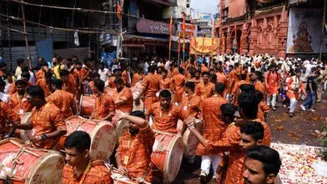
in a massive immersion procession towards Hussain Sagar Lake that brings the entire city to a standstill. In recent years, even the initial welcoming of the idols, or 'Aghaman', has become a grand spectacle with elaborate lighting, music, and processions before the festival officially begins. With over 75,000 pandals across the city, the atmosphere is electric.
Goa
In Goa, Ganesh Chaturthi, known locally as 'Chavath', is a more intimate, family-oriented, and nature-focused affair. Many families traditionally craft their own clay idols at home. A unique feature is the 'Matoli', a wooden canopy hung above the idol and decorated with seasonal, locally sourced fruits, flowers, and vegetables. The festival is a time for family reunions, with many Goans living elsewhere returning to their ancestral homes. While public pandals exist, the heart of the celebration is in the homes, filled with traditional music from instruments like the ghumot and the aroma of sweets like patoleo.
Bengaluru, Karnataka
Bengaluru’s celebrations are marked by a blend of grand public festivities and a strong community focus on eco-friendly practices. The Bengaluru Ganesh Utsava, held in Basavanagudi, is one of the oldest and longest-running cultural events in the city, featuring music, dance, and art performances. Many residential communities and apartment complexes organize their own celebrations, often including workshops for making clay Ganesha idols to promote sustainability. Key areas like Basavanagudi and Malleshwaram are dotted with pandals, and the festival culminates in vibrant immersion processions at lakes like Ulsoor and Sankey Tank.
Chennai, Tamil Nadu
In Tamil Nadu, the festival is called Vinayaka Chaturthi. Chennai's celebrations are notable for their creative and socially conscious pandals, which often carry messages of environmental awareness. There's a strong and growing emphasis on sustainability, with city authorities actively promoting the use of natural, biodegradable clay idols and prohibiting plaster of Paris. Artisans and shops offer eco-friendly options, including idols made from clay or even seeds that can be grown into plants after immersion. While the scale might be different from Mumbai, the devotional spirit is profound, with community gatherings and food distribution being common sights.
Delhi
As a cultural melting pot, Delhi has embraced Ganesh Chaturthi with a unique blend of Maharashtrian rituals and local North Indian flavour. While not as widespread as in western India, the capital hosts several grand pandals that replicate the Mumbai vibe, such as the 'Lal Bagh Ka Raja' at Netaji Subhash Place. Areas like Uttam Nagar and Dwarka are known for their massive idols and community events. You can also find celebrations that reflect the traditions of South India, like the one organised by the Sri Subha Siddhi Vinayaka Mandir Society in Mayur Vihar, making Delhi a hub for diverse Chaturthi experiences.
Ahmedabad, Gujarat
In Gujarat, Ganesh Chaturthi is celebrated with great devotion, though often with a more community-centric and slightly less frenetic energy than in neighbouring Maharashtra. Pandal-hopping is a popular activity for locals in Ahmedabad, with dozens of stages set up across the city. In recent years, there has been a significant push towards sustainability, with the Ahmedabad Municipal Corporation championing eco-friendly idols made from materials like clay and even cow dung to protect water bodies. This blend of traditional worship and modern environmental consciousness defines the city's celebrations.
Hubballi-Dharwad, Karnataka
For a truly unique and traditional experience, the twin cities of Hubballi-Dharwad in northern Karnataka offer a distinct celebration. The village of Chabbi, near Hubballi, is famous for its tradition of worshipping striking red-coloured Ganesha idols, a practice dating back to the 19th century. Hubballi itself hosts grand festivities, with towering 25-foot idols like 'Hubballi Ka Raja' taken out in massive immersion processions accompanied by high-energy music and dancing crowds. The celebrations here feel deeply rooted in local tradition, offering a glimpse into a less commercialized but equally vibrant Ganeshotsav.