



The Golden Hour's Gilded Cage
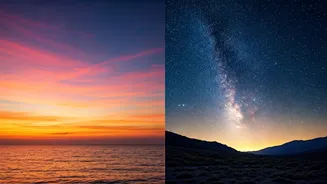
Remember when every travel itinerary revolved around the sun? We chased golden hour from Bali to Santorini, jostling for the perfect spot to capture a sun-drenched selfie. Travel was a visual hunt, and the prize was a feed-worthy photo of a dramatic sunset.
This era, driven by social media, turned breathtaking natural phenomena into crowded, sometimes stressful, photo-ops. While beautiful, this focus on a single, fleeting moment often meant we missed what happened before and, more importantly, after. The sunset became the destination, rather than part of a larger, more immersive experience. It represented a passive form of travel—observing beauty from a distance, but not always truly connecting with the place itself.
A New Darkness Beckons
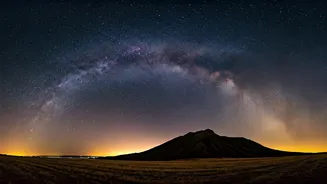
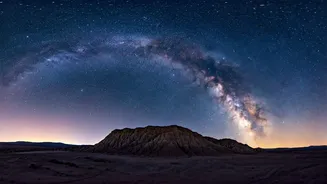
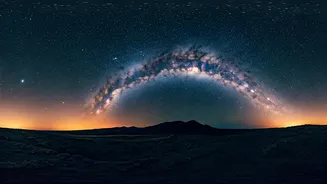
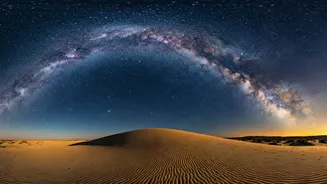
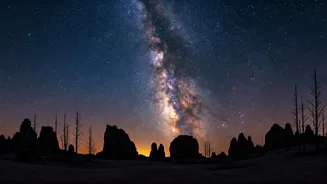
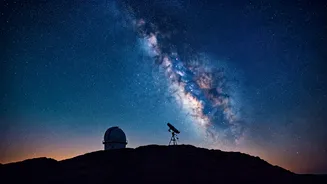
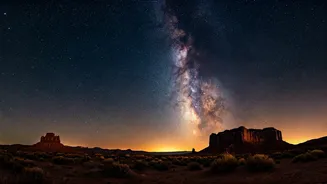
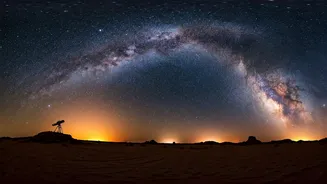
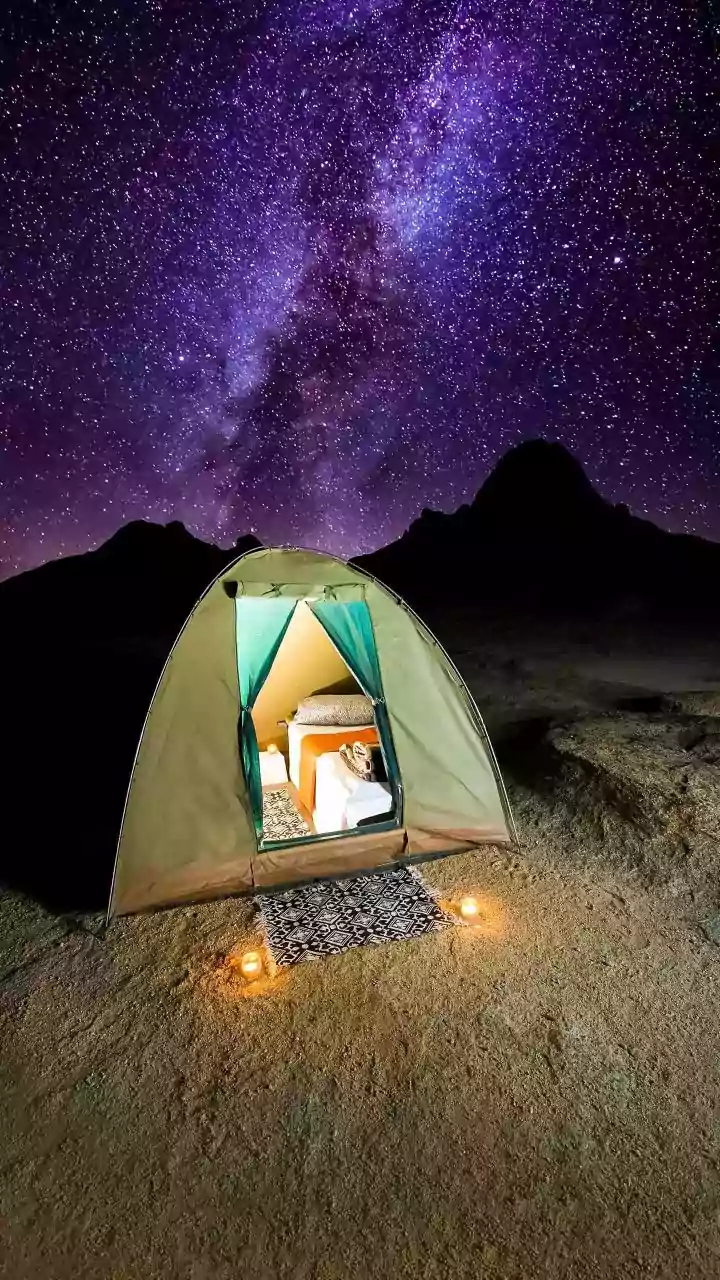
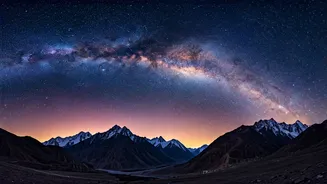
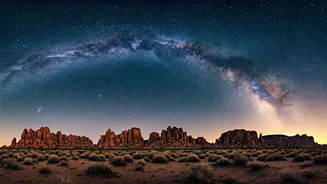
Now, a compelling counter-trend is emerging: astrotourism. Instead of flocking to light, travellers are actively seeking darkness. They are journeying to remote locations not for what they can see in the daytime, but for the clarity of the heavens at night. This isn't just for professional astronomers with powerful telescopes. It's for anyone who has felt a sense of awe looking up at the Milky Way, a sight increasingly rare for the billions living under the orange glow of urban light pollution. This movement involves visiting certified Dark Sky Parks and Reserves, areas protected from artificial light to preserve the natural nocturnal environment. It’s a deliberate turn away from the noise and crowds, toward silence, stillness, and the sublime.
Why We're Craving the Cosmos
So, what’s driving this cosmic shift? It’s a perfect convergence of modern anxieties and timeless human curiosity. Firstly, there's the pushback against 'overtourism'. Travellers are tired of crowded hotspots and are seeking out the solitude that dark-sky locations naturally offer. Secondly, the pandemic amplified our appreciation for open spaces and nature. A starry sky is the ultimate open space. Thirdly, there is a growing awareness of the impact of light pollution, not just on our ability to see stars but on wildlife and human health. This eco-consciousness makes preserving darkness an act of conservation. Finally, it’s a search for meaning. In a hyper-connected, fast-paced world, gazing at stars that are thousands of light-years away offers a profound sense of perspective and connection to the universe.
India's Place Under the Stars
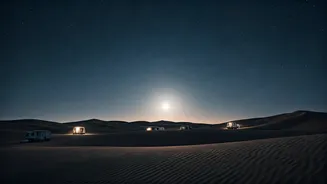
This global trend has found a special home in India. In 2022, the Hanle Dark Sky Reserve was established in Ladakh, marking India's first official foray into astro-tourism infrastructure. Nestled high in the Himalayas, its dry air and high altitude offer some of the clearest skies on the planet. But the potential extends far beyond Ladakh. The vast, empty stretches of the Rann of Kutch, the remote reaches of Spiti Valley, and the high-altitude deserts of Rajasthan are all nascent hubs for stargazing. Tour operators are now curating experiences that combine cultural immersion with nocturnal wonder—imagine folk tales told under a canopy of stars or desert safaris that culminate in a guided tour of the constellations. It’s a form of tourism that is inherently sustainable, benefiting remote communities without requiring massive infrastructure.
Beyond the Telescope
The evolution from sunset to starry night is about more than just astronomy. It symbolises a broader shift in our travel philosophy—from seeing to experiencing. The new luxury isn't a five-star hotel, but an unfiltered view of the cosmos. It’s not just stargazing; it’s nocturnal wildlife tours, kayaking in bioluminescent bays, and simply learning to appreciate a destination after dark. It’s a move towards 'slow travel,' where the goal is to absorb a place fully rather than ticking off a checklist. This new chapter of travel encourages us to engage all our senses, to learn something new, and to return home not just with photos, but with a renewed sense of wonder.