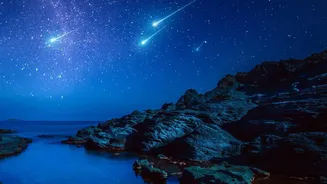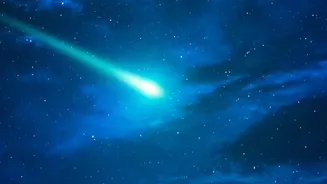







What Are the Orionids?
The Orionid meteor shower is an annual event that occurs when Earth travels through the debris field left behind by Halley's Comet (1P/Halley), the most famous comet in our solar system. These tiny particles, often no bigger than a grain of sand, burn
up upon entering our atmosphere at incredible speeds—around 66 kilometres per second. This high velocity often results in very bright, fast meteors that can leave glowing trails, or 'trains', for a few seconds. The shower gets its name from the constellation Orion, as the meteors appear to radiate from a point near the Hunter's club. At its peak, under perfect conditions, you might see between 15 and 25 meteors per hour.
Best Dates and Times to Watch in 2026
For 2026, the Orionid meteor shower will be active from early October to early November. The peak, when the most meteors are visible, is predicted for the night of October 21-22. Some forecasts also note that activity could extend into the night of October 22-23. The best viewing window is in the pre-dawn hours, after midnight. This is when the radiant point in Orion is high in the sky. However, this year there's another crucial timing factor to consider: the moon.
The Challenge: A Bright Moon
The biggest obstacle for the 2026 Orionids will be a bright waxing gibbous moon, which will be about 80% illuminated during the peak nights. The full moon occurs just a few days later on October 26. This bright moonlight will wash out many of the fainter meteors, significantly reducing visibility for much of the night. However, there is a window of opportunity. On the peak mornings, the moon will set around 3 a.m. local time. This leaves a gap of dark sky between moonset and the beginning of dawn twilight, from roughly 3 a.m. to 5:30 a.m. This is your prime time to watch.
Escaping Urban Light Pollution
For anyone in or near a major Indian city like Delhi, Mumbai, or Bengaluru, the biggest enemy of stargazing is light pollution. The glow from streetlights, buildings, and homes creates a bright haze that makes it impossible to see all but the brightest celestial objects. To truly enjoy the Orionids, you need to get away from city lights. Driving just 30-40 minutes away from a city can dramatically improve your view. Locations designated as dark sky reserves, like Hanle in Ladakh, offer pristine conditions, but even finding a spot in a rural area, a large park, or on the outskirts of your town will make a huge difference. Resources like Light Pollution Map can help you find darker areas nearby.
Don't Forget the Cloud Cover
A perfectly dark, moonless night is useless if it's cloudy. Clear skies are non-negotiable for watching a meteor shower. Since weather forecasts are only reliable a few days out, it's essential to check your local cloud cover forecast as the peak dates approach. The post-monsoon period of October and November often brings some of the clearest skies of the year across India, as the rains have washed dust from the atmosphere. However, local conditions can vary. You can use weather apps and websites like AccuWeather or Meteoblue, which offer specific 'stargazing' or 'astronomy' forecasts that detail cloud cover at different altitudes.
Tips for a Successful Viewing
Once you have your time and location sorted, a few simple preparations can make the experience much more enjoyable. First, your eyes need about 15-20 minutes to fully adapt to the darkness, so avoid looking at your bright phone screen. You don't need a telescope or binoculars; your naked eyes are the best tool for scanning the wide expanse of the sky. Find a comfortable spot where you can lie back on a mat or reclining chair to avoid neck strain. October nights can be chilly, especially in rural or elevated areas, so dress in warm layers and bring a blanket. Finally, be patient. Meteors come in spurts, and you might wait for several minutes before seeing one. Just relax and enjoy the night sky.