





The Calorie Question: A Spoonful of Sweetness
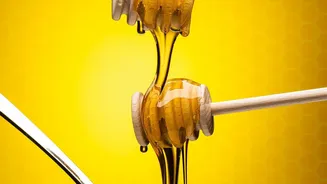
Let’s get the most direct comparison out of the way first: the calories. On a per-spoon basis, honey is actually more calorie-dense than granulated sugar. A tablespoon of honey contains about 64 calories, while a tablespoon of sugar has around 49 calories. This
difference is primarily because honey is denser than sugar. However, by weight, sugar is more caloric, with about 387 calories per 100 grams compared to honey's 304. This is because honey contains about 18% water, whereas sugar does not. The counterargument is that honey tastes sweeter than sugar, mainly due to its higher fructose content. This might lead you to use less of it to achieve the same level of sweetness, potentially balancing out the caloric intake.
Composition: What Are They Made Of?
Both sweeteners are composed of two simple sugars: glucose and fructose. The key difference lies in how they are structured. Table sugar, or sucrose, is a disaccharide where one glucose molecule is chemically bonded to one fructose molecule. Your body needs to break this bond using enzymes in your small intestine before it can be used for energy. Honey, on the other hand, is a mix of separate glucose (around 30%) and fructose (around 40%) molecules, along with water and small amounts of other sugars. Because these sugars are already separate, they are more easily absorbed by the body. This is why honey is sometimes described as being 'pre-digested' by bees.
Blood Sugar and The Glycemic Index
The Glycemic Index (GI) measures how quickly a food raises your blood sugar levels. This is where honey often claims a slight edge. Table sugar has a GI of around 65, while honey's average GI is slightly lower, around 58. This means honey may raise your blood sugar a bit more gradually than sugar does. However, the GI of honey can vary widely depending on its floral source, from as low as 45 for some citrus honeys to over 80 for others. While a lower GI is generally better, the difference between average honey and sugar is moderate. Both are still high-GI foods that should be consumed with caution, especially by individuals with blood sugar management concerns.
Nutritional Value: More Than Just Sugar?
This is where raw, unprocessed honey pulls ahead. Table sugar offers what are often called 'empty calories' — it provides energy but no other nutrients. In contrast, honey contains trace amounts of vitamins, minerals, enzymes, and antioxidants. You can find small quantities of potassium, calcium, iron, and B vitamins in honey. Darker honeys, in particular, tend to be richer in these beneficial compounds and antioxidants called flavonoids, which may have anti-inflammatory effects. It's crucial to note that these amounts are very small, and you would need to consume a large quantity of honey to get a significant nutritional benefit. Additionally, many of these benefits are lost when honey is heavily processed or pasteurised.
The Verdict: Which Should You Choose?
There is no simple winner in the honey versus sugar debate. If your primary goal is to get a few extra antioxidants and micronutrients with your sweetener, and you prefer its flavour, raw honey is the better choice. Its slightly lower glycemic index and natural enzymes are minor but real advantages over processed sugar. However, if you are strictly counting calories, it is important to remember that honey is more caloric per spoonful. Ultimately, both honey and sugar are forms of added sugar. Health organisations recommend limiting the intake of all added sugars to reduce the risk of health issues like obesity, type 2 diabetes, and heart disease. The most significant health benefit comes not from swapping one for the other, but from reducing your overall consumption of sweeteners.