




Understanding the Solar Maximum
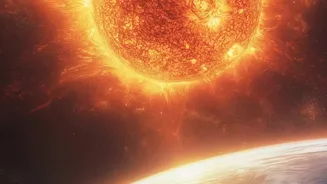
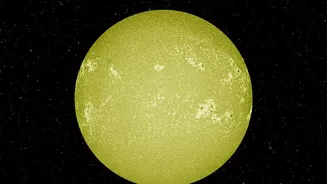
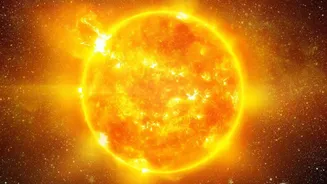
The Sun operates on an approximately 11-year cycle, swinging between periods of low activity (solar minimum) and high activity (solar maximum). A solar maximum is characterized by a significant increase in sunspots, which are temporary, dark, and cool
patches on the sun's surface driven by intense magnetic activity. While initial forecasts for the current cycle, Solar Cycle 25, predicted a peak around July 2025, activity has ramped up much faster than expected. Updated predictions suggest the maximum phase began in late 2024 and will create a prolonged period of heightened activity through 2026, meaning more solar flares and eruptions are likely.
Flares, Eruptions, and Earth's Magnetic Shield
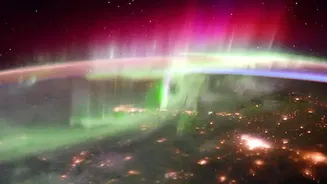
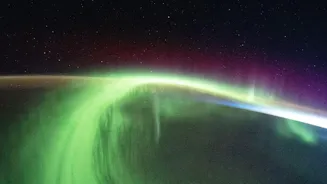
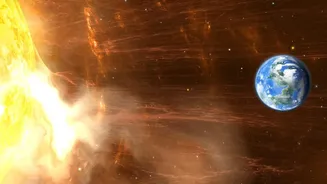
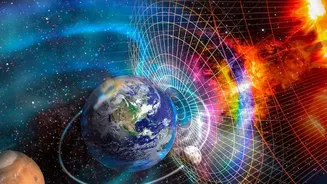
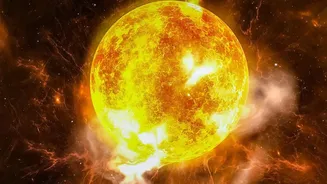
Solar flares are immense bursts of radiation, while Coronal Mass Ejections (CMEs) are colossal explosions of plasma and magnetic fields from the Sun's corona. When a CME is directed at Earth, it can slam into our planet's protective magnetic field, the magnetosphere, triggering a geomagnetic storm. This interaction between the solar material and our magnetic shield is what generates beautiful auroras, but it also induces powerful electrical currents both in space and on the ground. It is these induced currents that pose the biggest threat to our modern infrastructure.
The Threat to Our Power Grids
The most significant ground-level threat from a geomagnetic storm is to our electrical power grids. The storm can create Geomagnetically Induced Currents (GICs), which are low-frequency DC currents that flow through long conductors like high-voltage transmission lines. Power grids are designed for AC power, and these unwanted DC currents can saturate the magnetic cores of large transformers, causing them to overheat, malfunction, and even fail permanently. A cascading failure could lead to widespread, long-lasting blackouts, as famously occurred in Quebec in March 1989, when a solar storm knocked out power for six million people for nine hours.
Satellites Caught in the Crossfire
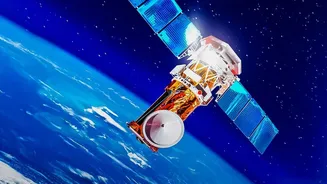
Satellites are particularly vulnerable to solar storms. There are several ways they can be affected. Firstly, the storm can heat and expand Earth's upper atmosphere, increasing the drag on satellites in low-Earth orbit and causing their orbits to decay faster. Secondly, high-energy particles can damage sensitive electronics, causing short circuits, memory errors known as single-event upsets, or complete failure. This is a major risk for our global communication networks and navigation systems like GPS, which can suffer from signal degradation and positioning errors during a storm.
Forecasting and Mitigation Efforts
The good news is that we are not defenseless. Space weather agencies like NOAA's Space Weather Prediction Center constantly monitor the Sun, providing forecasts and alerts that give satellite operators and grid managers time to take protective measures. These can include powering down non-essential satellite components or temporarily disconnecting parts of the power grid to prevent widespread collapse. Engineers are also working on building more resilient hardware, such as transformers capable of withstanding GICs and satellites with better shielding. While a worst-case scenario storm could still cause significant disruption, improved forecasting and mitigation strategies are helping to reduce the risk.