



What Exactly Is the Skin Barrier?
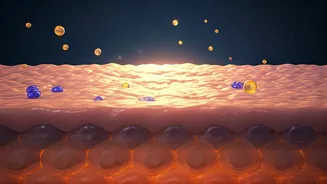
Think of your skin barrier as a security guard for your face. Known scientifically as the stratum corneum, it's the outermost layer of your skin. The easiest way to visualise it is as a brick wall. The skin cells ('bricks') are held together by a lipid
mortar made of ceramides, cholesterol, and fatty acids. This wall has two crucial jobs: to keep good things (like water) in, and to keep bad things (like pollution, bacteria, and irritants) out. When this barrier is strong and intact, your skin looks and feels smooth, hydrated, and calm. When it's compromised, trouble begins.
Why the Sudden Obsession?
The focus on the skin barrier isn't just a marketing gimmick; it's a direct reaction to years of aggressive skincare trends. The popularity of high-strength acids, harsh physical scrubs, and layering multiple potent 'actives' has led to a generation of over-exfoliated, irritated skin. People were damaging their 'brick wall' in the pursuit of a quick fix for texture or acne. The shift towards barrier protection is a return to basics. It acknowledges that you can't build a healthy skincare routine on a damaged foundation. This is especially true in India, where a combination of extreme weather shifts—from humid monsoons to dry winters—and high levels of urban pollution constantly challenge our skin’s resilience.
Signs Your Barrier Is Damaged
A compromised skin barrier doesn't hide well. Your skin will send clear signals that it needs help. Watch out for these common red flags: - **Increased Sensitivity:** Products that never bothered you before now sting or burn. - **Redness and Inflammation:** You notice persistent redness, blotchiness, or flushing. - **Dryness and Dehydration:** Your skin feels tight, flaky, and looks dull, no matter how much moisturiser you apply. It can't hold onto hydration. - **Acne and Breakouts:** A broken barrier allows acne-causing bacteria to penetrate more easily, leading to more frequent breakouts. - **Itchiness or Rashes:** Conditions like eczema or rosacea can flare up when the barrier is weakened.
How to Repair and Protect Your Barrier
The good news is that the skin barrier is resilient and can be repaired with a gentle, consistent approach. Think of it as a 'skin-tox'—a detox from harsh products and a focus on nourishment. 1. **Simplify Your Routine:** Stop using all potent actives for a while. That means pausing your retinoids, vitamin C serums, and exfoliating acids (like AHA and BHA). Go back to a simple cleanse-moisturise-sunscreen routine. 2. **Cleanse Gently:** Swap out foaming cleansers that leave your skin feeling 'squeaky clean' (which is actually a sign of stripped oils). Opt for a mild, pH-balanced, non-foaming cleanser or a hydrating cleansing balm. 3. **Hydrate and Moisturise:** This is non-negotiable. Look for moisturisers packed with barrier-supporting ingredients. Apply them to damp skin to lock in moisture. Don't be afraid to layer a hydrating toner or essence before your moisturiser. 4. **Don't Skip Sunscreen:** UV radiation is a primary cause of barrier damage. A broad-spectrum sunscreen with at least SPF 30 is your barrier's best friend, every single day, rain or shine.
Your Barrier-Building Ingredient Checklist
When shopping for products, look for these powerhouse ingredients that help rebuild and fortify your skin's 'brick wall': - **Ceramides:** These are lipids (fats) that are naturally part of your skin barrier. Think of them as replenishing the 'mortar' between your skin cell 'bricks'. - **Hyaluronic Acid:** A humectant that draws moisture from the air into your skin, providing deep hydration. - **Niacinamide (Vitamin B3):** A multi-tasking wonder that helps produce more ceramides, reduces inflammation, and calms redness. - **Fatty Acids:** Ingredients like Omega-3 and Omega-6, found in oils like marula, squalane, and rosehip, help nourish and soften the skin. - **Panthenol (Vitamin B5):** Another humectant that also has anti-inflammatory properties to soothe irritated skin.