





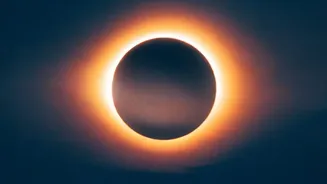

A Unique Window on the Corona
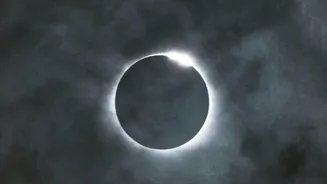
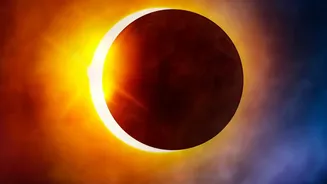
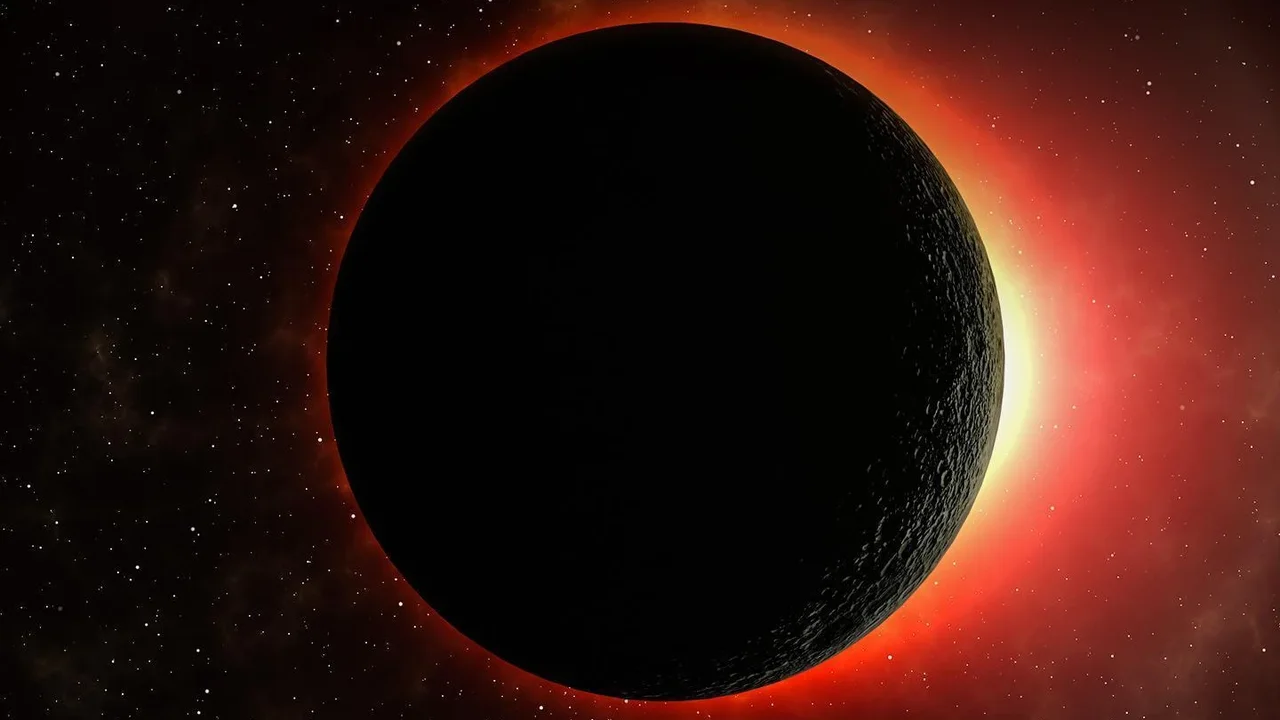
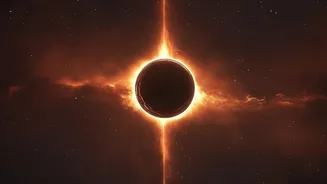
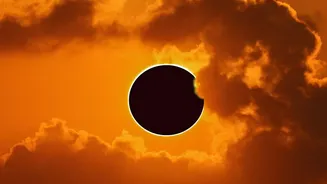
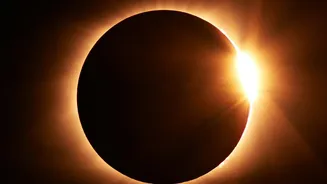
A total solar eclipse provides a rare and valuable chance for scientists to study the Sun's outer atmosphere, the corona. Normally, the Sun's brilliant surface, or photosphere, is so bright that it completely obscures the much fainter corona. During an eclipse,
the Moon acts as a natural screen, allowing the ethereal, super-heated tendrils of the corona to become visible from Earth. This brief window is critical for tackling one of solar physics' most persistent mysteries: the coronal heating problem. Scientists are puzzled as to why the corona is hundreds of times hotter than the Sun's surface, reaching temperatures of millions of degrees Celsius. Eclipses offer a chance to gather data that can help solve this puzzle. As each eclipse reveals a different view of the ever-changing Sun, the 2026 event provided a fresh snapshot of its magnetic activity during the declining phase of Solar Cycle 25.
Science in the Skies
To maximize data collection, researchers took to the skies. NASA deployed its WB-57 high-altitude research aircraft to chase the Moon's shadow over the Atlantic. Flying at 50,000 feet, the jet stayed within the path of totality for nearly three minutes—significantly longer than the maximum two minutes and 18 seconds available on the ground. This altitude also placed the aircraft above most clouds and atmospheric distortion, allowing its suite of advanced cameras to capture high-resolution images of the corona in multiple wavelengths of light. The data gathered aims to shed light on the structure of the corona, the formation of solar prominences, and the relationship between the corona and the solar wind, the stream of charged particles that flows from the Sun and can impact Earth.
Balloons, Rockets, and Global Collaboration
The research wasn't limited to high-flying jets. The NASA-supported Nationwide Eclipse Ballooning Project launched dozens of scientific balloons from Iceland and Spain. In Iceland, 80 balloons were released to study how the sudden drop in sunlight affected Earth's boundary layer, the part of the atmosphere closest to the ground. In Spain, other balloons measured changes in atmospheric ozone levels. These ground-up studies complement the top-down view from space. The European Space Agency (ESA) also ran coordinated campaigns, comparing the real-world eclipse observations with data from missions like Solar Orbiter and Proba-3. Proba-3 is a particularly innovative mission that uses two satellites flying in precise formation to create its own artificial, long-duration eclipses in space. By predicting the corona's appearance and then comparing it to the reality of August 12, scientists can refine the models used to forecast space weather.
An Indian Contribution to Global Science
Even though the eclipse was not visible from India, Indian scientists made significant contributions. A team from the Raman Research Institute (RRI) in Bengaluru was among the global groups that predicted the structure of the Sun's corona for August 12. Using a sophisticated data-driven model, they forecasted the appearance of complex, petal-like structures in the corona. These predictions are more than just a scientific curiosity; they are a crucial test of computational models that help us understand solar magnetism and predict space weather, which can affect satellites and power grids on Earth. The comparison of these predictions with the images captured during the eclipse provides vital feedback for improving our understanding of the Sun's magnetic environment.