






The New Digital Gold Rush: Your Photos as AI Fuel
Artificial intelligence doesn't learn in a vacuum. To generate images, text, or sounds, AI models must first be 'trained' on vast datasets. For a long time, this meant scraping the public internet. Today, tech giants have realized the high-quality, well-organized
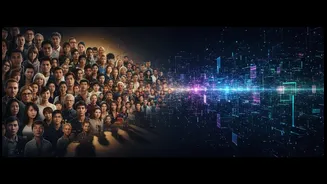
data they need is already inside their own platforms: the billions of photos and videos we have publicly uploaded over the years. This content is a treasure trove. It's often captioned, tagged, and connected to other users, making it incredibly valuable for teaching an AI about the world. Companies like Meta have updated policies to clarify that public content can be used to train their AI models, turning our shared memories into a corporate asset for building the next generation of technology.
The Myth of 'Public' Means 'Free for Any Use'
The common defense from tech companies is that this data is 'publicly available'. But this argument conflates visibility with consent. When you post a photo publicly on a social platform, there's an implicit social contract. You understand that other users can see it, share it, or comment on it within the platform's ecosystem. What you likely don't expect is for that photo to be fed into a machine, analyzed, and used to build a separate commercial product, potentially in ways that could one day mimic your style or even your likeness. This is a fundamental change in the nature of the agreement between user and platform. Arguing that 'public' means a free-for-all for any future use is a convenient but disingenuous stance that puts the onus entirely on the user to foresee every possible technological development.
Why 'We've Updated Our Terms' Is Not Enough
Legally, companies often cover themselves by updating their lengthy Terms of Service agreements and privacy policies. They might send a mass email or show a banner that few people read before clicking 'agree'. For a change this significant—moving from data hosting to data harvesting for AI training—this is woefully inadequate. It's a form of hiding in plain sight. True consent must be informed and explicit. Forcing users to dig through dense legal documents to understand a major shift in data usage, or automatically opting them into it, is the opposite of transparency. Recent backlash against some of Meta's AI features, which were enabled by default, forced the company to pull them back, demonstrating that users are not happy when they discover these changes after the fact.
A Better Path: The Principle of Clear Notice and Real Choice
There is a better way, and it's built on two simple principles: clear notice and meaningful choice. Instead of burying the change, platforms should use prominent, unmissable notifications to inform users. Think full-screen pop-ups that clearly state: "We want to use your public photos to train our AI. Here is what that means." Crucially, this should be followed by a genuine choice, preferably an 'opt-in' model where users must actively agree before their data is used. An 'opt-out' system, which places the burden on users to find a setting and disable it, is a weaker, less ethical model that relies on user inertia and lack of awareness. By requiring an active opt-in, companies would not only respect user autonomy but also build trust. It changes the relationship from transactional to collaborative.