



A Revolution in Launch Costs
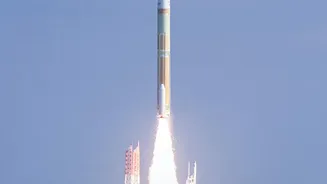
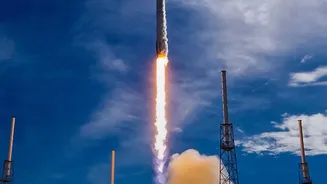
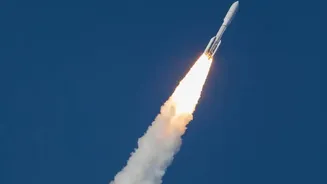
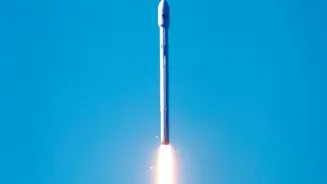
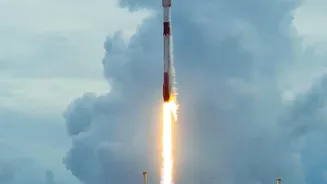
The single biggest factor supercharging the small satellite boom is the dramatic drop in the cost of getting to space. During the Space Shuttle era, launching one kilogram into orbit cost tens of thousands of dollars. Today, thanks primarily to the advent
of reusable rockets pioneered by companies like SpaceX, that cost has plummeted. This steep price reduction has democratized access to space, moving it from the exclusive domain of governments to a viable commercial enterprise for startups and established companies alike. Instead of waiting years for a spot on a massive, expensive rocket, companies can now launch fleets of smaller satellites more quickly and affordably, sometimes even 'ridesharing' on a single launch vehicle.
Technology Gets Smaller and Smarter
Concurrent with cheaper launches is the radical miniaturization of technology. What once required a satellite the size of a bus can now be accomplished by one the size of a shoebox. Advanced sensors, powerful processors, and sophisticated communication systems have all shrunk, thanks to the same trends that put supercomputers in our pockets. This allows for the development of highly capable nanosatellites and microsatellites, often built around standardized formats like the CubeSat. These smaller, modular designs reduce manufacturing time and cost, allowing for rapid iteration and deployment. This evolution means small satellites aren't just cheaper to launch; they are cheaper to build and can be produced at an unprecedented scale.
A Universe of New Applications
This new accessibility is unlocking a torrent of commercial applications that were previously impractical or impossible. Fleets of small satellites, or 'constellations', are being deployed in Low Earth Orbit (LEO) to provide global broadband internet, connecting remote and underserved areas. Earth observation is another explosive growth area. Satellites now provide daily high-resolution imagery of the entire planet, fueling data-driven insights for agriculture, where farmers can monitor crop health in real-time. This data is also critical for climate monitoring, disaster response, insurance risk assessment, and tracking global supply chains. Governments are also major customers, using small satellites for intelligence, surveillance, and reconnaissance missions.
The New Commercial Space Race
The combination of lower costs and vast market potential has turned space into a hotbed for venture capital and private equity. The market for small satellites is projected to grow into a multi-billion dollar industry within the next decade. Investors see an opportunity to fund the foundational infrastructure of the 21st-century data economy. They are backing not just the satellite operators themselves, but the entire ecosystem, from launch providers to data analytics platforms that interpret the information sent back to Earth. This flood of private capital accelerates innovation, creating a competitive and dynamic market where new business models, like in-orbit services and data subscriptions, are constantly emerging.
Challenges on the Orbital Horizon
Despite the immense optimism, the industry is not without significant challenges. The very success of small satellites is creating new problems, most notably the growing threat of orbital congestion and space debris. With thousands of new objects being launched, the risk of collisions is increasing, prompting new regulations around de-orbiting and space traffic management. Furthermore, the small size of these satellites inherently limits their power, payload capacity, and lifespan, requiring more frequent replacement cycles. As the market becomes more crowded, companies also face hurdles with spectrum allocation and the simple profitability challenge of turning massive upfront investments into sustainable revenue streams.