




What Has Changed With the New FDI Policy?
The new policy, effective from April 2024, marks a significant shift from the previous framework. Before this, any foreign investment in the space sector, primarily covering satellite establishment and operation, required 100% government approval, a process
that could be lengthy and deter investors. The reforms unbundle the space sector into three distinct categories, each with its own clear FDI limit and entry route. This tiered approach provides much-needed clarity and predictability for investors, replacing a monolithic and often restrictive system with a nuanced, pro-investment structure. The goal is to transform the Indian Space Research Organisation's (ISRO) role from a primary operator to a research and development powerhouse, allowing private entities to handle commercial operations.
A Breakdown of the New Investment Tiers
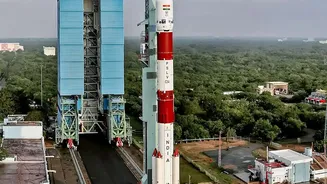
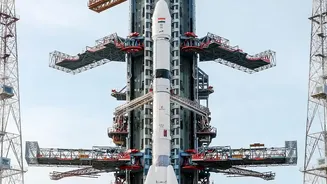
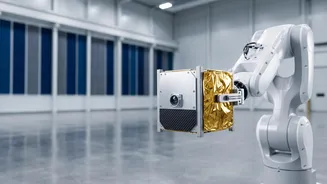
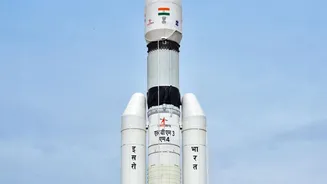
The liberalised policy creates a multi-lane highway for investment. Here’s how it works: 1. Up to 100% FDI (Automatic Route): This is the most open category, designed to build a robust domestic supply chain. It allows for 100% foreign ownership without government pre-approval for companies that manufacture components, systems, and sub-systems for satellites, ground segments, and user equipment. 2. Up to 74% FDI (Automatic Route): This tier covers the core of commercial space activities. Foreign entities can automatically invest up to 74% in businesses involved in satellite manufacturing and operations, creating satellite data products, and building ground and user segments. Any investment beyond 74% in these areas requires government approval. 3. Up to 49% FDI (Automatic Route): Reflecting national security considerations, this is the most regulated category. It applies to the development of launch vehicles, associated systems, and the creation of spaceports for launching and receiving spacecraft. Investments exceeding the 49% cap need to go through the government approval route.
A Game-Changer for Indian Startups
For the 400+ private space startups in India, this is a watershed moment. The new rules unlock access to a global pool of capital that was previously hard to reach. With significant funding, startups can scale their operations, accelerate research and development, and expand their manufacturing capabilities. It’s not just about money; it's about technology transfer and global collaboration. The policy encourages partnerships with established international players, which can provide Indian firms with advanced technologies, sophisticated operational knowledge, and entry into the global aerospace supply chain. This influx of capital and expertise is expected to help Indian companies offer competitive services on a global scale.
The Opportunity for Global Investors
The revised policy positions India as one of the most attractive destinations for space investment globally. The country's space economy, valued at around USD 9 billion in 2025, is projected to reach USD 44 billion by 2033. For investors, the appeal is a combination of a rapidly growing market, a massive pool of skilled engineering talent, and a government actively encouraging private and foreign participation. The creation of the Indian National Space Promotion and Authorization Centre (IN-SPACe) as a single-window agency streamlines the regulatory process, reducing bureaucratic hurdles. The clear, tiered FDI structure allows investors to precisely tailor their entry strategy, whether it's through a 100% owned component manufacturing unit or a majority-stake joint venture in satellite operations.
The Road Ahead
While the policy is a monumental step, the journey is just beginning. The success of these reforms will depend on continued regulatory clarity and the efficient functioning of agencies like IN-SPACe. For startups, the challenge will be to scale effectively and compete in a more crowded market. For investors, due diligence on local partners and a deep understanding of the specific sub-sector regulations remain crucial. The government has also signalled further support through initiatives like a ₹1,000 crore venture capital fund to provide early-stage capital to promising space-tech firms. These reforms are designed to expand India's share of the global space economy from 2% to a projected 8% by 2033, fostering a vibrant, self-sustaining private space ecosystem.