





The Demand for More Room in Orbit
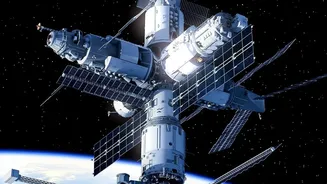
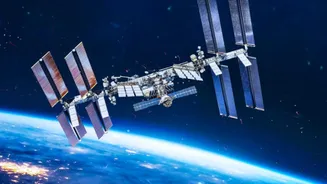
For decades, the International Space Station (ISS) has been the premier destination for astronauts and microgravity research. But with the ISS scheduled for decommissioning around 2031, a new commercial era is dawning. The demand for access to low-Earth
orbit (LEO) for research, manufacturing, and even tourism is rapidly outpacing the available supply. This has created a significant business opportunity for private companies to build and operate their own space stations. However, a major hurdle has always been the sheer cost and complexity of launching building materials. Traditional modules are limited by the size of a rocket's payload fairing, making orbital construction a slow and expensive process of connecting many small, rigid parts.
A Different Kind of Space Station
Enter the inflatable habitat. Companies like Sierra Space are pioneering these expandable structures, which launch in a compressed, compact state and are then inflated in orbit to their full volume. Sierra Space's Large Integrated Flexible Environment (LIFE) habitat, for instance, is designed to fit inside a standard five-meter rocket fairing but expands to the size of a three-story apartment building once deployed. One module alone can provide a third of the ISS's entire pressurized volume. This technology isn't entirely new; NASA first experimented with the concept in the 1960s and successfully tested the Bigelow Expandable Activity Module (BEAM) on the ISS starting in 2016. Today's designs, however, are far more ambitious, intended to serve as core components of standalone commercial space stations like the planned Orbital Reef.
The Benefits of Building Big and Soft
The primary advantage of inflatable habitats is their efficiency. They offer a much greater volume of usable space for their launch mass compared to traditional rigid aluminum structures. This drastically reduces launch costs, a key factor in the business case for commercial space stations. But the benefits go beyond just size and cost. The soft, multi-layered shells are constructed from high-tech fabrics like Vectran, a material five times stronger than steel. These layers offer superior protection against micrometeoroids and space radiation compared to single-wall metal modules. Recent burst pressure tests on full-scale prototypes by Sierra Space have demonstrated remarkable durability, with the modules withstanding pressures far exceeding NASA's safety requirements, proving their structural integrity.
Unlocking New Frontiers for Science
This massive expansion of orbital real estate is poised to ignite a new wave of low-gravity experiments. The microgravity environment, where the effects of gravity are greatly reduced, is a unique laboratory. On Earth, gravity can mask or overwhelm subtle physical and biological processes. In space, phenomena like surface tension become dominant, and processes like convection, which mixes fluids, are nearly absent. This allows for groundbreaking research in areas like pharmaceuticals, where scientists can grow purer protein crystals to design more effective drugs. Other promising fields include materials science for creating flawless alloys and fiber optics, and regenerative medicine, including the potential for 3D-printing human organs without the tissue collapsing under its own weight. The increased volume provided by inflatable habitats will allow for more complex, larger-scale experiments that are simply not feasible in the cramped confines of current facilities.
From Blueprint to Orbit
The transition to this new model of space infrastructure is already underway. Sierra Space and its partner Blue Origin are developing the Orbital Reef station, which will heavily feature LIFE habitat modules. Axiom Space is also building its own commercial station, which will initially attach to the ISS before becoming independent, and plans to incorporate inflatable modules as well. The global market for these modules was valued at nearly $3 billion in 2025 and is projected to double by 2033, reflecting immense investment in the commercial space ecosystem. With successful ground testing campaigns validating the technology, the first pathfinder inflatable habitats could launch as early as the end of 2026, setting the stage for a thriving commercial economy in orbit before the ISS takes its final bow.