







The Insulation Trilemma
For decades, builders and homeowners have faced a frustrating trade-off when choosing insulation. Petroleum-based plastic foams like polystyrene are effective and affordable, but they are derived from fossil fuels, are non-biodegradable, and can pose
health risks to workers. Traditional alternatives like fiberglass and mineral wool are widely used, but can have their own environmental drawbacks and installation challenges. On the other hand, fully sustainable options have often come with a higher price tag or compromises in performance, such as lower resistance to moisture or physical degradation over time. This has created a persistent challenge: how do you keep a building warm in the winter and cool in the summer without breaking the bank or harming the planet? Finding a single material that is cost-effective, durable, and truly sustainable has been the industry's holy grail.
A Breakthrough from Wood
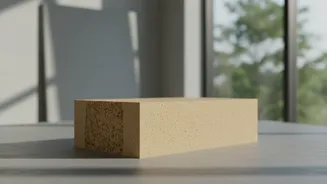
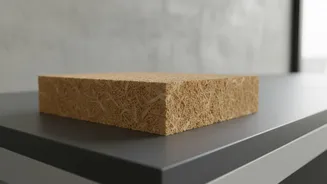
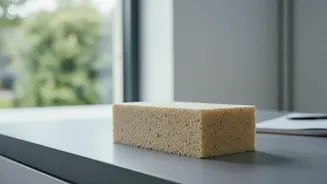
Enter wood-fibre foam. Led by researchers at institutions like Germany's Fraunhofer Institute and the University of Maine, scientists are transforming a simple, renewable resource into a high-performance material. The process involves grinding down wood—often waste material from lumber mills—into fine particles or even nanoscale fibres. This wood pulp is then mixed into a viscous suspension, expanded with a foaming agent, and hardened. The result is a lightweight yet strong foam that consists almost entirely of wood, with the material's own natural properties providing much of the bonding strength. This innovative approach turns low-value wood chips and sawdust into a product with the potential to replace petroleum-based plastics in a wide array of applications.
Checking Off Thermal Performance
A primary job of insulation is to resist heat flow, a property measured by thermal conductivity. Early results show wood foam is highly competitive in this area. Research indicates its thermal conductivity is comparable to, and in some cases may even rival, that of expanded polystyrene (Styrofoam). By trapping air within its porous, cellular structure, the foam acts as an excellent barrier to heat transfer. This means a home insulated with wood foam can potentially achieve the same level of energy efficiency as one using conventional plastic insulation, leading to lower heating and cooling bills for the occupant. Unlike some softer fibre insulation materials that can sag and create thermal gaps over time, wood foam can be produced in rigid, dimensionally stable boards that maintain their insulating integrity for the life of the building.
Built for Durability and Safety
Performance isn't just about thermal resistance; it's also about longevity. The new generation of wood foams has been specifically engineered to address the shortcomings of earlier bio-based materials. Researchers have made significant strides in creating foams that are resistant to pressure and moisture. While some natural materials struggle with water, certain wood foams have demonstrated an ability to manage humidity without collapsing or losing their insulating properties. This breathability can help reduce the risk of condensation and mould growth within walls. Furthermore, in fire tests, wood fibre insulation tends to form a protective char layer, which can slow the rate of burning and maintain structural integrity longer than some plastic foams that melt and release toxic gases.
The Cost and Green Equation
The true promise of wood foam lies in its ability to be both green and economical. The raw material is wood fibre, a renewable resource that is often sourced from sustainably managed forests or as a waste byproduct from other industries. This dramatically reduces the material's embodied carbon compared to petroleum-based products. Some formulations are even fully recyclable with paper and cardboard. From a cost perspective, using wood waste helps keep raw material prices low. While wood fibre insulation can sometimes be more expensive upfront than the cheapest foam boards, its long-term benefits, combined with rising demand for sustainable construction, are driving the market forward. As manufacturing scales up in North America and Europe, costs are expected to become increasingly competitive.
From the Lab to the Building Site
Wood-fibre foam and board insulation are no longer purely experimental. Europe has been manufacturing and using these products for over two decades, proving their effectiveness in real-world construction. The market is now gaining significant traction in North America, with new manufacturing plants coming online to meet growing demand. While challenges remain in developing building codes and increasing awareness among contractors, the momentum is undeniable. The global market for wood fibre insulation board was valued at nearly $5 billion in 2025 and is projected to grow significantly, driven by stricter energy efficiency regulations and a consumer shift toward healthier, more sustainable homes. This ongoing research is paving the way for a future where eco-friendly construction is not a niche alternative, but the default standard.