





A Fundamental Shift in Strategy
For decades, the Indian Space Research Organisation (ISRO) was the sole custodian of India's space ambitions, responsible for everything from research and development to building and launching rockets and satellites. This state-led model brought India immense
success and prestige. Now, a profound transformation is underway. The government, through landmark initiatives like the Indian Space Policy 2023, is fundamentally redefining ISRO's role. The focus is shifting from ISRO doing everything to ISRO enabling a broader ecosystem. The policy encourages the private sector, referred to as Non-Governmental Entities (NGEs), to take a leading role in end-to-end space activities, including building rockets and satellites and providing space-based services. This allows ISRO to concentrate on its core mission: advanced research, deep space exploration, and developing next-generation technologies that will push the frontiers of science.
The Commercial Enablers: NSIL and IN-SPACe
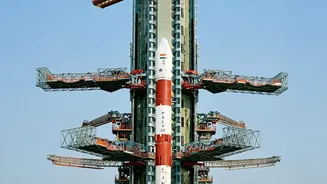
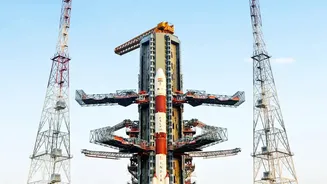
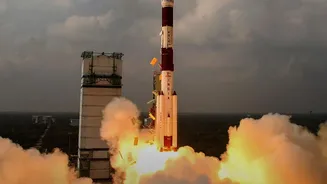
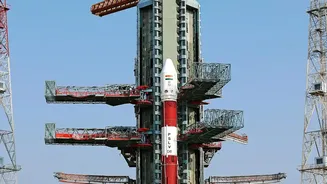
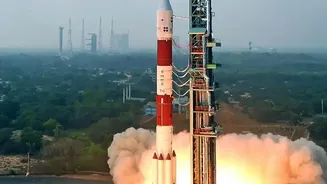
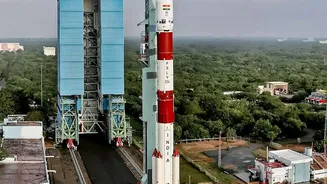
This new architecture is supported by two key bodies. NewSpace India Limited (NSIL), established in 2019, is ISRO's commercial arm. Its mandate is to commercialise ISRO's proven technologies, managing the production of workhorse rockets like the Polar Satellite Launch Vehicle (PSLV) through industry consortiums and marketing launch services to global customers. NSIL's booming revenues, which have grown significantly in recent years, reflect the high demand for India's reliable and cost-effective launch capabilities. The second pillar is the Indian National Space Promotion and Authorisation Centre (IN-SPACe). Acting as a single-window agency, IN-SPACe facilitates private sector participation by providing access to ISRO's state-of-the-art facilities, sharing technology, and offering regulatory clarity. It is the crucial link that connects private industry's dynamism with ISRO's deep institutional knowledge, authorising missions and nurturing startups.
The Rise of Private Space Players
The policy reforms have catalysed an explosion in entrepreneurial activity. From just a handful a decade ago, India now boasts over 400 space-tech startups. This burgeoning private sector is attracting significant investment, with funding crossing record levels. These companies are not just peripheral suppliers; they are developing their own launch vehicles, building sophisticated satellite constellations, and creating innovative data analytics solutions. A major milestone was achieved in July 2026 with the successful orbital launch of Vikram-1 by Skyroot Aerospace, India's first privately developed rocket. This demonstrated that the Indian private sector has the capability to execute complex space missions, a crucial step in building a multi-provider launch hub and moving beyond being solely reliant on ISRO.
The Road Ahead: Growth and Global Ambition
The maturation of India's space economy is not just a domestic success story; it has global implications. India’s space economy, valued at around $8 billion today, is projected to grow to between $40-45 billion within the next decade. The goal is to increase India's share of the global space economy from the current 2-3% to a more formidable figure. This growth is driven by the increasing demand for satellite-based services, from high-speed internet constellations to Earth observation data for agriculture and disaster management. Furthermore, liberalised Foreign Direct Investment (FDI) norms are making it easier for Indian startups to attract global capital and collaborate with international partners, integrating the Indian ecosystem more deeply into the global supply chain. As private companies begin to handle more routine launch and satellite manufacturing tasks, ISRO can dedicate its resources to ambitious projects like the Gaganyaan human spaceflight mission and a future Indian space station. This symbiotic relationship—where ISRO’s legacy empowers private innovation—is the true hallmark of a maturing space economy.