


The Challenge of Remote Control
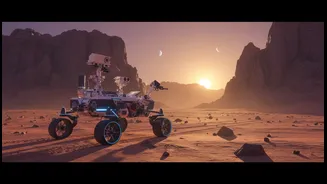
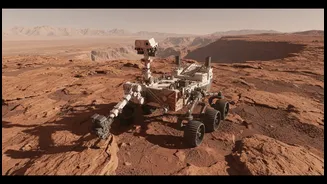
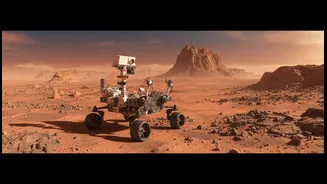
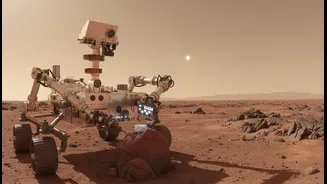
NASA’s rovers, like the celebrated Curiosity and Perseverance, are marvels of engineering, but they operate under a significant constraint: the communication delay between Earth and Mars. This delay, which can be up to 20 minutes each way, forces mission
planners at the Jet Propulsion Laboratory (JPL) to meticulously plot out every single movement in advance. This cautious, step-by-step approach is reliable but slow, limiting how much ground a rover can cover in a Martian day. It also means that rovers are programmed to be risk-averse, actively avoiding challenging terrain such as steep slopes, large rock fields, and the shifting sands that could trap them. As a result, some of the most scientifically compelling locations on Mars, like crater walls, canyons, and potential cave entrances, have remained tantalizingly out of reach.
A New Generation of Autonomous Explorers
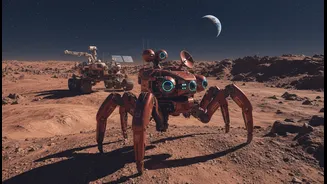
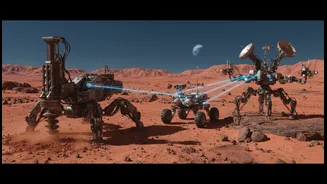
To overcome these limitations, NASA is investing in advanced robotics that can think for themselves. Instead of waiting for instructions from Earth, these next-generation robots will use onboard artificial intelligence to make their own navigation decisions in real-time. This leap in autonomy is central to several new projects. Recently, NASA has already tested this by allowing the Perseverance rover to plan its own route using generative AI, analyzing orbital imagery and terrain data to navigate safely. Beyond single-rover autonomy, NASA is developing cooperative robot teams. The Cooperative Autonomous Distributed Robotic Exploration (CADRE) project, for instance, features a trio of small, suitcase-sized rovers designed to work together. They will autonomously map an area, communicate with each other, and even elect a leader to coordinate tasks, all without constant human oversight.
Smarter Systems for Tougher Terrain
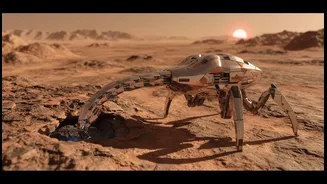
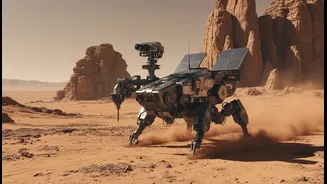
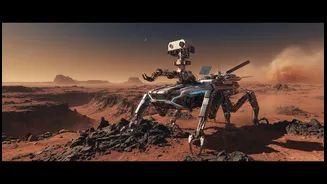
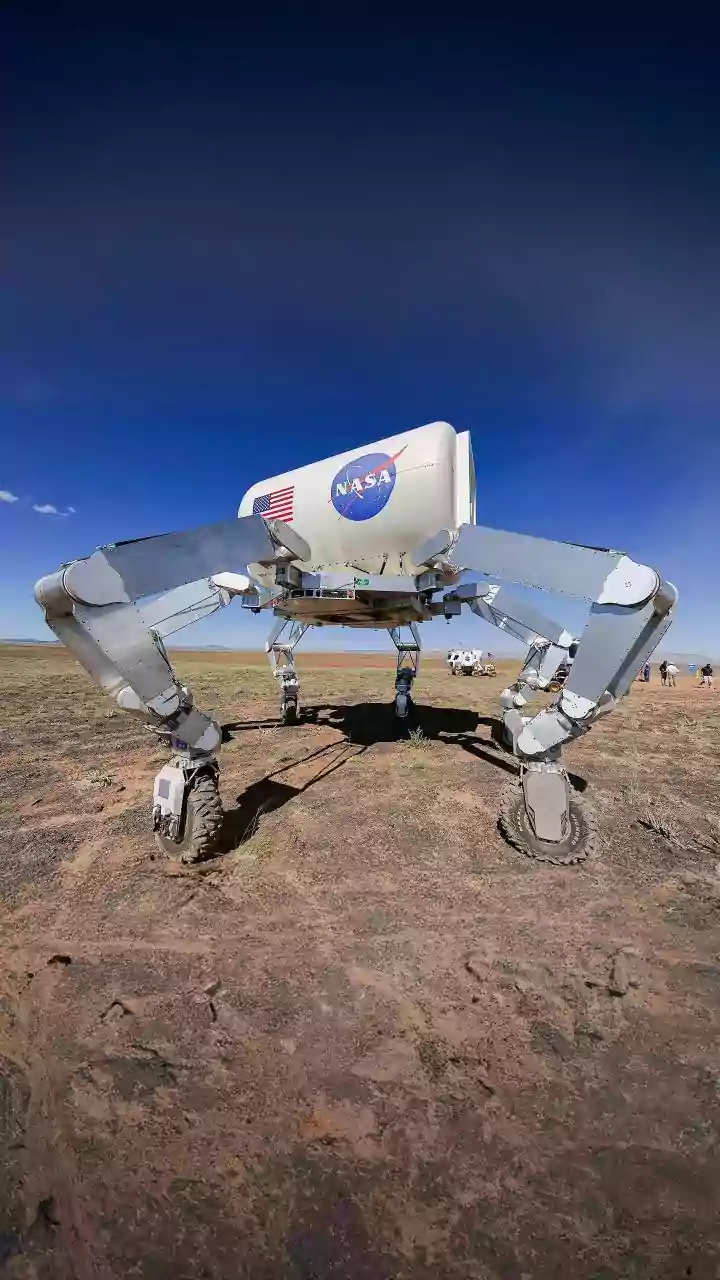
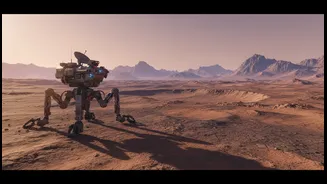
What makes these new robots “smarter” is a combination of sophisticated software and innovative hardware. Prototypes like the Exploration Rover for Navigating Extreme Sloped Terrain (ERNEST) are being tested in Earth’s deserts, which mimic the Martian landscape. ERNEST features an active suspension system that allows it to lift its wheels individually, performing complex maneuvers to climb over obstacles that would stop current rovers. Its AI algorithms, trained in thousands of hours of simulations, allow it to assess its environment and figure out how to traverse difficult features on its own. Other concepts, like the DuAxel rover, take a modular approach. This four-wheeled vehicle can split in two, allowing one half to anchor itself while the other rappels down a steep cliff or into a crater on a tether. These capabilities could unlock access to scientifically rich layered deposits on crater walls, which hold clues to Mars's ancient history.
Unlocking the Secrets of Mars's Caves and Canyons
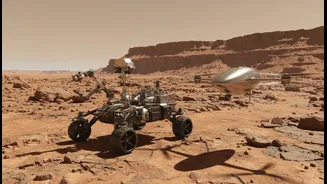
The primary goal of these autonomous systems is to explore previously inaccessible environments where signs of past life might be preserved. Caves and lava tubes are considered high-priority targets because their subterranean nature could protect delicate biosignatures from the harsh radiation and extreme temperatures on the Martian surface. Exploring these dark, unknown environments is impossible with rovers that require a direct line of sight for communication. Fully autonomous robots, however, could venture into these caves, create 3D maps, identify scientifically interesting features, and even collect samples without any prior information about the layout. Similarly, future concepts include advanced aerial explorers, like a proposed Mars Science Helicopter, that could fly for longer distances and carry scientific instruments, autonomously scouting routes for rovers or exploring canyons and mountainsides far from any landing site.