





The Problem with Modern Feet
Our feet are masterpieces of engineering, packed with 26 bones, 33 joints, and over 100 muscles, tendons, and ligaments. They are designed to adapt, grip, and feel the ground. However, we spend most of our lives encasing them in cushioned, supportive
shoes. While comfortable, this constant support can act like a crutch. The small, intrinsic muscles within the foot and around the ankle don't have to work as hard, leading to weakness over time. This process dulls our proprioception—the body's crucial sense of its position in space. When your brain gets less feedback from your feet, it can't react as quickly to prevent a stumble or a roll, making you more prone to sprains and instability.
Why Going Barefoot Is a Game-Changer
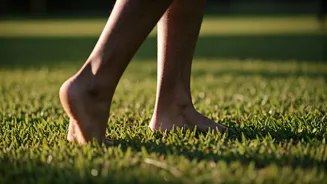
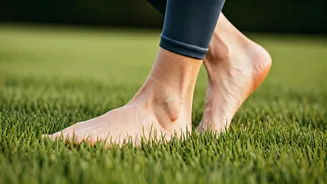
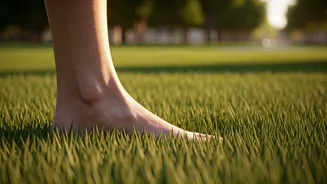
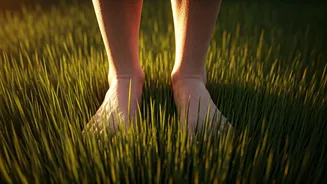
Kicking off your shoes reawakens this entire system. When you walk barefoot on a natural, uneven surface like grass, soil, or sand, your feet are forced to engage. Thousands of nerve endings on the soles of your feet—which are usually smothered by socks and rubber soles—start sending a flood of sensory information to your brain. This sensory data provides a high-definition map of the ground beneath you. In response, the small stabiliser muscles in your feet, ankles, and lower legs have to make constant, tiny adjustments to maintain balance. This isn't just walking; it's active training. Over time, this process strengthens those neglected muscles and sharpens your proprioception, building a stronger, more responsive foundation from the ground up.
The Ground Rules: Start Safely
Before you dash to the nearest park, a few precautions are essential for a safe and beneficial experience. First, pick your spot carefully. Scan the area for any hazards like broken glass, sharp stones, or thorns. A clean, well-maintained patch of grass is ideal for beginners. Second, start slowly. Your feet have been protected for years, so the skin and muscles need time to adapt. Begin with just 10-15 minutes of barefoot time and gradually increase the duration as you feel more comfortable. Pay attention to your body. If you feel any sharp pain (different from general muscle fatigue), stop and rest. It’s also wise to bring a small towel to wipe your feet before putting your shoes back on.
Challenge 1: The Mindful Walk
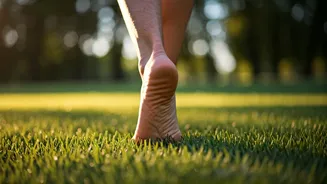
This is your starting point. Find your patch of grass and simply walk. But do it with intention. Pay attention to the sensation of the grass under your feet. Is it soft, damp, prickly? Focus on how your foot lands. Do you land on your heel first, or more towards your midfoot? Try to roll through the foot, from landing to pushing off with your toes. This isn't about speed or distance; it’s about re-establishing the powerful connection between your brain and your feet. This simple act begins the process of retraining your neuromuscular pathways for better balance and control.
Challenge 2: The Uneven Terrain Test
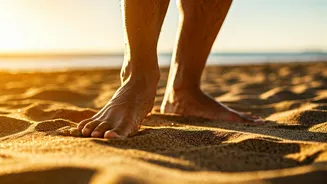
Once you're comfortable on flat grass, seek out slightly more challenging terrain. This could be a gentle, grassy slope, a patch of lumpy ground with small bumps and dips, or even a section with soft soil or sand if available. Walking on these surfaces forces your ankles to work through a greater range of motion. Each step requires micro-adjustments to prevent you from losing your balance. This is where the real stability work happens. Your ankle joints are constantly flexing, extending, and rotating in subtle ways, actively strengthening the ligaments and muscles that support them.
Challenge 3: Single-Leg Balance
Now, let’s isolate the stability challenge. Stand on a comfortable patch of grass and lift one foot off the ground. Try to hold this position for 30 seconds without wobbling excessively. You will immediately feel the hundreds of tiny movements your standing foot is making to keep you upright. The small muscles are firing, your toes might be gripping the ground, and your ankle is working overtime. This is proprioception in action. Switch legs and repeat. If 30 seconds is easy, try closing your eyes for a few seconds to make it significantly harder—removing your visual input forces your feet and ankles to do all the work.