





Start With the Right Doormat
Your first line of defence against monsoon muck is a high-quality doormat. Materials like coir, derived from coconut husks, are excellent for scraping dirt and mud from shoes. However, they can absorb a lot of water. For areas exposed to heavy rain, consider
a mat made from rubber or recycled PVC, often called noodle mats, which are water-resistant and allow drainage. The ideal strategy is a two-mat system: a durable, weather-resistant mat outside to handle the heavy-duty work, and a more absorbent mat inside to catch any remaining moisture. This simple combination drastically cuts down on the amount of water and dirt tracked through your home.
Designate a Zone for Wet Items
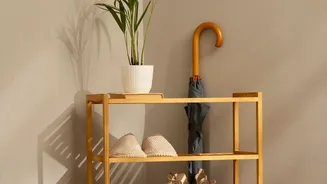
Creating a dedicated spot for dripping umbrellas and soaked raincoats is crucial. An umbrella stand is a simple but effective solution. You can find them in various materials, from classic metal to modern plastic, that fit any decor. For smaller spaces, consider a wall-mounted rack or even a stylish, tall planter to hold umbrellas upright while they dry. Position this holder right by the door to prevent drips across the floor. For footwear, a waterproof boot tray is a must-have. Placing one near the entrance gives family and guests a clear place to leave muddy shoes, containing the mess and protecting your floors.
Rethink Your Shoe Storage
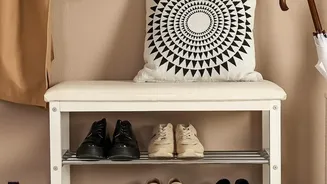
Wet shoes need to breathe. Storing damp footwear in a closed cabinet is a recipe for mould and unpleasant smells. During the monsoon, opt for open storage solutions. An open-tiered shoe rack with slatted shelves allows air to circulate, helping shoes dry faster. To keep things even tidier, place a waterproof tray underneath the rack to catch any dripping water or mud. This keeps your floor clean and makes cleanup effortless. For smaller items like hats and gloves, having designated bins or baskets for each family member can prevent them from piling up and adding to the clutter.
Actively Combat Indoor Humidity
Clutter is only half the battle; the other is the pervasive dampness that high humidity brings. An electric dehumidifier is one of the most effective tools for pulling excess moisture from the air, helping to maintain an ideal indoor humidity level of 30-50%. Place it in your entryway or other damp-prone areas. For a more low-tech approach, use moisture-absorbing products like silica gel packets, activated charcoal bags, or even bowls of sea salt in closets and corners. These materials naturally draw moisture from the air, preventing that sticky, muggy feeling.
Improve Airflow and Freshen the Air
Good ventilation is key to fighting mustiness. Whenever there's a break in the rain, open windows and doors to allow for cross-ventilation, which helps dry out your home and dispel stale air. Using exhaust fans in kitchens and bathrooms is also crucial to expel moisture generated from cooking and showering. To combat lingering damp smells, turn to natural solutions. Burning camphor or placing neem leaves in corners can help deter mould and fungus. A few drops of essential oils like lavender or eucalyptus on cotton balls can freshen up cupboards, while bowls of white vinegar or baking soda can absorb odours.