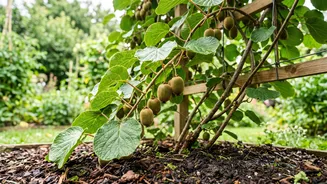







Why Wind is a Threat to Young Vines
While a gentle breeze is harmless, strong or persistent winds are a major challenge for establishing kiwifruit vines. Their new shoots grow incredibly fast, sometimes up to 10 cm per day, but the points where they join older wood are very brittle and
prone to snapping. The large, soft leaves act like sails, catching the wind and putting immense strain on the plant. This leads to two types of damage. The first is physical: shoots can break, leaves get shredded, and developing fruit can be scarred from rubbing against branches, which reduces its quality. The second is physiological. Wind strips moisture from the leaves faster than the young roots can absorb water, causing the plant to dry out and experience stress, which slows its growth.
The First Step: Strategic Planting
The best defence starts before you even plant. Kiwifruit vines thrive in warm, sunny and sheltered locations. A spot against a south- or west-facing wall is often ideal as it provides warmth and a solid barrier against prevailing winds. Observe your garden to identify its wind patterns and avoid low-lying 'frost pockets' where cold air settles, as young shoots are also extremely vulnerable to frost. When you select your site, remember that these are vigorous climbers that need a sturdy support like a strong trellis or pergola, which should be installed before planting to avoid disturbing the roots later. Giving your vine a sheltered start is the single most effective way to ensure its long-term health.
Building a Better Barrier: Windbreak Options
If a perfectly sheltered spot isn't available, you can create one. Windbreaks work best when they filter the wind rather than blocking it completely, as a solid wall can create damaging turbulence on the other side. You have two main options: natural and artificial. Natural windbreaks, such as a row of hardy shrubs or trees, are attractive and beneficial for local wildlife. However, they can take several years to become effective. For immediate protection, artificial windbreaks are a great solution. Specialty windbreak netting attached to sturdy posts is a popular and affordable choice for home gardeners. It's designed to slow the wind down without stopping airflow completely. You can also construct temporary barriers using fencing or other materials to shield a very young plant during its first crucial years.
Techniques for Temporary Protection
For newly planted vines, even a simple, temporary shield can make a world of difference. You can create a small, three-sided screen around the base of the plant using bamboo stakes and horticultural fleece or shade cloth. This protects the most vulnerable part of the vine while it develops a stronger root system. Some gardeners use plastic spiral wraps or grow-tubes around the main trunk to shield it not only from wind but also from sunscald and rodent damage. As the vine grows and begins to climb its trellis, ensure you tie the new canes to the support structure as soon as they are long enough. This prevents them from whipping around in the wind and provides stability as they develop.
Supporting Overall Plant Health
A healthy, well-cared-for plant is naturally more resilient to environmental stress, including wind. Ensure your kiwifruit vine is planted in well-drained soil rich in organic matter. Kiwis are sensitive to both drought and overwatering, so maintaining consistent moisture is key, especially during dry spells. A layer of mulch around the base of the plant will help retain soil moisture, suppress weeds, and keep the roots cool. Regular feeding with a balanced fertiliser during the growing season will provide the nutrients needed for vigorous growth, helping the vine quickly grow strong enough to withstand the elements on its own.