


The Sun’s Hidden Temper
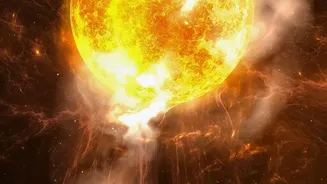
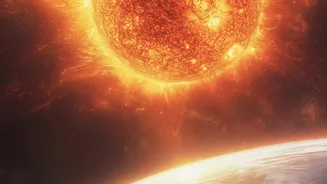
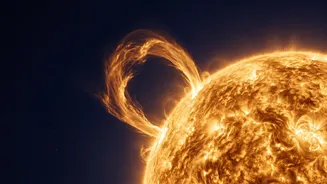
Our star is a dynamic and sometimes volatile object. While solar flares are intense bursts of radiation, the bigger threat to our infrastructure comes from Coronal Mass Ejections (CMEs). These are colossal explosions in the Sun's atmosphere that blast
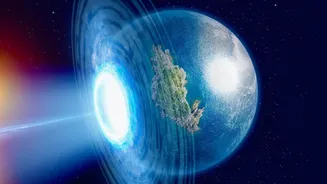
enormous clouds of magnetised plasma into space. If a CME is aimed at Earth, it travels millions of kilometres and can reach our planet in anywhere from less than a day to several days. While our planet’s magnetic field protects us from most solar radiation, a powerful CME can interact with it violently, triggering a significant geomagnetic storm.
A Shock to the System
A geomagnetic storm can create havoc for ground-based technology. As the Earth's magnetic field shifts and wobbles, it induces powerful, low-frequency electrical currents in the ground, known as Geomagnetically Induced Currents (GICs). These currents seek the path of least resistance, which often means long conductors like pipelines and, crucially, high-voltage transmission lines. When GICs flow into power grids, they can enter large transformers, causing them to saturate. This saturation can lead to overheating, damage, and widespread grid instability, potentially causing blackouts that could last for hours, days, or even longer if key equipment is permanently damaged.
A Historical Warning
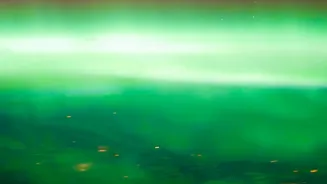
This isn't just a theoretical threat. In 1859, the most powerful geomagnetic storm in recorded history, known as the Carrington Event, struck Earth. The CME arrived in just over 17 hours, causing telegraph systems worldwide to fail, with some operators receiving electric shocks and sparks setting paper ablaze. Auroras were seen as far south as the tropics. A more modern example occurred in March 1989, when a less intense storm collapsed the Hydro-Québec power grid in Canada, plunging millions into darkness for nine hours. A Carrington-level event today could have a catastrophic impact on our highly electrified world.
The Eyes on the Sky
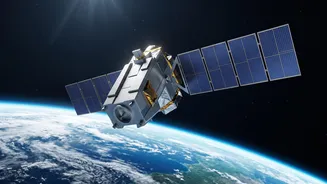
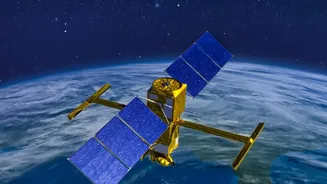
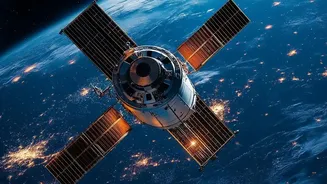
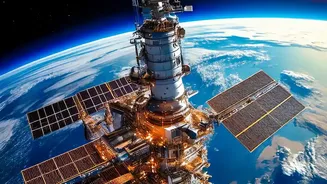
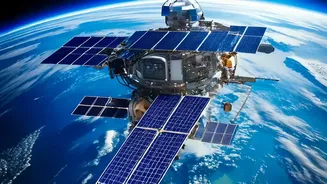
This is where solar weather alert networks come in. They are our planetary defense system against these events. The first line of defense is a fleet of spacecraft strategically positioned between the Earth and the Sun. Satellites like NASA's Advanced Composition Explorer (ACE) and NOAA's Deep Space Climate Observatory (DSCOVR) are located at a gravitationally stable point about 1.6 million kilometres from Earth. From this vantage point, they constantly monitor the solar wind—the stream of charged particles flowing from the Sun—and can detect an Earth-bound CME. This provides a crucial early warning, typically giving us 15 to 60 minutes, and sometimes hours, of lead time before the storm hits.
From Warning to Action
Once a threat is detected, agencies like NOAA's Space Weather Prediction Center (SWPC) issue watches, warnings, and alerts to governments and infrastructure operators. Armed with this advance notice, power grid operators are not helpless. They can take protective measures to brace the grid for impact. These actions can include reducing the load on the system, postponing non-critical maintenance, bringing extra power generation online to increase reserve capacity, and in some cases, strategically disconnecting vulnerable transformers to prevent them from absorbing the damaging GICs. This proactive approach turns a potential disaster into a manageable operational challenge.
India's Solar Shield
India is also actively bolstering its capabilities in this domain. The Aryabhatta Research Institute of Observational Sciences (ARIES) in Nainital plays a key role, collaborating with the Indian Space Research Organisation (ISRO) on Space Situational Awareness (SSA). This includes monitoring space weather and developing algorithms like CIISCO to automatically detect CMEs. These efforts are vital for protecting India's own growing space assets and critical ground infrastructure. The Aditya-L1 mission, India's first dedicated solar observatory, is designed to provide continuous observation of the Sun, further enhancing the country's ability to monitor and forecast disruptive solar events.