





Know Your Window of Opportunity
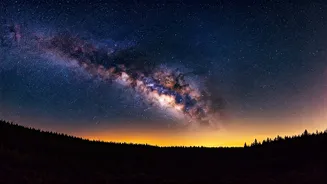
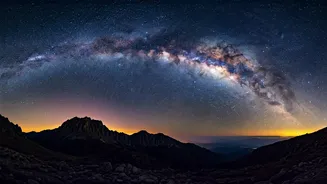
Timing is everything. The brilliant, dusty core of the Milky Way is most visible in the Northern Hemisphere during the summer months, from roughly June through September. During this period, the galactic center rises in the southeast and arcs across the southern
sky throughout the night. But there’s another critical factor: the moon. A full moon acts like a giant, sky-wide flashlight, washing out all but the brightest stars. The ideal time for your celestial adventure is during the New Moon phase, or the week leading up to it or following it, when the moon is either absent or a faint crescent that sets early. Check a lunar calendar online; if the moon is less than a quarter full, you’re in good shape to see the galaxy's sprawling, hazy glow.
The Enemy: Light Pollution
For the vast majority of Americans, the night sky is just a handful of stars against a murky orange backdrop. This is light pollution, the collective glow of streetlights, office buildings, and homes that obscures our view of the cosmos. To see the Milky Way, you must escape it. Your mission is to find a location with as little artificial light as possible. Astronomers use the Bortle Scale, a nine-level system, to measure sky darkness. Cities are a Level 8 or 9, where you can barely see the Big Dipper. You need to get to a Level 4 or, ideally, a Level 3 or lower. This typically means driving at least an hour, and often two, away from any major metropolitan area. Think state parks, national forests, or designated dark sky sanctuaries.
Finding Your Dark Sky Haven
So, where do you go? Start with a light pollution map online (like lightpollutionmap.info) to find the nearest “gray,” “blue,” or “black” zones. These are your targets. National Parks and State Parks are often your best bet, as they are large, undeveloped, and frequently far from urban centers. Many parks even have dedicated stargazing areas. For the ultimate experience, seek out an official International Dark Sky Park. These are locations certified for their pristine night skies and commitment to reducing light pollution. A quick search for “dark sky park near me” will point you to these premier viewing spots. When you arrive, look for a spot with a clear, open view of the southern horizon, away from trees or hills that might block the main event.
Pack for Patience and Comfort
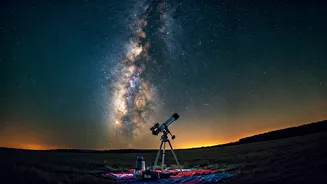
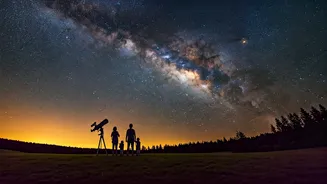
You don't need a telescope, but you do need to be prepared. The number one rule of stargazing is to preserve your night vision. Your eyes take about 20-30 minutes to fully adapt to the dark, and a single blast of white light from a phone or flashlight will reset the clock. Use a red-light headlamp or cover a regular flashlight with red cellophane. Red light has a longer wavelength that doesn't trigger the contraction of your pupils. Pack a comfortable folding chair or a thick blanket to lie on. Binoculars can be a fantastic tool, allowing you to scan the star-dense regions of the Milky Way and feel like you're falling into the galaxy. And don't forget layers of clothing; even on a summer night, it can get chilly when you're sitting still for hours.
The Art of Seeing
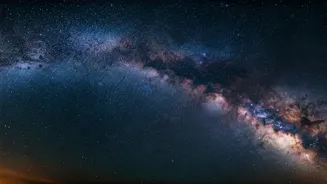
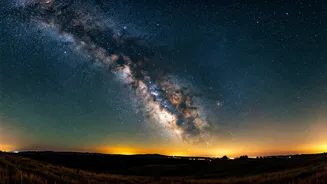
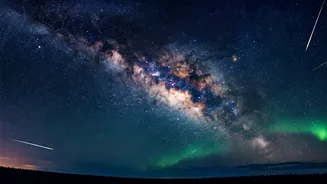
Once you're settled in your dark location, turn off all lights and just wait. This is the hardest part for our stimulation-addicted brains. After about 15 minutes, you'll notice more and more stars appearing. After 30 minutes, the sky will be teeming with them. Look to the south. You aren’t looking for a sharp, defined object. The Milky Way will appear as a faint, patchy, cloud-like band stretching across the sky. It won't look like the ultra-vivid, colorful images you see online—those are long-exposure photographs. To the naked eye, it’s a more subtle, silvery mist. Use your binoculars to explore its brightest region, Sagittarius, which looks like a teapot pouring steam into the galactic core. That “steam” is a collection of billions of stars, so dense they blur into a single, breathtaking glow.