


The debate is a classic: is a green, starchy banana healthier than a sweet, yellow one? The truth is more nuanced. The best choice depends on your health goals, and the secret to getting it right lies in a factor many people overlook: portion size.
The Great Banana Divide: Starch vs. Sugar
At
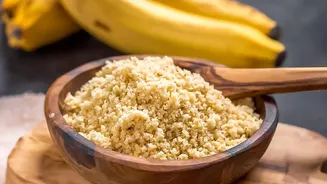
the heart of the raw versus ripe debate is a simple chemical process. As a banana ripens, its composition changes dramatically. A green (raw) banana is packed with resistant starch, a complex carbohydrate that your body doesn't easily digest. As the fruit yellows, enzymes convert these starches into simple sugars like sucrose, glucose, and fructose, making it sweeter and softer. An unripe banana can be up to 80% starch by dry weight, while a fully ripe one may contain only 1% starch. This fundamental shift from starch to sugar is what creates the different health impacts.
The Case for Raw (Green) Bananas
If you're managing blood sugar or focused on gut health, a green banana is your ally. Because it's high in resistant starch and a fibre called pectin, it has a low glycemic index (GI), typically around 30-42. This means it releases sugar into the bloodstream slowly, preventing sharp spikes. This resistant starch isn't digested in the small intestine; instead, it travels to the colon, where it acts as a prebiotic, feeding beneficial gut bacteria. This process can improve digestive health and increase feelings of fullness, which can aid in weight management. However, some people find green bananas have a slightly bitter taste and a firm, waxy texture. The high starch content can also cause gas or bloating in those not used to it.
The Appeal of Ripe (Yellow) Bananas
Ripe bananas are often preferred for their sweet taste and creamy texture. As the starch converts to sugar, they become easier to digest, making them a great source of quick energy, which is ideal before a workout. Ripe bananas also have higher levels of antioxidants compared to their green counterparts. While their GI is higher (around 51-62), it's still in the low-to-medium range, meaning a moderate portion is unlikely to cause a dramatic blood sugar spike in most healthy individuals. They are also an excellent source of nutrients like potassium, which supports heart and kidney function, and vitamin B6, which is important for mood regulation and immune health.
Why Portion Size Changes Everything
This is where the comparison gets truly interesting. While ripeness determines a banana's GI, the actual impact on your blood sugar depends on the glycemic load (GL), which accounts for portion size. A very large green banana could raise your blood sugar more than a very small ripe one. A medium banana (about 118 grams) typically contains around 105 calories, but sizes can vary dramatically from extra small (72 calories) to extra large (135 calories). Two small ripe bananas have more calories and sugar than one large one. If you're managing diabetes or counting calories, choosing a smaller banana, regardless of ripeness, can make a significant difference. Pairing a banana with a source of protein or fat, like a handful of nuts or a spoonful of yogurt, can also slow sugar absorption and keep you feeling full longer.
So, Which Banana Should You Choose?
There is no single 'best' banana for everyone. The right choice depends on your individual health needs and preferences. If your priority is blood sugar control or improving gut health through prebiotics, a smaller, greener banana is a better option. If you need a quick energy boost for physical activity or simply prefer a sweeter, easier-to_digest fruit, a ripe banana is an excellent choice. The most important takeaway is that both green and ripe bananas can be part of a healthy diet. Instead of getting caught up in which is superior, focus on mindful portion control. Enjoy the banana you prefer, but be conscious of its size and how it fits into your overall daily intake.