






At a glance, hiking and skateboarding seem to occupy different worlds. One is about serene nature trails, the other about concrete cityscapes. Yet both activities demand a profound connection to the ground beneath your feet. Which is right for you?
The Meditative Scan of the Trail
Hiking
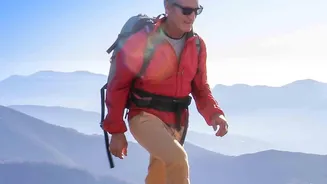
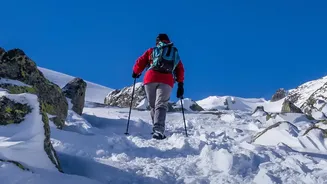
is an exercise in broad, forward-thinking awareness. Your attention is drawn to the path several feet, or even yards, ahead. You engage in a rhythmic, almost meditative scan for obstacles: exposed tree roots, loose rocks, sudden dips, or muddy patches. This type of focus allows for anticipation and planning. Your body has time to adjust its gait and prepare for a change in elevation. Research shows that walking on uneven terrain requires significantly more energy and mental engagement than walking on a flat surface. This constant, but not frantic, need to adapt to the trail strengthens muscles in the hips, knees, and ankles that are often underused in daily life. This form of attention can be deeply grounding, fostering mindfulness as you become attuned to the sights, sounds, and feel of the natural environment. It’s a lower-intensity focus that calms the mind while keeping it engaged.
The High-Alert Focus of the Surface
Skateboarding demands an entirely different, more intense form of attention. The focus is not yards ahead, but directly in the immediate path of your wheels. A tiny pebble, a small crack in the pavement, or an almost invisible change in surface texture can mean the difference between a smooth glide and a sudden, painful fall. This creates a state of hyper-awareness, where your brain must process visual information and react in fractions of a second. This develops what is known as proprioception—your brain's internal map of where your body is in space—to an incredibly high degree. The constant, split-second adjustments required to maintain balance while in motion create a unique feedback loop. Every push, turn, and landing requires micro-adjustments from your vestibular system, the sensory network in your inner ear that controls balance and spatial orientation.
Navigating Nature vs. Concrete
The obstacles themselves define the experience. A hiker contends with natural, often predictable challenges. A steep incline is strenuous but straightforward. A creek crossing requires planning, but the water and rocks are part of an organic landscape. A skateboarder, on the other hand, navigates a world of artificial and often unforgiving obstacles. Stairs, handrails, curbs, and ledges are not designed for skating, making their traversal a creative, and often risky, act of reinterpretation. Even in a skatepark, where obstacles are purpose-built, they mimic the harsh angles of the urban environment. This difference is fundamental: hikers move through a landscape, while skateboarders repurpose it. The mental challenge for a hiker is one of endurance and adaptation to natural forms; for a skater, it’s about precision, timing, and conquering man-made geometry.
The Cognitive and Mental Payoff
Both activities are powerful tools for mental wellbeing, but they build different strengths. The steady, mindful focus of hiking is proven to reduce stress, calm anxiety, and promote mental clarity. It pulls you out of your own head and grounds you in the present moment. Skateboarding offers a more high-octane mental workout. The process of trying a trick, failing repeatedly, and finally succeeding creates a powerful 'earned dopamine' loop that builds resilience and a growth mindset. It forces you into a 'flow state', where self‐doubt fades and you are completely absorbed in the moment. This intense focus has been shown to be beneficial for managing conditions like ADHD, as it trains the brain in motor control, balance, and dexterity. It also rewires how the brain manages fear, teaching it to prepare for a challenge rather than avoid it.