







A High-Stakes Celestial Repair Job
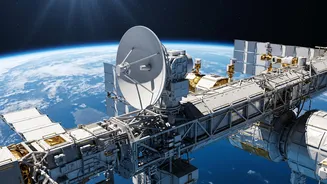
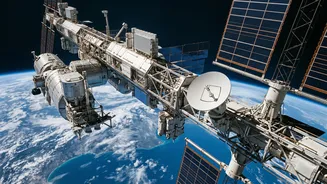
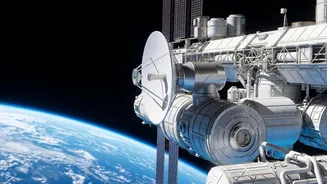
On August 25, two astronauts, NASA’s Anil Menon and the European Space Agency’s (ESA) Sophie Adenot, concluded a demanding six-and-a-half-hour spacewalk to replace a faulty Space-to-Ground Antenna (SGANT). This wasn't their first attempt. The duo had
ventured outside the station on August 18 to remove the broken hardware but ran out of time before they could install its replacement. The second spacewalk saw them successfully mount a spare antenna onto the station's truss structure, restoring a vital backup system. The success was palpable, with a message from ground controllers declaring, “you just saved the video dish.”
The Lifeline to Earth
The International Space Station relies on a robust communications network to stay connected with Mission Control. These systems, which include S-band and Ku-band frequencies, are not just for sending breathtaking images back to Earth. They are the station’s nervous system, transmitting a constant stream of telemetry—health and status data from thousands of components—as well as scientific results. This link also provides voice and video communication for the crew and is essential for navigating the docking of arriving and departing spacecraft. While the ISS has redundant systems, the failure of one of its two high-speed antennas months ago eliminated a critical safety margin, making its replacement a high priority for NASA.
The Dangers and Details of the Fix
Working in space is an inherently risky and physically demanding task. During the spacewalk, Menon, an Indian-American flight surgeon and NASA astronaut on his third extravehicular activity (EVA), was positioned at the end of the Canadarm2 robotic arm to handle the bulky hardware. Adenot, a helicopter test pilot who made history on the previous outing as the first French woman to perform a spacewalk, assisted by traversing handrails. The pair first retrieved the spare antenna from an external storage platform. After carefully installing and connecting the new unit, they moved the faulty antenna they had previously detached to a long-term storage spot, clearing the worksite. The entire operation was the 283rd spacewalk in support of ISS maintenance since its assembly began.
Why Redundancy Is Everything in Orbit
In the isolated environment of space, a backup system is not a luxury; it is a necessity. The successful repair restores the full redundant capabilities of the station's primary communication links. This means that if the other primary antenna were to experience an issue, the station would not lose its high-speed connection to Earth. This resilience is crucial for ensuring the safety of the crew and the integrity of the multi-billion dollar orbiting laboratory. As the ISS ages and approaches its planned retirement, maintenance campaigns like this one become increasingly vital to keep it operating safely and effectively. This series of spacewalks was part of a larger effort to upgrade and stabilize the station's systems for its final years of operation.