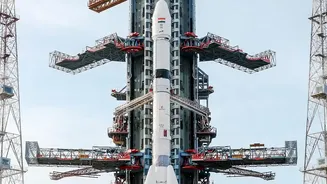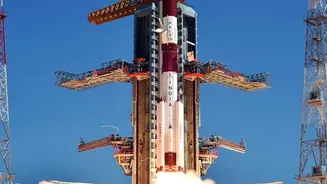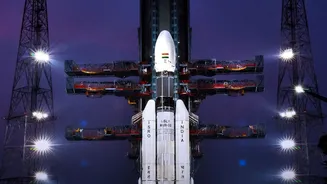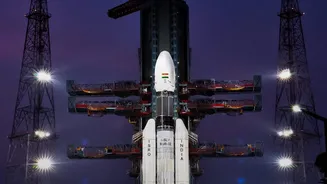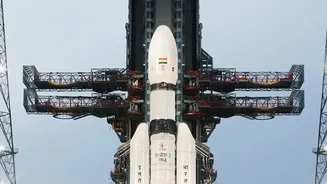



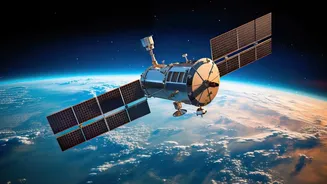
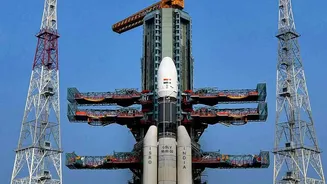
The Indian Space Research Organisation (ISRO) marked October 30, 2026, for a pivotal launch. On that day, the NVS-03 satellite successfully lifted off, a mission designed to strengthen India's homegrown navigation system.
A Successful Launch
On the night of October 30, 2026,
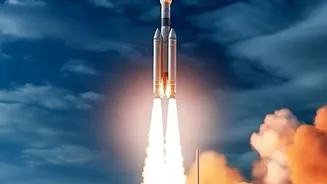
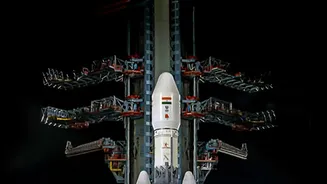
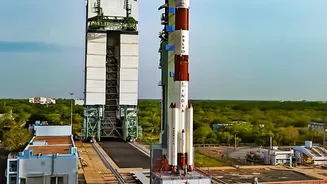
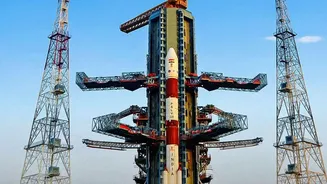
ISRO's Geosynchronous Satellite Launch Vehicle (GSLV-F18) rocket successfully launched the NVS-03 satellite from the Satish Dhawan Space Centre in Sriharikota. The 2,250 kg satellite was precisely injected into its intended Geosynchronous Transfer Orbit about 18 minutes after liftoff. This launch was a critical step in revitalizing India's regional navigation satellite system, known as Navigation with Indian Constellation (NavIC). The successful mission marks a significant achievement, ensuring the continuity and enhancement of the country's independent navigation capabilities.
Why NVS-03 is Crucial for NavIC
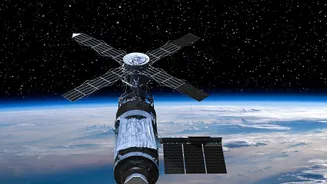
The NavIC system, India's alternative to the US-owned GPS, provides vital positioning, navigation, and timing services for the country and a region extending 1,500 km beyond its borders. However, the constellation had faced challenges. Prior to this launch, repeated failures of atomic clocks on older satellites had crippled the system, leaving only three satellites fully operational. A minimum of four satellites are required for NavIC to provide basic, standalone positioning services. The successful launch of NVS-03 restored this minimum operational capacity, bringing the number of active satellites back to four and ensuring the system could function independently again.
Next-Generation Technology
NVS-03 is the third satellite in a new generation designed to be more robust and capable than their predecessors. A key upgrade is the inclusion of an indigenously developed Rubidium atomic clock. These clocks are the heart of any navigation satellite, providing the ultra-precise time measurements needed to calculate a user's exact location. Failures of imported clocks on earlier satellites prompted India to develop its own, and NVS-03 now carries this homegrown technology into orbit alongside imported ones, moving India closer to self-reliance. Furthermore, the NVS-03 introduces a new L1 frequency band, which is widely used by civilian GPS devices. This makes NavIC more compatible with standard consumer electronics and should improve service for smartphones and vehicle trackers.
The Strategic Importance of NavIC
Operating an independent navigation system is a matter of strategic autonomy for India. The country was motivated to create NavIC after being denied access to GPS data by the United States during the Kargil War in 1999. Having a sovereign system ensures that critical navigation and timing services for military operations, disaster management, and essential infrastructure like power grids and telecommunications remain secure and accessible, regardless of geopolitical tensions. NavIC provides two tiers of service: a Standard Positioning Service (SPS) for all civilian users and an encrypted Restricted Service (RS) for authorised users, including the military.
What Comes Next for India's Navigation System
While the NVS-03 launch is a major success, it is part of a larger plan. ISRO intends to launch a series of five secondndndgeneration satellites to fully augment and modernise the NavIC constellation. The original system was designed for seven active satellites, and reaching this number will be necessary to provide the full range of services and accuracy across the region. ISRO Chairman Dr. V. Narayanan stated that the entire constellation would need to be completed before the service could be fully integrated with mobile systems for wider public use. This mission also highlights the growing role of private industry in India's space ecosystem, with hundreds of companies contributing to the launch.