








The End of an Era for Paper Forms
For decades, the final step before landing in Australia has been a familiar ritual: the hunt for a pen to fill out the paper Incoming Passenger Card. Handed out by cabin crew on international flights, this form has been the primary way the Australian
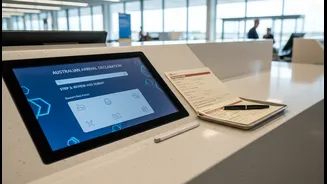
government collects customs and biosecurity information from arriving travellers. But the days of deciphering cramped handwriting and juggling passports on a tray table are numbered. The Australian government has announced it is phasing out the paper cards in favour of a new digital system called the Australia Travel Declaration (ATD). This move aims to modernise the arrival process, bringing Australia in line with other major destinations like Singapore and New Zealand that have already gone digital. The government is investing over A$56 million into the project, promising a quicker, more seamless experience for millions of visitors.
Introducing the Digital Arrival Declaration
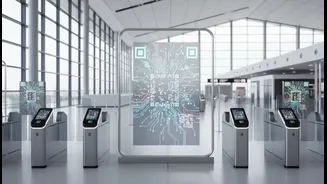
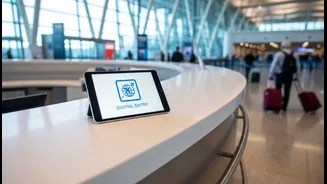
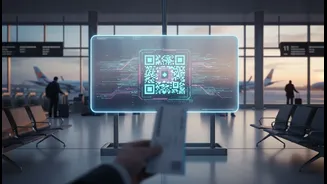
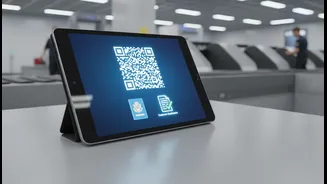
The Australia Travel Declaration is designed to replace the physical card entirely. Instead of filling out a form on the plane, travellers will be able to submit their declaration online before they even depart. The system allows passengers to complete their details up to 72 hours before their flight. Once submitted, the system generates a unique QR code, which is then sent to the traveller's email and can be saved on their phone. This digital pass is then scanned by Australian Border Force officers upon arrival, simplifying the customs and immigration process. The change follows a successful trial involving over 450,000 passengers on select Qantas flights into Sydney, Melbourne, and Brisbane, which began in late 2024. The goal is to reduce manual processing, improve the quality of data collected for security and biosecurity risk assessments, and meet traveller expectations for a modern, digital border experience.
The Caveat: A Phased Rollout
While the news signals a major shift, travellers shouldn't throw away their pens just yet. The headline-making change comes with a significant caveat: the rollout is being phased in gradually over 12 to 18 months. The initial phase will see the Qantas trial expand to Perth and Adelaide by the end of 2026. Following that, the system will be progressively introduced at all other international airports and seaports. Initially, the digital declaration will be accessible via a web-based form. Only later will the government work with other airlines to integrate the function into their own apps, similar to the current Qantas trial. This means for the immediate future, whether you can use the digital system will depend on which airline you fly and which airport you arrive at.
Why Paper Cards Will Linger
The most important detail for travellers is that paper arrival cards will remain available as a backup. The government has confirmed that for passengers who cannot access or complete the digital declaration, the traditional orange cards will still be provided. This ensures that no one is left stranded due to a dead phone battery, lack of internet access, or simply being unfamiliar with the new technology. This dual system is a practical necessity during the transition period. It acknowledges that a nationwide shift involving millions of travellers from diverse backgrounds requires a safety net. It also provides a fallback for technical glitches, which have plagued previous attempts to digitise Australia's border. A Digital Passenger Declaration app launched in 2022 was later scrapped after negative user feedback, making this gradual, cautious approach a lesson learned.
What This Means for Indian Travellers
For the many Indian citizens who travel to Australia for tourism, business, or to visit family, this change will eventually simplify the arrival process. Applying for an Australian visa, such as the popular Subclass 600, is already a fully digital process done through an online ImmiAccount. The digital arrival declaration is the logical next step in creating a fully paperless journey from application to arrival. In the short term, however, it adds a layer of awareness. Travellers should check with their airline before flying to see if they are eligible for the digital declaration. If not, they should be prepared to fill out the paper form as usual. Regardless of the method, the information required remains the same: personal details, flight information, and declarations about goods being brought into the country for biosecurity purposes.