



Tree Pose, or Vrksasana, is a cornerstone of yoga, testing our balance and focus. But what if balance feels out of reach? Using a wall isn't a crutch; it's a powerful tool for practitioners of all levels to refine and explore this pose.
The Roots of Tree Pose
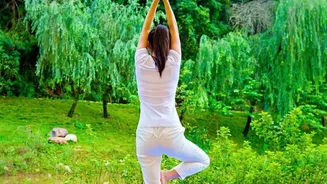
Vrksasana is more
than just standing on one leg. It’s a pose that symbolizes strength, stability, and growth. By rooting one foot into the ground, we mimic a tree's connection to the earth, strengthening the muscles in our feet, ankles, and legs. The pose challenges our physical balance and mental focus, asking us to find stillness amid the wobble. It stretches the inner thighs and groin, opens the hips, and helps to lengthen the spine. The goal is not just to avoid falling, but to cultivate a calm and steady mind. A fixed gaze, or 'drishti', is crucial for maintaining equilibrium.
Why Invite a Wall to Your Practice?
Using a prop like a wall is often misunderstood as a sign of inexperience. In reality, it’s a smart way to enhance your practice. The wall provides immediate tactile feedback, helping your nervous system understand your body's alignment without the fear of falling. This added security allows you to shift your focus from simply staying upright to refining the finer points of the pose. You can work on opening your hip, lengthening your spine, and ensuring your standing leg is properly engaged. For beginners, it builds confidence; for experienced yogis, it offers a chance to hold the pose longer and explore its subtleties.
Variation 1: Fingertip Support
This is the most common entry point for using a wall. Stand parallel to a wall, with your side facing it. Place the fingertips of your nearest hand lightly on the wall for support. Shift your weight onto the foot closer to the wall. Begin by lifting the heel of your other foot, keeping the toes on the floor like a kickstand. When you feel steady, lift your foot to your inner calf or, with the help of your hand, to your inner thigh. Avoid placing the foot directly on your knee joint. Use the wall only as much as you need, and notice how it helps you stabilize. Hold for several breaths before switching sides.
Variation 2: Back Against the Wall
For maximum support and alignment feedback, practice with your back against the wall. Stand with your heels a few inches from the wall, and press your sacrum (the flat bone at the base of your spine) and shoulder blades against it. Shift your weight to one leg and bring your other foot into your Tree Pose position on your calf or thigh. This variation makes it very clear if your hips are not square. The wall provides a solid reference point, encouraging a longer spine and preventing you from leaning forward or backward. This is an excellent way to build the muscle memory needed for a freestanding pose.
Variation 3: Knee to the Wall
Another effective variation involves using the wall to support the bent knee. Stand facing the wall. Shift your weight into one leg and lift the other into Tree Pose. Then, turn your body so the bent knee can press gently into the wall. This variation offers a unique form of stability, leaving your hands free to come to a prayer position at your heart or extend overhead. It helps you focus on opening the hip of the bent_leg side while keeping the standing leg strong and stable.
Deepening Your Practice with Support
Once you feel stable with the wall's assistance, you can begin to explore the pose more deeply. The security of the wall frees you to experiment. Can you press the sole of your foot more firmly into your thigh, and your thigh back into your foot? Can you lengthen your tailbone toward the floor and lift your chest? With the balance component managed by the wall, you can investigate these alignment cues with greater awareness. You might even challenge your balance by closing your eyes for a moment or lifting your gaze toward the ceiling, knowing the wall is there to catch you.