






The Irresistible Pull of Petrichor
The phenomenon often begins with a smell. That earthy, fresh aroma of the first rain on dry ground, known as petrichor, is a powerful sensory trigger. This scent comes from a compound called geosmin, produced by soil bacteria, which is released into the air
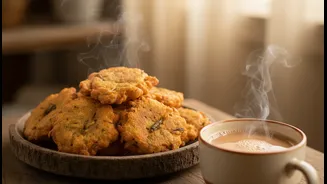
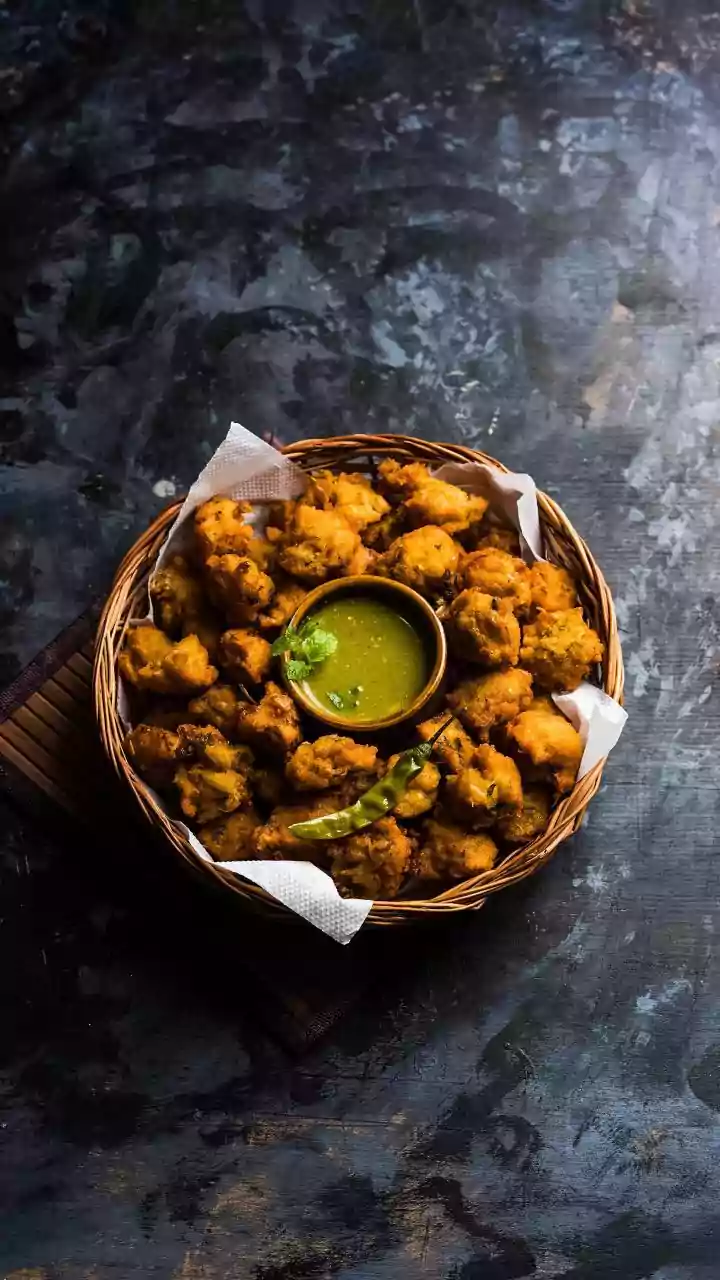
by raindrops. The human nose is incredibly sensitive to it. Our brains process smells in the same regions responsible for emotion and memory. For many, this scent is deeply linked to positive, nostalgic memories: childhood, family gatherings, and the relief from summer heat. This powerful association between a beloved smell and happy memories can activate cravings before the first pakora is even fried.
A Craving for Contrast
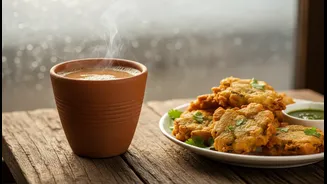
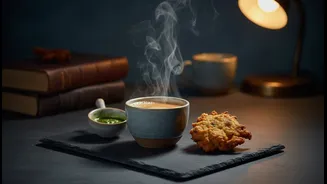
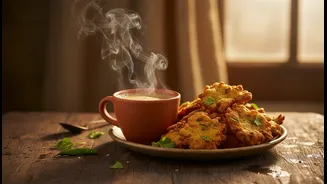
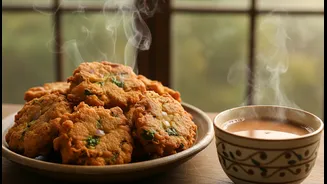
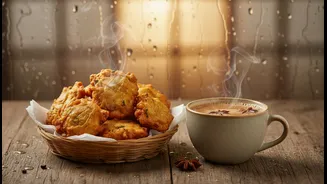
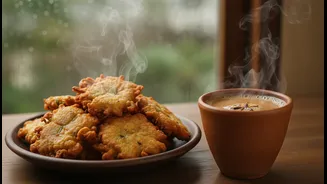
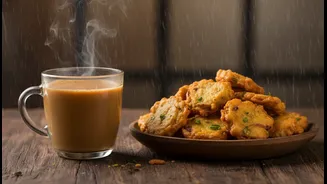
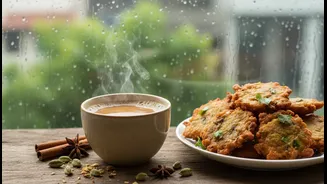
Monsoon weather creates a specific sensory environment: cool, damp, and humid. In this setting, our brains instinctively seek contrast. The appeal of a freshly fried samosa, bhajiya, or vada lies in its textural opposition to the surroundings. The crispiness and crunch provide a deeply satisfying counterpoint to the soft, sluggish feeling of a damp day. Temperature plays a role, too. The cooler air makes us gravitate towards foods that provide physical and psychological warmth. A steaming cup of masala chai or a hot-off-the-kadhai snack doesn't just warm our hands; it creates an internal feeling of comfort and pleasure that feels especially right during gloomy weather.
The Chemistry of Comfort
There's also a biochemical reason these snacks feel so good. The dimmer light and grey skies of the monsoon can lead to a dip in serotonin, the body’s natural mood-stabilising hormone. To counteract this, the brain craves carbohydrates and fats. Foods high in these components, like most fried snacks, help boost the production of serotonin. They activate the brain's reward system, triggering the release of dopamine, which makes us feel good. This chemical feedback loop reinforces the behaviour, making us reach for another piece not just for taste, but for the subconscious mood boost it provides.
More Than Food, It's a Ritual
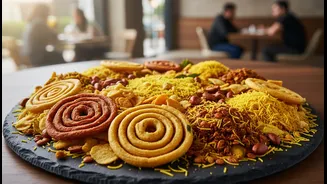
Monsoon snacking is rarely a solitary act. It is a deeply social and cultural ritual. Across India, the season is marked by specific food traditions, from Mumbai's vada pav to Kolkata's telebhaja and Delhi's pakoras. Families gather, friends make impromptu plans, and colleagues step out from the office for a shared break. This act of sharing food reinforces the positive associations. Over years and generations, the sequence of rain, chai, and snacks becomes a cherished tradition. The brain anticipates this ritual, and the pleasure associated with it, making the craving a form of happy expectation. It’s about connection and community as much as it is about consumption.
Memory on a Plate
Ultimately, every plate of monsoon snacks is a plateful of memories. Recent research highlights how our brains create specific memory traces for high-calorie foods, linking them to sensory cues and emotions. These food memories can drive hunger even when we're not physically hungry. For many Indians, the taste of a pakora or roasted bhutta is inseparable from the memory of being with loved ones, watching the rain from a window, and feeling safe and happy. The food is a vehicle for nostalgia, transporting us back to simpler, warmer moments. It is this powerful connection to our personal and cultural history that makes monsoon snacking feel less like an indulgence and more like coming home.