







Hoh Rainforest, Washington
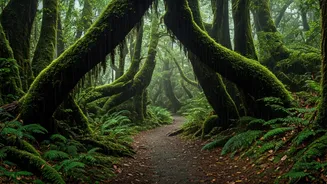
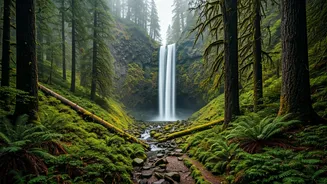
Let’s start with the obvious, because it’s the gold standard for a reason. The Hoh Rainforest, part of Olympic National Park, doesn’t just tolerate rain; it thrives on it. Receiving up to 14 feet of precipitation annually, this temperate rainforest is a world
of impossible green. When it rains, every surface comes alive. The thick carpets of moss and ferns covering ancient Sitka spruce and Western hemlock trees become deeply saturated, glowing with an emerald intensity. The air grows heavy with the scent of damp earth and decaying leaves. A rainy-day hike on the Hall of Mosses trail feels less like a walk in the park and more like stepping into a prehistoric fantasy world, where the sound of raindrops on giant leaves is the only soundtrack you need.
Savannah, Georgia
A sunny day in Savannah is lovely, but a rainy day is pure Southern Gothic romance. The city's famous Spanish moss, draped languidly from live oak trees, takes on a silvery, almost mournful beauty as it drips with water. The cobblestone streets of the historic district, particularly along River Street, become slick and reflective, mirroring the soft glow of gas lamps and historic storefronts. Instead of crowds, you’ll find a quieter, more intimate city. Ducking into a cozy pub or a centuries-old inn for shelter feels like part of the experience, not an inconvenience. The rain encourages a slower pace, perfect for appreciating the moody, timeless atmosphere of Savannah’s storied squares and hidden courtyards.
Cannon Beach, Oregon
The Oregon Coast is built for dramatic weather, and Cannon Beach is its moody masterpiece. This isn't a lie-on-the-sand-and-soak-up-rays kind of beach. Its magic lies in the collision of sea, sky, and stone. On a gray, drizzly day, the iconic Haystack Rock and its neighboring sea stacks are often shrouded in a moving mist, making them appear and disappear like geological ghosts. The ocean turns a steely gray, and the crashing waves feel more powerful and majestic. A walk on the wet, packed sand becomes a contemplative experience. Afterward, the town’s many charming cafes and galleries offer a warm, welcoming refuge where you can watch the coastal storm roll in, feeling perfectly content to be on the inside looking out.
Great Smoky Mountains, Tennessee/North Carolina
The name says it all. The “smoke” that gives these mountains their name is a persistent fog that rises from the dense vegetation. Rain and low-hanging clouds only intensify this signature effect. When a storm settles over the Smokies, the layers of rolling hills and ancient peaks become a watercolor painting of blues, grays, and deep greens. Driving a route like the Newfound Gap Road becomes an otherworldly journey through the clouds themselves. Waterfalls, which are abundant throughout the park, swell from gentle trickles into roaring cascades. The sound of rain in the vast, quiet forest is deeply soothing, and the mist weaving through the valleys adds a layer of mystery and grandeur that sunshine simply can’t replicate.
Mackinac Island, Michigan
Step off the ferry onto Mackinac Island, and you’re already stepping back in time. With its Victorian architecture and ban on motor vehicles, the island runs on the clip-clop of horse-drawn carriages and the gentle pace of bicycles. Rain enhances this nostalgic escape. The weather encourages you to slow down even more—to browse the quiet bookshops, linger over a meal at the grand dame Grand Hotel, or watch the world-famous fudge being made on Main Street. The sound of rain on the tin roofs of historic cottages is profoundly cozy. A light mist hanging over the Straits of Mackinac gives the harbor a mysterious, ethereal quality. On Mackinac Island, a rainy day isn't a washout; it's an invitation to embrace the charm of a simpler, quieter era.