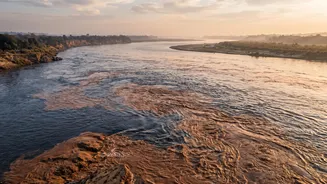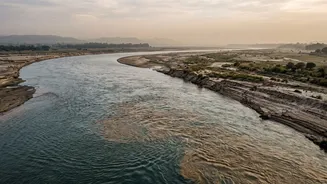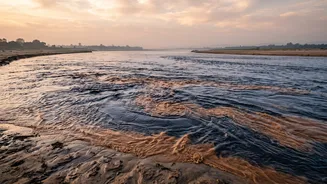






A cornerstone of India-Bangladesh relations for three decades, the Ganges Water-Sharing Treaty is approaching its December 2026 deadline. This looming expiry is forcing a critical re-evaluation of water rights, especially for downstream Bangladesh.
A Landmark Accord Nears Its End
Signed
in December 1996, the Ganges treaty was a landmark achievement in water diplomacy between New Delhi and Dhaka. It was designed to manage the sharing of the river's water during the critical dry season, from January 1 to May 31 each year. The agreement's focus is the Farakka Barrage in West Bengal, an Indian structure about 18 kilometres upstream from the Bangladeshi border that controls the flow of water. The treaty established a formula for sharing based on 10-day periods, aiming to provide predictability for both nations. With a 30-year term, its renewal now depends on mutual consent, placing the future of one of the region's most vital resources on the negotiating table.
The View from Downstream
For Bangladesh, the stakes could not be higher. As the lower riparian country, it is heavily dependent on the flow of the Ganges, which it calls the Padma River. For decades, even with the treaty in place, Bangladesh has faced severe consequences from reduced dry-season flows. These include increased salinity in its southwestern coastal regions, which damages farmland and threatens the delicate ecosystem of the Sundarbans mangrove forest, the world's largest. The decline in freshwater has devastated fisheries, hindered river navigation, and forced farming communities to abandon their lands. Farmers have reported that a lack of water for irrigation has ruined crops, and some have tragically taken their own lives.
A River Under Unprecedented Stress
The context for these negotiations is far more alarming than it was in 1996. The Ganges itself is in crisis. Scientific studies show the river is experiencing its most severe decline in streamflow in over a millennium. This is not just a temporary drought but a long-term trend driven by a combination of factors. Climate change is causing Himalayan glaciers, the river's source, to retreat at an alarming rate, diminishing long-term water supply. Simultaneously, monsoons have become more erratic, and massive groundwater extraction for agriculture across the river basin is depleting the aquifers that feed the river during the dry season. Put simply, the pie that India and Bangladesh are trying to divide is shrinking.
Bangladesh's Negotiating Stance
Facing this reality, Bangladesh is preparing for complex negotiations. Officials have stated they are not seeking a simple renewal but a revised agreement that better protects the nation's interests. A key demand is the reintroduction of a 'guarantee clause', similar to one in a 1977 agreement, which would ensure Bangladesh receives a minimum percentage of water even if flows at Farakka are unexpectedly low. Furthermore, there is a strong push to move beyond a Farakka_centric deal and adopt a comprehensive basin_wide management approach. This would account for the entire river system, including the impact of climate change and upstream activities.
The Diplomatic Chessboard
The negotiations are complicated by the broader political climate. Relations between New Delhi and Dhaka have been strained following a change in government in Bangladesh in 2024. India has indicated that discussions will happen through the established Joint Rivers Commission, a bilateral mechanism for all 54 shared rivers. However, the unresolved Teesta River water_sharing deal, stalled since 2011 due to internal Indian politics, serves as a cautionary tale for how difficult transboundary water negotiations can be. While technical discussions are reportedly underway, the path to a high_level political agreement that satisfies both nations remains uncertain.