







The Rise of the Green Deskscape
In our increasingly digital lives, the desire for a touch of nature has never been stronger. This has given rise to the 'green deskscape'—a minimalist approach to bringing the outdoors in. The trend is part of a larger movement called biophilic design,
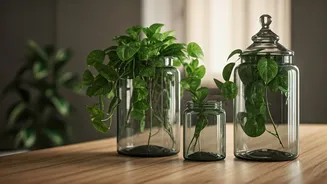
which connects humans with nature to improve well-being. A chaotic workspace can contribute to stress, but a curated, green corner can foster focus and tranquility. This specific trend, using a money plant in a clear glass jar, hits the perfect note. It’s clean, low-maintenance, and visually satisfying, providing a serene focal point that declutters both your desk and your mind. It reflects a shift towards intentional living, where every object in our space serves a purpose, whether functional or purely for joy.
Why This Specific Combination Works
The magic of this trend lies in the perfect pairing of plant and vessel. The money plant (Epipremnum aureum), also known as Pothos, is a superstar of indoor gardening in India. Revered in Vastu Shastra for bringing prosperity and positive energy, it's also incredibly resilient and thrives in water. Its heart-shaped leaves and long, trailing vines create a beautiful, dynamic silhouette as they grow. The apothecary jar, with its vintage, scientific appeal, elevates the simple cutting into a piece of decor. The clear glass puts the intricate root system on display, adding another layer of visual interest. Unlike a clunky soil pot, the transparent jar feels light and airy, preserving precious desk space while making a significant aesthetic impact. It’s a study in contrasts: the wild, organic plant contained within a clean, structured form.
Creating Your Own Apothecary Plant Jar
Getting this look is refreshingly simple. First, you'll need a healthy money plant from which to take a cutting. Using clean scissors, snip a 6- to 8-inch piece of vine just below a node (the small bump where a leaf emerges). This node is where new roots will sprout. Remove the lowest leaf or two to ensure they don't sit in the water and rot. Next, select your apothecary jar. Choose one with a wide enough mouth for easy cleaning but a classic, shapely form. Fill it with room-temperature filtered water or tap water that has been left out for 24 hours to allow chlorine to dissipate. Place your cutting into the jar, ensuring the nodes are submerged but the remaining leaves are above the waterline. That's it. Your stylish new desk accessory is ready.
Care and Long-Term Maintenance
While this setup is low-maintenance, a little care goes a long way. Place your jar in a spot with bright, indirect light. Direct sunlight can scorch the leaves and encourage algae growth in the water. Every 7-10 days, change the water to keep it fresh and oxygenated for the roots. When you do, give the inside of the jar a quick wipe to prevent any slimy buildup. You’ll see white roots begin to form within a few weeks. Money plants can live in water indefinitely. If you notice the water getting cloudy quickly or a foul smell, change it immediately and rinse the roots gently. For a nutrient boost, you can add a single drop of liquid hydroponic fertiliser to the water once a month, but it's not strictly necessary as the plant is a slow grower in water.
Styling and Creative Variations
Once you've mastered the single jar, you can play with the concept. Group two or three jars of varying heights and shapes to create a small 'water garden' on a shelf. You can also experiment with different types of glass, like amber or smoked grey apothecary jars, for a moodier, 'dark academia' vibe. While the money plant is ideal, other plants like Syngonium (Arrowhead Plant), Philodendron, and Spider Plant also root well in water and offer different textures and leaf shapes. For a final touch, consider the placement. Let the vines trail down the side of a bookshelf, frame your computer monitor, or cascade from a floating wall shelf above your desk to add vertical interest and draw the eye upward.