






The Dogma of the 'Anabolic Window'
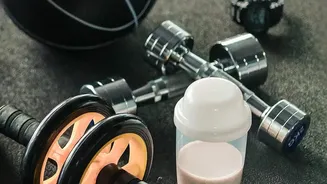
You know the scene: the moment a workout ends, there's a race to the shaker bottle. This urgency comes from the concept of the 'anabolic window', a supposedly brief 30 to 60-minute period post-exercise where your muscles are primed to absorb nutrients
for repair and growth. This idea, born from early research, created a generation of gym-goers who feared that any delay would mean their hard work was for nothing. The belief was simple: get protein into your system immediately to maximise muscle protein synthesis (MPS), the process of rebuilding muscle fibres. This turned a nutritional guideline into a high-pressure countdown.
Your Body's Post-Workout Priorities
After a tough workout, your body has a long to-do list. The main priorities are repairing microscopic muscle tears, reducing inflammation, and replenishing its primary fuel source, glycogen. All these recovery processes require significant energy. At the same time, digestion is also an energy-intensive task. This is known as the thermic effect of food (TEF), which is the energy your body uses to break down, absorb, and metabolise what you eat. Protein has the highest TEF of all macronutrients, demanding 20-30% of its own caloric value just for digestion. When you consume a large, protein-heavy meal or shake, you're giving your body two major energy-draining tasks at once: recover from exercise and digest a complex meal.
The Digestion vs. Recovery Energy Battle
The core of the issue is resource allocation. When you task your body with heavy digestion immediately after a workout, you create a competition for energy and blood flow. Your system must divert resources to the stomach and intestines to break down the food. This can potentially pull energy away from the critical work of muscle repair and reducing inflammation in your limbs. While your body can multitask, forcing it to focus heavily on digestion can slow down other recovery processes. If digestion is inefficient, it can lead to bloating and discomfort, further stressing a body that is already in a state of repair.
Good News: The Anabolic Window Is Wide Open
Fortunately, the pressure to eat immediately is based on outdated science. More recent, comprehensive studies have shown the 'anabolic window' is much wider than we thought. Your muscles remain sensitised to protein and receptive to repair for at least 24 hours, and possibly up to 48 hours, after a workout. This means you don't need to panic. The single most important factor for muscle growth and recovery isn't precise timing, but your total daily protein intake, spread reasonably throughout the day. A 2013 meta-analysis concluded that as long as daily protein goals are met, the immediate timing has little to no extra benefit.
A Smarter Approach to Post-Workout Nutrition
Instead of rushing, consider giving your body a brief period to cool down and shift out of 'fight or flight' mode. Waiting 60-90 minutes before a large meal can allow your system to prioritise the initial stages of muscle repair without competing with digestion. If you do prefer to eat sooner, especially if you trained in a fasted state, opt for easily digestible nutrients. A snack that combines simple carbohydrates to replenish glycogen and a fast-absorbing protein can be ideal. Good options include a glass of milk, which contains both whey and casein proteins plus carbs, or a fruit smoothie with a scoop of hydrolysed whey protein, which is pre-digested and easier on the stomach. The goal is to provide building blocks without overwhelming your digestive system.