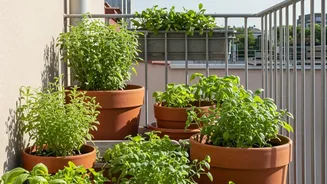


As the crisp winter air settles across North India, the gardening season is far from over. In fact, November is the perfect time to turn your balcony into a productive vegetable patch by growing your own sweet, crunchy carrots right in a pot.
Why November Is Perfect for Carrots
Carrots are
a cool-season crop, and the mild winter temperatures across North India from October to February provide the ideal climate for them to thrive. The gentle sun and cool air prevent the roots from becoming bitter, leading to a sweeter, more flavourful harvest. Sowing in November allows the roots to develop during the coldest months, ensuring they are ready for a delicious spring harvest. Your balcony, which may have been too harsh and sunny during the summer, now becomes a perfect spot for sun-loving winter vegetables.
Choose a Deep Pot and Sunny Spot
The single most important factor for growing straight, healthy carrots is root space. Since the edible part grows downwards, a deep container is non-negotiable. Select a pot, grow bag, or planter that is at least 12 to 15 inches deep. This depth allows the taproot to grow long and straight without hitting the bottom and becoming stunted or forked. Any material will work—terracotta, plastic, or fabric—as long as it has excellent drainage holes to prevent waterlogging. Place your pot in the sunniest part of your balcony, as carrots need at least six hours of direct sunlight each day for proper root development.
The Secret to Perfect Carrot Soil
Carrots despise heavy, compacted, or rocky soil. Any obstruction will cause the root to fork, twist, or stop growing. Never use dense garden soil straight from the ground in your pots. Instead, create a light, fluffy, and well-draining potting mix. A reliable formula is an equal-parts blend of coco peat (for moisture retention), compost or vermicompost (for nutrients), and coarse sand or perlite (for drainage and aeration). This loose mixture allows the delicate roots to push through effortlessly, resulting in perfectly shaped carrots. Ensure the mix is free of any stones, lumps, or debris.
Selecting the Right Carrot Seeds
While long, traditional 'desi' carrots are popular, shorter varieties are often better suited for containers. Look for types like 'Nantes' or 'Pusa Kesar', which are known for their sweet flavour and uniform, cylindrical shape that performs well in pots. 'Parisian' or 'Thumbelina' varieties, which are small and round, are also excellent choices for shallower pots as they mature quickly. Many seed packets will indicate if a variety is suitable for container gardening. For North Indian plains, 'Pusa Kesar' is a very popular and reliable choice.
Sowing Seeds for Success
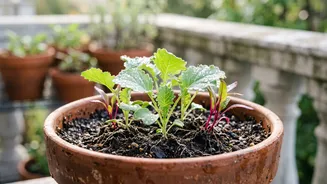
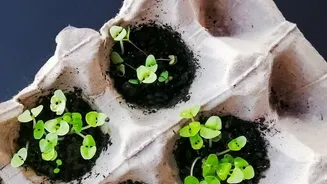
Carrot seeds are tiny and should be sown directly into the pot where they will grow, as they do not tolerate being transplanted. First, water your soil mix so it's evenly moist but not saturated. Scatter the seeds thinly across the surface to avoid overcrowding. Then, cover them with a very fine layer of the potting mix, about half a centimetre deep. Water gently with a fine spray to avoid dislodging the seeds. The soil must be kept consistently moist for the seeds to germinate, which can take up to two weeks.
Watering, Thinning, and Ongoing Care
Once the seedlings emerge and are about two inches tall, you must perform the crucial step of 'thinning'. This involves removing weaker seedlings to ensure the remaining ones are spaced about two to three inches apart. While it may feel counterintuitive, this spacing is essential to give each carrot root enough room to grow to its full size without competition. Keep the soil consistently moist, but not waterlogged, especially as the roots develop. Uneven watering can cause the carrots to crack or split. Feed the plants with a low nitrogen liquid fertiliser once every three to four weeks, as too much nitrogen will produce lush green tops but small roots.
Most carrot varieties are ready to harvest in 90 to 110 days , depending on the type and growing conditions . You can tell they are nearing maturity when the 'shoulders' of the carrots start to become visible at the soil line and have a good , rich colour . You can gently pull one out to check its size . To harvest , loosen the soil around the carrot with a small trowel and pull it straight up from its leafy top . The reward is a crisp , sweet vegetable that tastes worlds better than anything you can buy .