




More Than Just Moisture
The headline benefit of mulching is certainly moisture retention. A good layer of mulch acts like a lid on the soil, reducing evaporation from sun and wind. This is crucial for thirsty kiwi vines, which have high water requirements, especially during
warm weather. But the advantages don't stop there. Mulching also suppresses competitive weeds that would otherwise steal water and nutrients from your vine. Furthermore, it helps regulate soil temperature, keeping the root zone cooler in the summer and insulating it from frost in the winter. As organic mulches break down, they enrich the soil with valuable nutrients and improve its structure, creating a healthier environment for the plant's root system to flourish.
Choosing the Best Mulch
For kiwifruit, organic mulches are the superior choice because they feed the soil as they decompose. Excellent options include materials like straw, pine needles, compost, well-rotted manure, bark chips, or sugarcane mulch. These materials help maintain soil moisture and add organic matter over time. Avoid using fresh wood chips or sawdust, as they can temporarily pull nitrogen from the soil as they break down, which can negatively impact your vine's growth. Also, be wary of mulches that may contain weed seeds or chemicals from treated wood, as these can introduce problems into your garden.
The Right Way to Apply It
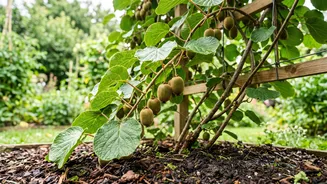
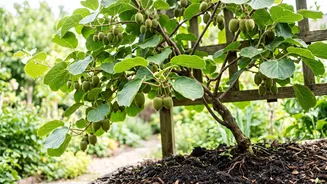
Timing and technique are everything when it comes to mulching. The best time to apply mulch is in the spring after the soil has had a chance to warm up. Before you begin, make sure the area around the base of the vine is free of weeds. It’s also a good idea to water the soil deeply before applying the mulch. Spread a layer that is about 5 to 10 cm deep (2 to 4 inches) in a wide circle around the plant, extending out to the edge of its canopy, also known as the drip line. The most critical rule is to keep the mulch from directly touching the trunk of the vine. Pull the mulch back to create a small, clear ring (a few inches wide) around the base of the stem. This prevents moisture from being trapped against the bark, which can lead to rot and disease.
Common Mulching Mistakes to Avoid
Many well-intentioned gardeners make a few common errors. The most frequent is 'volcano mulching'—piling mulch up in a cone shape against the plant's trunk. This practice traps moisture, suffocates the bark, and can cause the trunk to rot. Another mistake is applying the mulch too thickly. A layer deeper than four inches can prevent oxygen from reaching the roots and may create a habitat for pests. On the flip side, a layer that is too thin won't be effective at suppressing weeds or retaining moisture. Finally, don't forget to replenish the mulch as it decomposes. Organic mulches break down over the season, so you may need to top it up to maintain the ideal depth.