



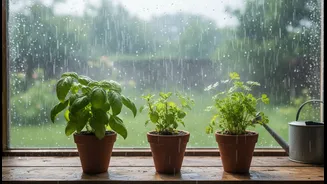


Meet Your Aromatic Quartet
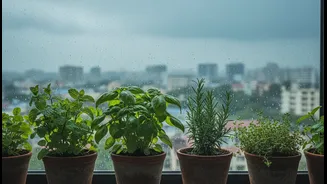
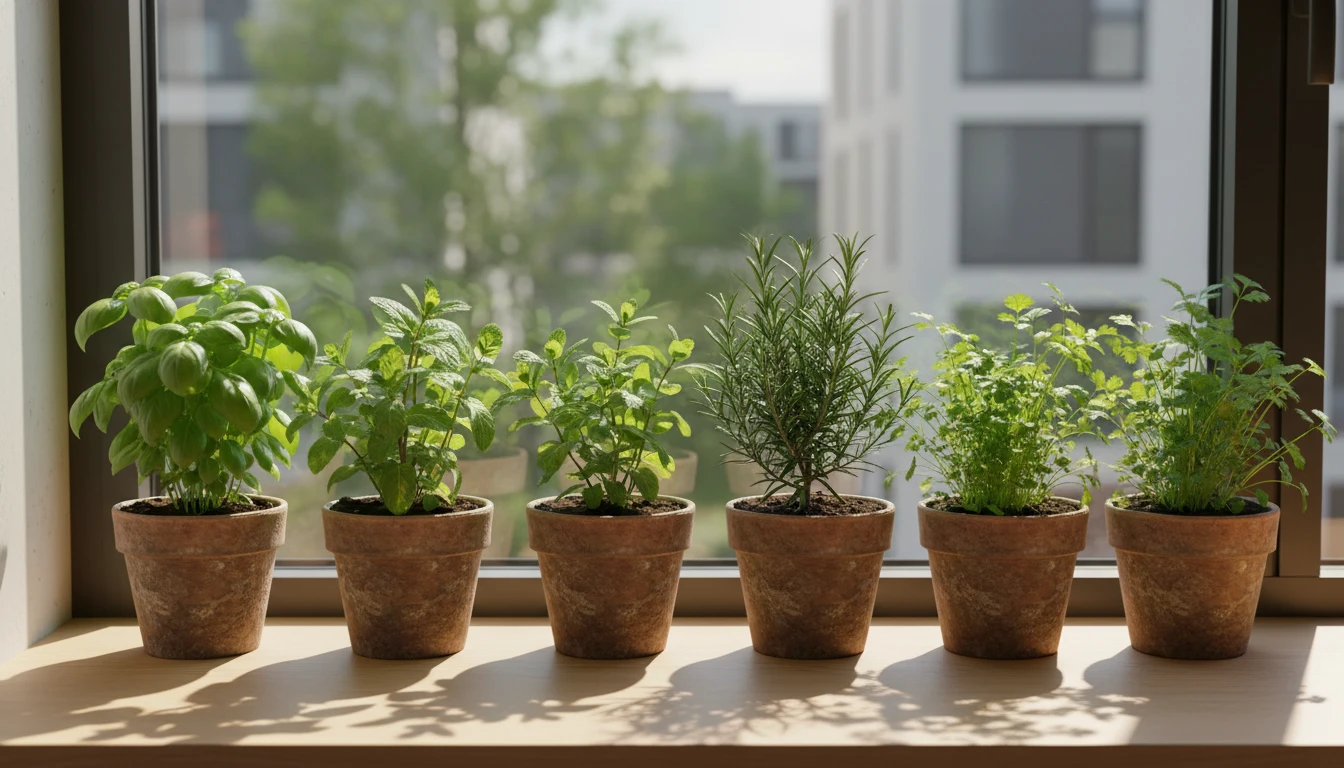
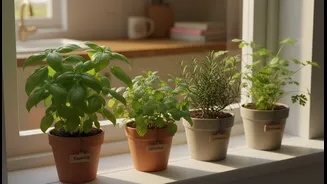
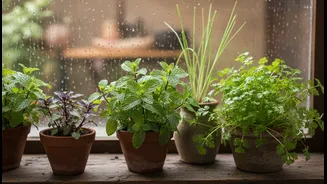
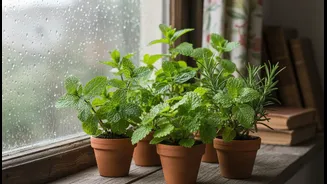
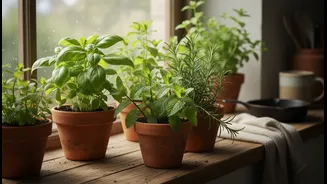
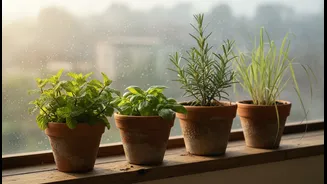
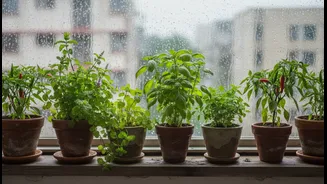
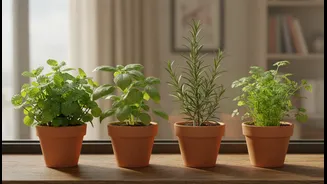
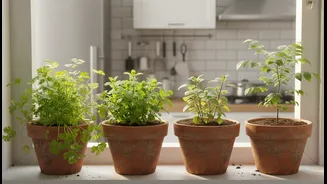
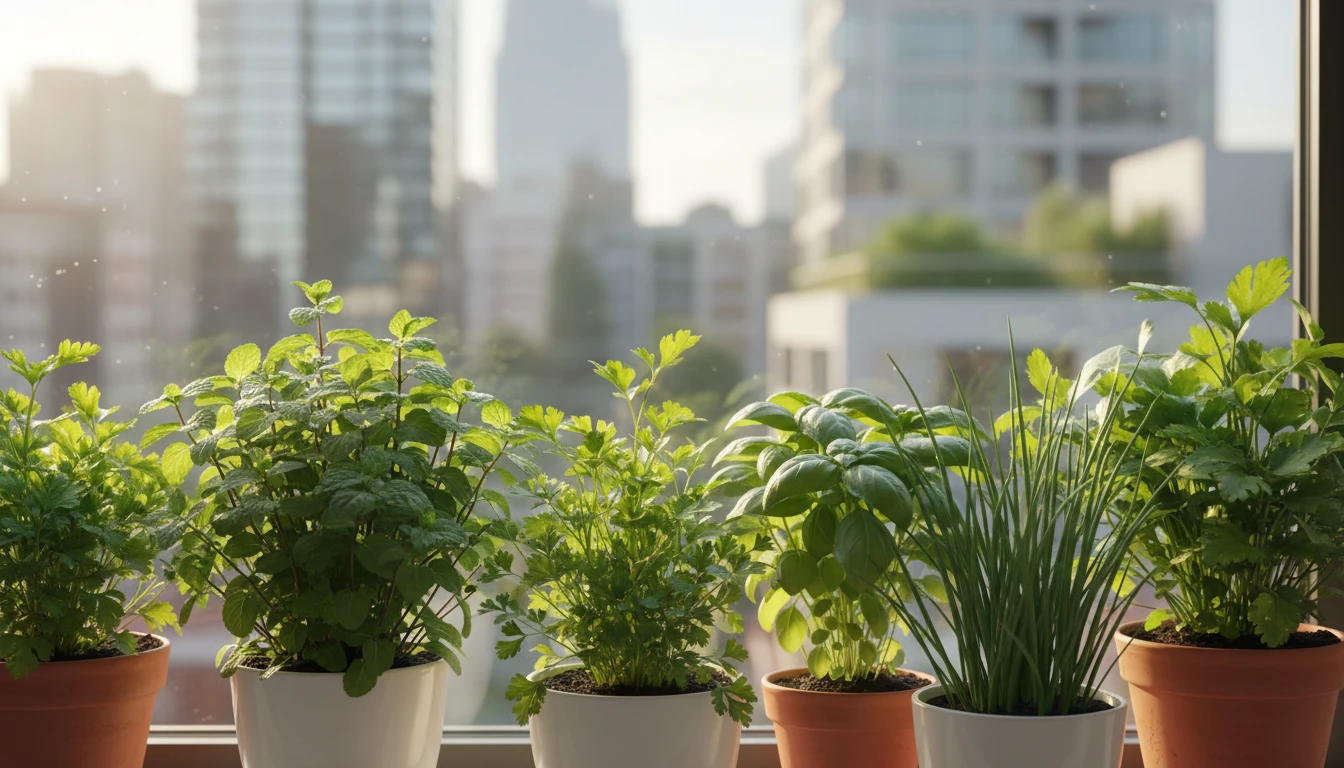
The key to a successful and low-effort garden is choosing the right plants. These four herbs are known for their resilience and are staples in Indian households, making them perfect for your windowsill. Mint (Pudina): Incredibly easy to grow, mint is a vigorous
plant perfect for pots, which help contain its desire to spread. It's essential for chutneys, raitas, and refreshing summer drinks. You can even grow a new plant from a cutting. Holy Basil (Tulsi): Revered for its medicinal properties and a staple in many Indian homes, Tulsi is a hardy plant that thrives with plenty of sunlight. Its aromatic leaves are perfect for herbal teas and kadhas. It needs at least four to six hours of sun daily. Coriander (Dhania): No Indian dish feels complete without a garnish of fresh dhania. Growing it from seed is straightforward, providing you with a ready supply of leaves. It grows quickly but prefers cooler weather and regular watering to thrive. Lemongrass: This fragrant grass adds a wonderful citrusy note to teas and Southeast Asian-inspired curries. It's a tall, ornamental plant that does well in large pots and loves full sun. You can easily propagate a new plant from a stalk bought at the grocery store.
Gathering Your Garden Supplies
You don't need an elaborate setup to get started. A few basic items are all it takes to create the perfect home for your herbs. Containers: Choose pots that are at least 6-8 inches deep to give roots enough space. For a larger plant like lemongrass, a 5-gallon pot is ideal. Ensure every pot has drainage holes at the bottom to prevent water from logging, which can cause root rot. Soil: A high-quality, well-draining potting mix is your best bet. Avoid using dense garden soil, which can compact in pots and choke the roots. Mixing in some organic compost will provide your herbs with the nutrients they need to get a strong start. Seeds or Saplings: You can start with good quality seeds or buy small starter plants (saplings) from a local nursery. For mint and lemongrass, you can even start from fresh cuttings or stalks.
Planting Your Herbs, Step-by-Step
Once you have your supplies, the planting process is quick and rewarding. 1. Prepare the Pots: Fill your containers with the potting mix, leaving about an inch of space at the top. Moisten the soil lightly with water before planting. 2. Sow the Seeds: For coriander, it's helpful to gently crush the whole seeds into two halves to improve germination. Plant seeds about half an inch deep, spacing them out to avoid overcrowding. For Tulsi, sprinkle the seeds on the surface and cover with a very thin layer of soil, as they need some light to germinate. 3. Plant Saplings or Cuttings: If you're using starter plants or rooted cuttings, gently remove them from their original container, place them in the new pot, and fill the surrounding space with soil. Make sure the plant sits at the same depth it was previously growing. 4. Water In: After planting, water the soil thoroughly until you see it drain from the bottom holes. This helps the soil settle around the roots.
Sunlight, Water, and Daily Care
These herbs are resilient, but a little regular attention will ensure they flourish. Sunlight: Most of these herbs need a good amount of light to produce flavourful leaves. A windowsill that gets at least 4-6 hours of daily sunlight is ideal. A south or west-facing window is often best. Watering: Don't follow a rigid schedule. Instead, check the soil daily. A good rule of thumb is to water when the top inch of soil feels dry to the touch. Herbs in pots tend to dry out faster than those in the ground, so they may need watering every day or two in hot weather. Encouraging Growth: To get bushier plants like Tulsi and mint, regularly pinch off the top sets of leaves. This encourages the plant to branch out. For Tulsi, it's also important to remove flower buds as they appear to direct the plant's energy into producing more leaves.
Harvesting for Continuous Flavour
The best part of a herb garden is harvesting your own fresh greens. The key is to harvest in a way that encourages more growth. For leafy herbs like mint, Tulsi, and coriander, snip off the top leaves and stems as needed. Never strip the plant of all its leaves at once. Regular, moderate harvesting is like a haircut for the plant, stimulating it to become fuller and more productive. For coriander, you can begin cutting leaves once the plant is about 6 inches tall. Cut the outer stems first, allowing the inner ones to continue maturing. With lemongrass, wait until the stalks are about half an inch thick. Cut them at the base with a sharp knife. You can either use the fresh stalk or peel the outer layers to get to the tender, pale core which is most aromatic.