






The Great Monsoon Myth: 'No Sun, No Sunscreen'
It’s a common and logical assumption: if you can’t see the sun, your skin is safe. Unfortunately, this is a myth that leaves many exposed to invisible damage. The dense cloud cover of the monsoon season may block the sun's heat and some of its light,
but it does not block all of its harmful ultraviolet (UV) radiation. Studies show that up to 80% of UV rays can penetrate through clouds, meaning your skin is still vulnerable. These rays also reflect off wet surfaces like roads and puddles, which can increase your overall exposure, a key concern for anyone commuting during the rains. Dermatologists stress that skipping sunscreen on overcast days can lead to pigmentation, premature ageing, and a higher risk of skin cancer over time.
Understanding Your Hidden Enemy: UVA Rays
To understand the risk, it’s important to know the difference between the two main types of UV rays that reach us: UVA and UVB. UVB rays have a shorter wavelength and are the primary cause of sunburn. Their intensity varies with the season and time of day, and they are somewhat filtered by clouds. UVA rays, on the other hand, have a longer wavelength that allows them to penetrate deeper into the skin. They make up about 95% of the UV radiation reaching the Earth's surface and are the main culprit behind photoaging—wrinkles and loss of elasticity. Crucially, UVA rays maintain a consistent intensity year-round and can easily pass through both clouds and glass. This means that even on the darkest monsoon day, or while sitting by a window in your office or car, your skin is being exposed to these ageing rays.
The Commuter's Conundrum: Rain, Sweat, and Pollution
For daily commuters in India, the monsoon presents a unique set of skincare challenges. The high humidity leads to increased sweating, which can cause sunscreen to feel sticky and even break down faster. A sudden downpour can wash away your protection if it isn't formulated to be water-resistant. Furthermore, navigating city streets exposes your skin to a cocktail of environmental pollutants from traffic and industry. Research shows that air pollutants can generate free radicals, which cause oxidative stress, leading to inflammation, a weakened skin barrier, and premature aging. This effect can be amplified when combined with UV exposure, making protection even more critical for urban dwellers.
Choosing Your Monsoon Armour: The Right Sunscreen Formula
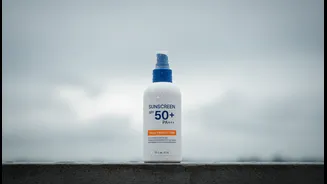
Given the challenges of humidity and rain, not just any sunscreen will do. The key is to look for specific formulations suited to the Indian monsoon. Dermatologists recommend opting for lightweight, non-greasy, and non-comedogenic (won't clog pores) sunscreens. Gel-based and fluid sunscreens are ideal as they absorb quickly without leaving a heavy, sticky feeling. Look for a broad-spectrum product with an SPF of 30 or higher and a high PA rating (PA+++ or PA++++) to ensure you are protected from both UVB and UVA rays. A "water-resistant" label is also a must-have, as these formulas are designed to maintain their SPF protection for a set time (typically 40 or 80 minutes) even when you sweat or get caught in the rain.
Application in Practice: How to Make It Stick
Proper application is just as important as the product you choose. Apply your sunscreen about 15-20 minutes before heading out to allow it to form a protective layer on your skin. A common rule is to use about a teaspoon for your face and neck. The biggest challenge during the monsoon is reapplication. Sunscreen's effectiveness diminishes over time with exposure to sun and moisture. It’s crucial to reapply at least every two hours, and more frequently if you have been sweating heavily or your face has been exposed to rain. For easy top-ups during the day, especially for commuters, sunsticks are an excellent, mess-free option for targeted areas like the nose, ears, and around the eyes. Remember that simply splashing water on your face is not enough to remove durable, water-resistant sunscreens at the end of the day; a proper cleanser is necessary to prevent clogged pores.