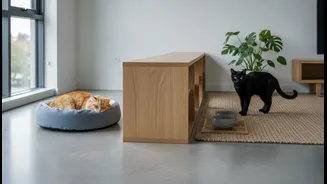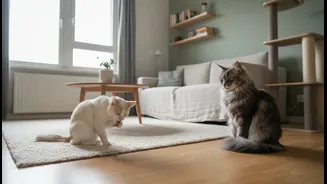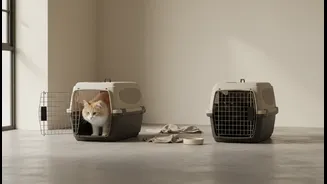





Create a Sanctuary Space
Before your new cat arrives, designate a separate, secure area. In a single-room flat, this is the biggest challenge but it is non-negotiable. The bathroom is often the best choice as it has a door and is easy to clean. If that isn't feasible, a large
dog crate or a sectioned-off area using a tall, sturdy baby gate can work. This 'sanctuary room' will be the new cat's home for the first several days or even weeks. It allows them to decompress from the stress of a new environment without the immediate pressure of facing another cat. Equip this space with its own litter box, food, water, a comfortable bed, and toys. This initial separation prevents a face-to-face confrontation, which can set a negative tone for the entire relationship.
The Power of Scent
Cats communicate heavily through scent; it's their way of gathering information about their environment and its occupants. Start by swapping scents before the cats ever see each other. Take a blanket or soft toy that your resident cat has used and place it in the newcomer's sanctuary. Do the same for your new cat, bringing their scented item into the main living area. This allows them to investigate each other's smell in a non-threatening way. You can also rub a clean sock on one cat's cheeks and place it near the other's food bowl to build a positive association: new scent equals a tasty meal. If either cat hisses or avoids the scented item, simply move it further away and slowly decrease the distance over several days. The goal is neutral or curious acceptance of the smell.
Site Swapping and Feeding Rituals
Once both cats are calm about each other's scents, you can begin site-swapping. Let your resident cat explore the sanctuary room while the new cat gets to wander the main flat. This allows them to gather more information through scent marking without direct contact. Do this for short periods daily. The next step is to associate each other's presence with a positive experience, like food. Begin feeding both cats on opposite sides of the closed sanctuary door. If they eat calmly, you can gradually move their bowls closer to the door with each meal. Any sign of hissing or growling means you've moved too fast; simply increase the distance again and proceed more slowly. Patience here is crucial, especially with rescue cats who may have past food insecurities.
First Visuals Through a Barrier
When both cats can eat peacefully right next to the door, it's time for their first visual introduction. This must be done through a physical barrier. Stack two baby gates in the doorway or use a screen door. This allows them to see and smell each other without any risk of a physical fight. Keep these initial meetings extremely short—just a few seconds at first. Distract them with their favourite treats or a wand toy to create a positive association. The goal is for them to see each other and think, "Good things happen when that other cat is around." End the session on a positive note, before any tension can build. Gradually increase the duration of these visual meetings over many days.
Reading Body Language
Understanding feline body language is vital. A relaxed cat will have ears forward and a loosely held tail. A slow blink is a sign of trust. Conversely, flattened ears, dilated pupils, a swishing tail, and a puffed-up coat are clear signs of fear or aggression. Hissing and growling are warnings to back off. It’s important to distinguish this from playful behaviour, which is often reciprocal and involves less tension. If you see signs of true aggression, stay calm. Never punish the cats, as this will only increase their stress. Silently and calmly end the interaction by closing the door or guiding one cat away. This shows them you will protect them, which builds trust.
Supervised Meetings and Shared Space
After many positive sessions through the barrier, you can try a supervised meeting in the same room. Begin with the barrier removed for just a few minutes. Engage both cats in a parallel play session with separate wand toys to keep them occupied and distracted. This helps them coexist without fixating on each other. Keep sessions short and always end on a high note. As they become more comfortable, you can gradually extend their time together. To prevent territorial disputes in a small flat, ensure you have multiple resources. This means one litter box per cat plus one extra, separate food and water stations, and plenty of vertical space like cat trees and shelves so they can create distance when needed.