





What 'AI Knowledge' Really Means
When we talk about 'AI knowledge', it's not a call for everyone to become a data scientist or machine learning engineer. Instead, it’s about understanding AI's role as a powerful tool that can handle repetitive, data-heavy tasks with incredible speed
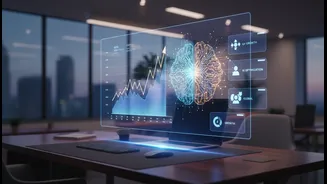
and accuracy. Think of AI as the ultimate analyst, capable of sifting through vast amounts of information to spot patterns, trends, and anomalies that a human might miss. In finance, AI algorithms flag potential fraud, and in marketing, they analyze customer data to personalize content at scale. This frees up human workers from tedious tasks like data entry or generating routine reports, allowing them to focus on higher-value work. The key 'knowledge' is learning how to effectively guide these tools and interpret the insights they provide.
The Irreplaceable Human Element
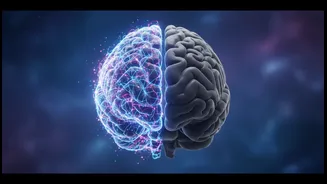
While AI excels at processing data, it lacks the distinctly human qualities that drive true innovation and connection. This is where 'human skills'—often called soft skills—become more crucial than ever. Qualities like creativity, critical thinking, emotional intelligence, and complex problem-solving are what turn AI-generated data into a successful business strategy. An AI can generate a thousand marketing slogans, but a human provides the creative direction and cultural understanding to know which one will resonate with an audience. An AI can diagnose medical images with high accuracy, but a doctor provides the empathy and critical judgment needed to develop a compassionate treatment plan. These skills are not 'soft'; they are essential differentiators in a world where technical tasks are increasingly automated.
Synergy in Action: How the Partnership Works
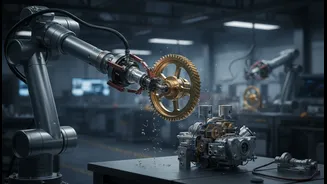
The winning formula comes to life when this synergy is put into practice across industries. In customer service, AI chatbots handle routine inquiries, allowing human agents to focus on complex or emotionally charged issues that require a personal touch. In manufacturing, robots perform repetitive assembly tasks while human workers oversee quality control and process innovation. Financial analysts use AI to identify market risks, but apply their own experience and intuition to make strategic investment decisions. In all these cases, AI is not replacing the human but augmenting their capabilities, leading to better outcomes than either could achieve alone. This collaborative approach boosts efficiency and productivity, while allowing employees to engage in more strategic and creative work.
Cultivating the Winning Combination for the Future
To thrive, both individuals and organizations must actively cultivate this partnership. For employees, the focus should be on upskilling in areas AI cannot replicate: communication, collaboration, adaptability, and creative problem-solving. According to the World Economic Forum, skills like critical thinking and self-management are in high demand. For businesses, the challenge is to redesign roles and workflows to embed human-AI collaboration effectively. This involves training employees to work alongside AI tools and fostering a culture that prioritizes trust and transparency in how these systems are used. Some experts predict that companies will soon 'employ' AI agents as part of hybrid teams, managed by human leaders who can orchestrate their digital and human workforce. The goal is to build a resilient organization where technology amplifies human strengths.