




The Great Monsoon Paradox
From June to September, the Indian subcontinent is defined by the monsoon. Life-giving rains drench the plains, hills, and coasts, bringing relief from the summer heat but also persistent cloud cover. For travellers, photographers, and stargazers, this
often means cancelled plans and obscured views. Yet, at the same time, a remote corner of the country experiences the exact opposite: pristine, cloudless skies day after day. This is the magic of Ladakh, a place that exists in a different climatic reality from the rest of India, thanks to a powerful geographical phenomenon.
Understanding the Rain Shadow Effect
To understand why Ladakh stays dry, you need to understand the concept of a 'rain shadow'. Imagine moisture-laden winds from the Arabian Sea and the Bay of Bengal moving inland. As these winds encounter a massive mountain range—in this case, the mighty Himalayas—they are forced to rise. As the air rises, it cools, and its ability to hold moisture decreases. This causes heavy precipitation (rain or snow) on the windward side of the mountains, which is the side facing the oncoming wind. By the time the air mass crosses over the mountain peaks and descends on the other side (the leeward side), it has lost most of its moisture. This dry, descending air creates an arid or semi-arid region known as a rain shadow. Ladakh lies squarely on the leeward side of the main Himalayan range, making it a classic cold desert.
Ladakh: A High-Altitude Cold Desert
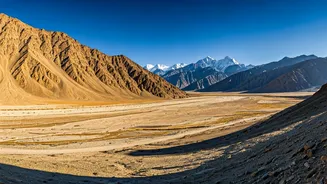
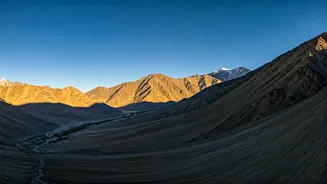
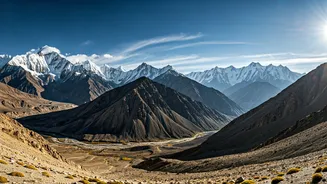
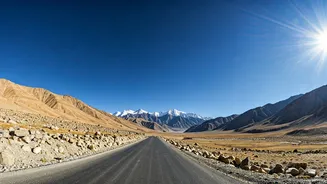
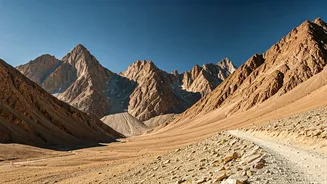
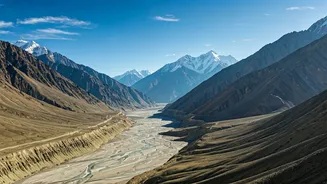
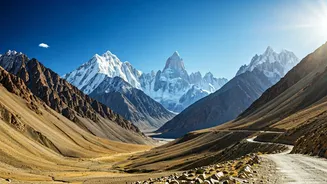
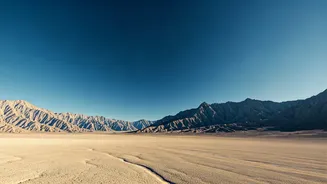
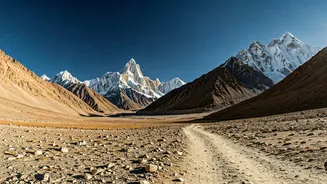
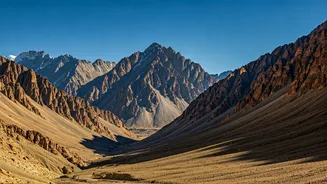
The Himalayan and Zanskar ranges act as colossal barriers, effectively blocking the monsoon clouds from reaching the Tibetan Plateau, where Ladakh is situated. While states like Himachal Pradesh and Uttarakhand receive torrential downpours on the southern slopes of the Himalayas, Ladakh, on the northern side, receives only faint drizzles, if any. The average annual precipitation in Leh, for instance, is just over 100 mm, classifying it as a desert. This is why the landscape is so stark and barren, with dramatic, eroded mountains and braided rivers flowing through wide valleys. The lack of vegetation and cloud cover is a direct result of being in this powerful rain shadow.
Hanle: India's Celestial Observatory
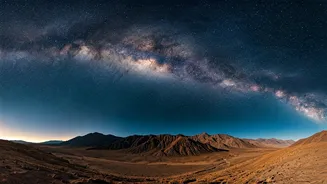
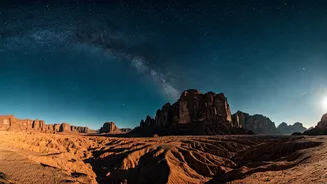
Nowhere is this effect more prized than in Hanle, a remote village in the Changthang region of Ladakh. Nestled deep within this rain shadow zone, Hanle is home to the Indian Astronomical Observatory, one of the world's highest-sited observatories for optical, infrared, and gamma-ray telescopes. Scientists chose this location specifically for its unique atmospheric conditions. The combination of high altitude (around 4,500 metres), minimal light pollution, low atmospheric water vapour, and a staggering number of clear nights per year (around 270) makes it an unparalleled site for observing the cosmos. For travellers, Hanle has become a pilgrimage site for astrophotography and stargazing, where the Milky Way stretches across the sky in breathtaking detail, unhindered by clouds or city lights.
Why 'Now' is the Ultimate Time
The contrast is what makes the monsoon season the 'ultimate' time to experience Ladakh's clear skies. While the rest of the country is at its cloudiest, Ladakh is at its clearest and most accessible. The summer months offer pleasant daytime temperatures, and the high mountain passes, like Khardung La and Chang La, are open, allowing road access to these remote valleys. This period provides a rare opportunity to escape the humid, overcast conditions elsewhere and step into a world of sharp, brilliant sunlight and star-filled nights. It’s a perfect counter-seasonal trip, offering an experience that is simply not available in most other parts of the Northern Hemisphere during their summer months.