






Why off-season bioluminescent plankton waves indicate changing Mumbai marine ecosystems
The mesmerizing blue glow on Mumbai's shores, once a seasonal marvel, is now appearing off-schedule, signaling deeper issues within the Arabian Sea.
The Shifting Blue Tides
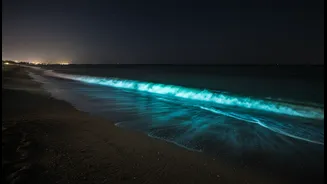
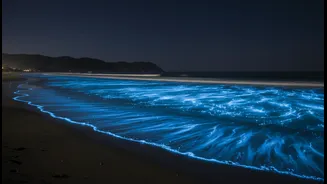
The captivating light, known as bioluminescence, is produced by a microscopic dinoflagellate called Noctiluca
scintillans, or 'sea sparkle'. Traditionally, these blooms would appear along India's west coast in the cooler, post-monsoon months of November and December. However, in recent years, Mumbai's residents have witnessed these 'blue tides' at unusual times of the year. This shift in timing is more than a curiosity; marine biologists see it as a clear and visible symptom of an ecosystem under duress. The change suggests that the fundamental conditions of the Arabian Sea are being altered, allowing this organism to thrive when it previously could not.
A Tale of Two Triggers
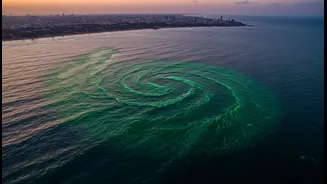
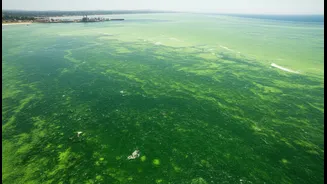
The proliferation of Noctiluca is a complex issue with two primary drivers working in tandem: local pollution and global climate change. For years, the leading theory pointed towards eutrophication—the excessive enrichment of water with nutrients. Untreated or poorly treated sewage and industrial effluents pouring into the sea from a dense metropolis like Mumbai create a nutrient-rich soup. These conditions are ideal for algae blooms, giving hardy species like Noctiluca a competitive advantage over others that form the base of a healthy marine food web.
Climate Change: The Great Amplifier
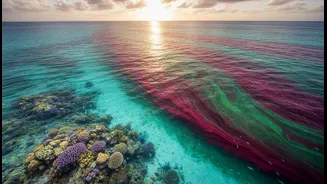
More recent studies highlight a powerful, overarching factor: climate change. The warming of the Arabian Sea is creating more stratified layers of water, with warmer, less dense water sitting on top. This stratification slows the upward movement of essential nutrients like silicate from the deep ocean to the surface. This is critical because diatoms, a type of beneficial phytoplankton that form the base of the marine food chain, need both sunlight and silicate to survive. With less silicate, diatom populations dwindle, leaving a vacant ecological niche that Noctiluca is perfectly equipped to fill.
A Sign of Sickness, Not Splendor
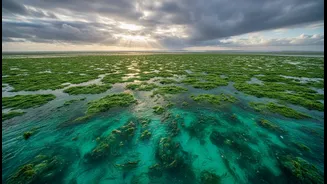
While visually stunning, a Noctiluca bloom is a sign of an unhealthy ecosystem. This organism is often described as an ecological dead-end. It is a voracious predator, consuming diatoms, fish eggs, and other small organisms, but very few creatures prey on it in return, partly due to the ammonia it excretes. This disrupts the entire food chain. Fish avoid these glowing patches, and mass fish kills have been associated with large-scale blooms, as the dense swarms can lead to oxygen-depleted 'dead zones' when they die and decay.
The Ripple Effect on Fisheries
The consequences for Mumbai and the entire west coast are significant, particularly for the fishing industry that supports millions of livelihoods. When diatoms, the primary food source for many commercial fish stocks, are replaced by unpalatable Noctiluca, the foundation of the fishery is weakened. Fishermen report lower catches in areas with blooms, and the long-term prospect is a decline in overall fish populations. This transforms the beautiful glow from a simple tourist attraction into a serious economic and food security concern for the region.