



The Moon's Ancient Plumbing
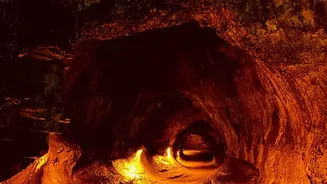
Ages ago, when the Moon was still volcanically active, rivers of molten rock flowed across its surface. As the top layer of these lava flows cooled and hardened, the molten rock inside continued to move, eventually draining away to leave behind vast,
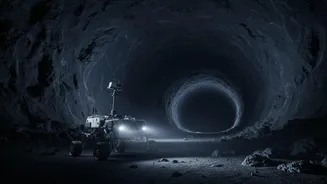
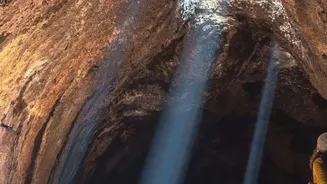
hollow tunnels. These are lunar lava tubes. For years, they were more theory than fact, but recent discoveries using radar and thermal imaging have confirmed that pits seen on the lunar surface are often 'skylights'—collapsed sections of roofing that open into these massive underground networks. Some of these tubes are thought to be enormous, potentially stretching for kilometres with diameters wide enough to house entire cities, offering a tantalising solution to the challenges of lunar colonisation.
A Hostile World Above
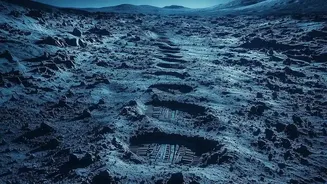
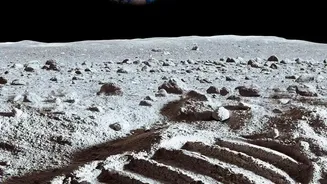
Building on the lunar surface is an immense engineering challenge. With virtually no atmosphere, any structure must withstand a constant barrage of threats. This includes punishing solar and cosmic radiation, which can harm astronauts and degrade equipment. There is also the physical threat from micrometeorites, tiny particles traveling at incredible speeds that can puncture habitats. Furthermore, the Moon's long days and nights create extreme temperature swings, from scorching hot to freezing cold. A lunar habitat would need heavy, expensive shielding to protect against all these dangers, making construction costly and complex. This is why scientists are increasingly looking downward for a solution that nature has already provided.
Robotic Cave Explorers
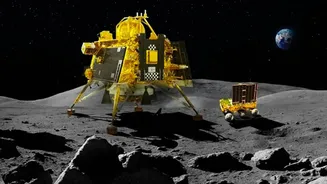
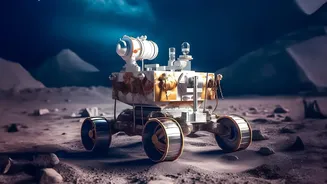
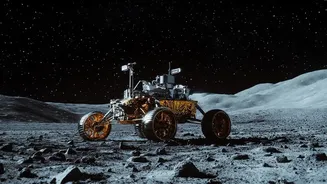
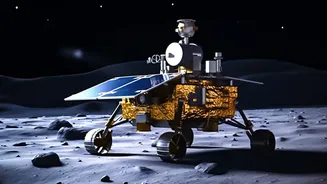
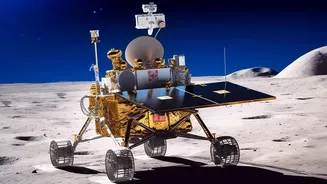
Before humans can move in, we need to know what we're getting into. This is where a new generation of subterranean rovers comes in. Sending wheeled robots into dark, uneven, and unmapped caves is a monumental task. As a result, space agencies and research groups are developing innovative new systems. One European consortium is testing a multi-robot approach where different machines work together: one maps the entrance, another drops sensors, and a third rappels down to explore and create detailed 3D maps of the interior. Other concepts involve rovers with unique spoked wheels to navigate rough terrain and even tethered, laser-powered drones designed to hover and explore these giant caverns. These robotic missions are crucial for assessing the structural integrity, size, and specific environmental conditions of the tubes before they can be deemed safe for humans.
A Natural, Stable Shelter
The data coming back from these robotic precursors is incredibly promising. The thick basalt roof of a lava tube, potentially 40 metres or more, provides outstanding natural shielding. It drastically reduces exposure to harmful radiation to levels that are considered safe for long-term human habitation. It also completely protects against micrometeorite impacts. Perhaps most importantly, the temperature inside these tubes is remarkably stable. While the surface swings wildly, the shadowed interiors of these caves are believed to maintain a constant, manageable temperature, potentially around -20°C or even a surprisingly mild 17°C in some pits. This stability dramatically simplifies the design of life support and energy systems for a potential base.
Blueprints for a Subterranean Future
With their protective qualities confirmed, lava tubes are shifting from a scientific curiosity to a core component of future lunar architecture. Instead of launching massive amounts of shielding material from Earth, astronauts could deploy lighter, inflatable habitats inside these pre-existing shelters. This would save an enormous amount of money and resources. The location of many tubes, often at the boundary of lunar plains and highlands, offers strategic advantages, providing easy access for landing sites as well as potential communication relays. Furthermore, the permanently shadowed, cold interiors of some tubes, particularly near the poles, could be cold traps containing water ice—a vital resource for drinking water, breathable oxygen, and rocket fuel. Exploring these tubes isn't just about finding a safe place to live; it's about unlocking the resources needed to stay there.