






The Original Daily Almanac
Before there were news feeds and social media streams, there was the Panchang. Derived from the Sanskrit words ‘Pancha’ (five) and ‘Anga’ (limbs), it is a traditional Vedic almanac that has guided life in the subcontinent for millennia. At its core, the Panchang is an astrological
diary that presents a detailed, five-part celestial blueprint for each day. It's not just a calendar for tracking dates but a sophisticated system designed to help individuals align their lives with the rhythms of the cosmos. Its purpose has always been to identify auspicious timings (Muhurta) for everything from major ceremonies like weddings to daily activities, ensuring actions are in harmony with natural energies.
Decoding the Five Limbs of Time
The Panchang is built on five fundamental pillars that together describe the quality of any given day. These five ‘limbs’ are Tithi, Vara, Nakshatra, Yoga, and Karana.
* **Tithi (The Lunar Day):** This is based on the moon's position relative to the sun. There are 30 tithis in a lunar month, each associated with specific energies and deities.
* **Vara (The Weekday):** These are the seven days of the week we know, each ruled by a different planet (e.g., Sunday by the Sun, Monday by the Moon), influencing the day's character.
* **Nakshatra (The Lunar Mansion):** The zodiac is divided into 27 lunar mansions or constellations. The Moon's transit through a particular Nakshatra on any given day is believed to impact mood and events.
* **Yoga (The Luni-Solar Combination):** Not to be confused with physical exercise, this refers to 27 specific combinations of the Sun and Moon's positions, each considered auspicious or inauspicious.
* **Karana (Half a Lunar Day):** Each tithi is divided into two Karanas, adding another layer of detail to the day's astrological quality.
Together, these elements provide a rich, nuanced understanding of the day's potential.
From Paper Calendars to Pocket Apps
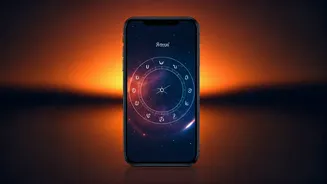
While the knowledge is ancient, its accessibility is thoroughly modern. The days of solely relying on a family priest or a printed wall calendar are fading. Today, the Panchang has gone digital. A plethora of websites and smartphone apps like Drik Panchang and Sanatan Panchang offer detailed, location-specific daily information at the touch of a button. This digital transformation has made it easier than ever for a new generation of Indians to connect with this traditional system. Whether you're in Delhi or Dubai, you can get precise timings for Rahu Kaal (an inauspicious period) or find the day's most favorable moments (Shubh Muhurat). This has moved the Panchang from a static, yearly publication to a dynamic, personal guide.
A Guide to Mindful Living
The modern appeal of the Panchang extends far beyond just planning weddings or religious ceremonies. In a world saturated with digital noise and endless to-do lists, many are turning to it as a tool for mindfulness. Checking the Panchang in the morning can be a grounding ritual, an act of tuning into a rhythm larger than oneself. It encourages a proactive, rather than reactive, approach to the day. Instead of being pulled in countless directions by notifications, one can start the day with an understanding of its unique energetic landscape. This practice offers a framework for living in harmony with nature's cycles, an idea with growing appeal in wellness circles. It's used for everything from agriculture and travel planning to simply knowing when to take on a challenging task.
The Ultimate Culture Scroll
This brings us to the idea of the Panchang as the new 'culture scroll'. While a social media feed is an endless scroll of algorithmically curated content, often leading to comparison and anxiety, the Panchang is a finite, purposeful scroll through cultural and cosmic time. It connects you not to fleeting trends, but to a tradition that has observed the skies and their influence on human life for thousands of years. Each element—a Tithi, a Nakshatra, a festival date—is a link to a story, a deity, a shared cultural practice. Consulting the Panchang is an active choice to engage with a deep well of ancestral wisdom, to find structure in the celestial, and to frame one's day with intention rather than distraction. It is a daily reminder of a universe that is orderly, cyclical, and deeply meaningful.