



As India seeks to expand its renewable energy footprint without sacrificing precious agricultural land, agrivoltaics offers a brilliant solution. But how do you grow crops under solar panels without starving them of essential sunlight?
The Dual-Use Dilemma
Agrivoltaics, the
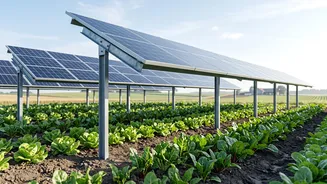
practice of using land for both solar power generation and agriculture, presents a powerful answer to land-use competition. In a densely populated country like India, where demand for food and energy is immense, using the same plot of land to harvest both crops and sunlight is a game-changer. The concept is simple but the execution is complex. It’s not just about putting panels on stilts over a field; it's about creating a symbiotic environment where both farming and energy production can thrive. The primary challenge lies in managing the single most important resource for both: sunlight.
A Calculated Compromise in the Sky
The core of agrivoltaic design is a sophisticated balancing act. Solar panels want maximum, direct exposure to the sun to generate the most electricity. Crops, on the other hand, need Photosynthetically Active Radiation (PAR), a specific spectrum of light, for growth. Interestingly, many plants have a 'light saturation point'; beyond this, extra sunlight doesn't increase growth but can increase heat stress and water demand. The shade from solar panels can protect crops from extreme heat, reduce water evaporation from the soil, and create a more stable microclimate, which can be especially beneficial for certain crops in arid regions. The goal is to design a system that gives panels enough light for viable energy generation while allowing just the right amount and quality of light to filter through to the crops below.
Static Designs: Fixed for Success
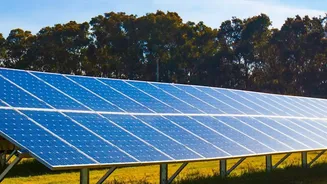
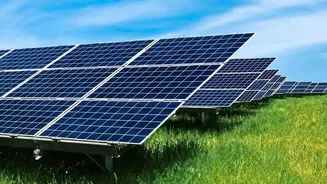
The most common approach involves static, or fixed-tilt, solar arrays. In these systems, engineers and agronomists collaborate to determine the optimal panel angle, height, and spacing before installation. This calculation is based on the farm's latitude, the typical path of the sun through the seasons, and the specific light requirements of the intended crops. For example, a system designed for shade-tolerant leafy greens will have panels spaced more closely together than one for sun-loving crops. Panels are also elevated higher off the ground, often several metres, to allow farm machinery like tractors to pass underneath for planting and harvesting. Some designs use a 'checkerboard' pattern to ensure sunlight reaches the ground at different times of the day.
Dynamic Designs: Tracking the Sun
A more advanced solution involves dynamic systems that use single-axis trackers. These motorised mounts can adjust the tilt angle of the panels throughout the day to follow the sun. This technology allows for an even finer degree of control. For instance, the system can be programmed to prioritise energy generation during peak sun hours in the morning and then tilt the panels to a less optimal angle in the hot afternoon to provide more shade and reduce water stress for the crops below. These tracking systems can increase energy output compared to fixed-tilt designs while also offering on-demand protection for crops, such as shielding them during hailstorms or extreme heatwaves.
The Proof is in the Harvest
Research and real-world projects are showing impressive results. In India, research institutes like the Central Arid Zone Research Institute (CAZRI) in Jodhpur have successfully designed systems for crops like mung beans, cluster beans, and cumin. Studies have shown that the partial shade from panels can lead to higher yields for certain crops and significantly reduce irrigation needs. There's even a mutual benefit for the panels themselves; the water evaporating from the plants below can create a cooling effect, which helps the solar panels operate more efficiently. This symbiotic relationship boosts land-use efficiency, sometimes by more than 60% compared to using the land for just one purpose.