

The Sun’s 11-Year Cycle
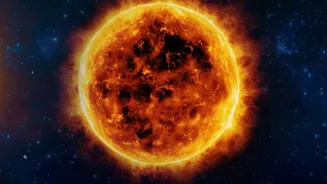
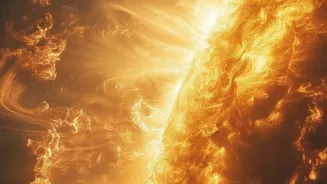
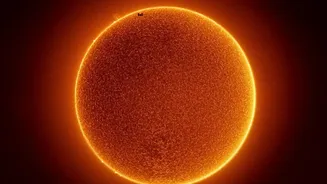
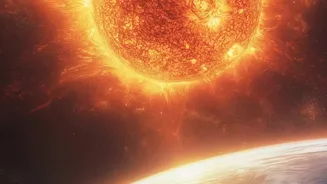
The sun has a heartbeat, but instead of blood, it pulses with magnetic energy. This pulse, known as the solar cycle, lasts about 11 years. It swings from a quiet period, called solar minimum, to a chaotic peak called solar maximum. We are currently in Solar
Cycle 25, which began in December 2019. Initially, scientists predicted this cycle would be relatively weak, similar to the last one. However, the sun has been far more active than forecasted, with activity levels exceeding predictions and peaking earlier than expected, sometime between late 2024 and early 2026. This heightened activity means more sunspots, more solar flares, and more powerful eruptions, which collectively create what we call space weather.
Flares and CMEs: The Sun’s Arsenal
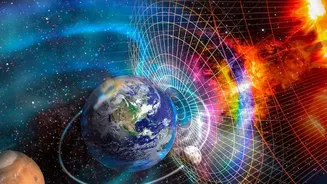
During a solar maximum, the sun unleashes two major phenomena that can affect us: solar flares and coronal mass ejections (CMEs). Think of a solar flare as a colossal muzzle flash—a sudden, intense burst of radiation from a sunspot. A CME, on the other hand, is like the cannonball itself. It's a massive cloud of magnetised plasma and charged particles hurled from the sun's corona, or outer atmosphere, traveling through space at immense speeds. While flares can cause radio blackouts on Earth almost instantly, it’s the CMEs that often cause the most significant problems. When a CME is aimed at Earth, it can slam into our planet's magnetic field, triggering a geomagnetic storm.
How Solar Storms Attack Satellites
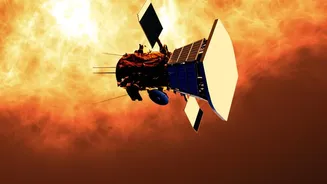
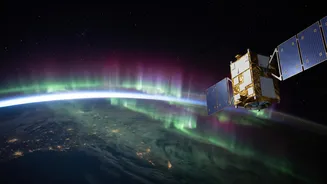
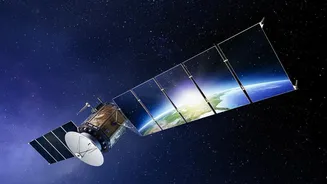
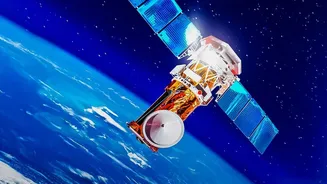
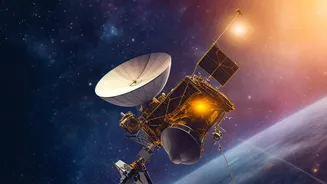
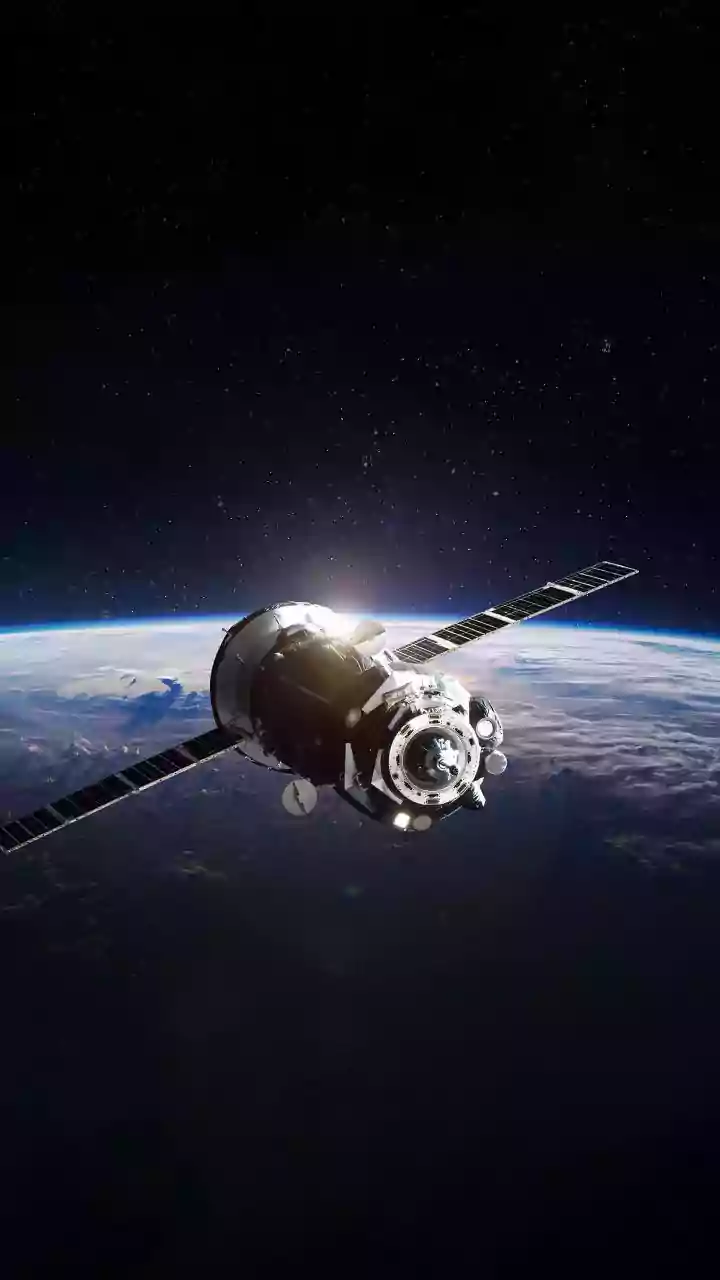
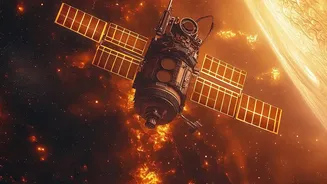
Satellites orbiting outside Earth’s protective atmosphere are on the front lines of space weather. They face a three-pronged assault. First, the intense radiation from a solar flare can directly damage a satellite’s sensitive electronics, corrupting data or even causing complete system failure. Energetic particles can penetrate the spacecraft and degrade its solar panels, shortening its operational life. Second, geomagnetic storms can disrupt the very signals satellites transmit. These storms disturb the ionosphere, a layer of Earth's atmosphere that radio signals must pass through. This can degrade the accuracy of GPS navigation, with errors large enough to affect precision agriculture and autonomous vehicles, or even cause a total loss of signal. Finally, for satellites in low-Earth orbit (LEO), there's the problem of atmospheric drag. A solar storm heats and expands Earth’s upper atmosphere, increasing its density. This thicker atmosphere creates more drag on LEO satellites, slowing them down and causing them to lose altitude, potentially leading to premature re-entry. In 2022, a minor geomagnetic storm was responsible for the loss of dozens of newly launched Starlink satellites.
Protecting Our Infrastructure in the Sky
Fortunately, we are not powerless against the sun's fury. Satellite operators and space agencies have several strategies to mitigate the risks. Modern satellites are built with radiation-hardened components and physical shielding to protect their electronics. Engineers can also use coatings and insulation to protect against the extreme environment. But the most crucial defense is forecasting. Agencies like NOAA's Space Weather Prediction Center monitor the sun 24/7. When a potentially Earth-directed CME is detected, they issue alerts. This gives satellite operators time to take protective measures, such as temporarily shutting down non-essential systems and placing the satellite into a 'safe mode' to ride out the storm. For satellites in low orbits, operators can boost them to a higher altitude to counteract the effects of increased atmospheric drag.