






Before You Start: The Pre-Trip Inspection
Your journey to safety begins before you even turn the key. A thorough vehicle check is non-negotiable. First, inspect your tyres. Ensure they have adequate tread depth, as worn tyres struggle to grip wet surfaces and can lead to skidding or aquaplaning.
Check that they are inflated to the manufacturer's recommended pressure. Next, test your brakes. Wet conditions can reduce braking efficiency, so ensure your brake pads and discs are in good shape. Your wipers are your first line of defence against rain; make sure the blades are not worn out and clear the windshield effectively without leaving streaks. Top up your washer fluid. Finally, check all your lights—headlights, tail-lights, indicators, and fog lamps. Being visible to others is just as important as being able to see.
Plan Your Journey and Timing
Spontaneity has its charms, but not when dealing with monsoon-ravaged hills. Check the weather forecast for your entire route before you leave. Avoid travelling at night if possible; darkness conceals potholes, debris, and other hazards. Inform someone of your route and estimated time of arrival. In areas prone to landslides, it’s wise to check with local authorities or use travel apps for real-time updates on road closures or blockages. If a heavy downpour starts while you are driving, the safest option is often to pull over to a secure spot—well away from trees or steep slopes—and wait for the rain to subside.
On-the-Road Techniques for Wet Hills
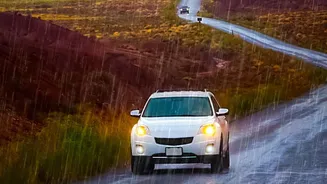
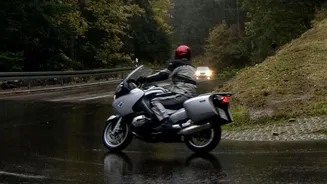
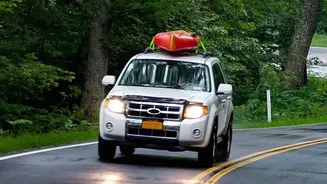
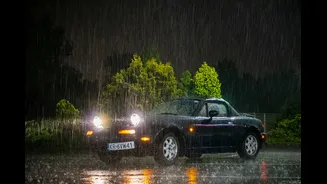
Driving on wet, winding roads requires a complete change in mindset. The single most important rule is to reduce your speed significantly. Wet roads drastically increase your vehicle's stopping distance. Maintain a much larger gap than usual between your car and the vehicle in front—at least a three-car distance is recommended. Use your headlights, even in daylight, to enhance your visibility to others. When taking sharp turns, slow down before the turn, not during it. Use lower gears when descending steep slopes to let engine braking assist you, preventing overuse and overheating of your brakes. Avoid sudden acceleration, hard braking, and sharp steering manoeuvres, as these can easily cause a loss of traction. Never use cruise control in rainy conditions, as it can increase the risk of losing control if you hydroplane.
Navigating Waterlogging and Landslide Risks
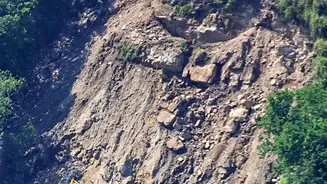
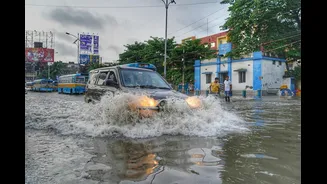
Two of the biggest dangers on post-rain hill roads are waterlogged patches and landslides. If you encounter a flooded section, the best advice is to avoid it. Water can hide deep potholes or washouts, and it takes surprisingly little of it to stall an engine or even sweep a vehicle away. If you must proceed, do so slowly in a low gear, keeping the engine revs high to prevent water from entering the exhaust. Be extremely vigilant for signs of potential landslides. Look out for new cracks in the road, tilting trees or poles, bulging ground at the base of slopes, or a sudden change in water flow in nearby streams from clear to muddy. Unusual sounds like rumbling or cracking trees can also be a warning. If you spot any of these signs, do not proceed. The safest action is to turn back and find an alternative route.
The Essential Hill-Driving Emergency Kit
Being prepared for the worst can make a critical difference. Your car should be equipped with a comprehensive emergency kit. This includes a properly inflated spare tyre with a jack and wheel spanner, a basic toolkit, and jumper cables. A first-aid kit is essential for any minor injuries. Pack a high-visibility vest and a reflective warning triangle to ensure you are seen if you break down. A powerful LED torch, a power bank for your phone, and a supply of drinking water and non-perishable snacks are also crucial. In landslide-prone areas, having a tow rope can be invaluable. With poor network connectivity common in the mountains, don't rely solely on your phone for navigation; offline maps are a lifesaver.