








The Race to a Digital Future
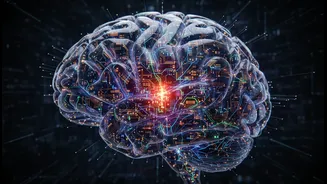
The Punjab government has announced that after a year of development, an AI curriculum will be introduced in government schools across the state. The initiative aims to equip students with the skills needed for future careers and a technology-driven world.
Officials see this as a key part of modernising the education system, with AI integrated as a core component of computer science. The plan even includes having AI learning outcomes reflected on students' board certificates, giving the subject significant academic weight. This move is part of a broader push that includes pilot programs for AI-driven career counselling labs, demonstrating a clear commitment to embedding technology in public education.
Beyond the Buzzword: What is 'AI Literacy'?
While teaching AI seems forward-thinking, the term itself can be a dangerously hollow buzzword. True AI literacy is not just about learning to code or use specific applications. It is about developing the critical thinking skills to understand how algorithms work, where they fail, and how they impact society. An effective curriculum must explore the ethics of AI, including issues of data privacy, algorithmic bias, and the potential for misinformation. If the focus is merely on technical skills, we risk creating a generation of proficient users who are ill-equipped to question or challenge the technology they wield. The goal should be to foster responsible digital citizens, not just skilled operators.
The Teacher Training Imperative
The single greatest obstacle to meaningful AI education is the preparedness of educators. Across India, there is a significant deficit of teachers trained to teach AI concepts effectively. Many educators themselves are just beginning to understand these complex technologies. A successful rollout requires more than a new textbook; it demands intensive, continuous training that empowers teachers to go beyond rote instruction. They must be equipped to lead nuanced discussions on AI's ethical dilemmas and societal consequences. While Punjab has plans to train computer teachers, the scale of the challenge is immense, and a rushed implementation could leave teachers struggling to deliver a curriculum they have not fully mastered.
The Unspoken Risk of a New Divide
In a country marked by a significant digital divide, a top-down technology curriculum risks deepening existing inequalities. While well-resourced urban schools may adapt, schools in rural and underserved areas often lack the basic infrastructure, from high-speed internet to sufficient computer labs, needed to implement an AI curriculum meaningfully. Without a foundational focus on bridging this infrastructure gap, the AI program could become another metric that separates privileged students from their less-resourced peers. Ensuring equitable access is not just about providing the curriculum; it is about guaranteeing that every student has the tools and environment to benefit from it.
Putting Human Judgement at the Centre
This brings us to the core of the issue: human judgement. Before schools can effectively teach artificial intelligence, the system itself must demonstrate human wisdom. This means building a curriculum grounded in ethics, designed for critical inquiry, and supported by a robust teacher training ecosystem. It means prioritising fairness and access over speed and spectacle. Human oversight is irreplaceable in guiding students through the complexities of AI, ensuring they understand its power and its perils. The state’s commitment to building an ethical foundation for AI usage is a stated goal, but the success of this vision depends entirely on its execution.