








A Statement in Steel and Bamboo
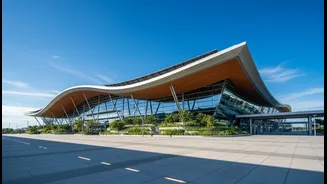
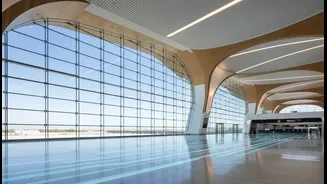
The new integrated terminal building is an architectural marvel designed to be both a modern transit hub and a cultural embassy for Assam. Spanning approximately 1,40,000 square metres, its design is inspired by the region's biodiversity, prominently
featuring bamboo and motifs of the foxtail orchid, or 'kopou phool'. With over 140 metric tonnes of bamboo used, the structure intentionally reflects local craftsmanship. But beyond aesthetics, it’s a powerhouse of capacity. Designed to handle 13.1 million passengers annually, a significant jump from its previous capacity, it aims to eliminate the bottlenecks that have long constrained the primary air gateway to India's eight northeastern states. The terminal features 64 check-in counters, 10 aerobridges, self-baggage drop systems, and DigiYatra-enabled gates to streamline passenger flow, making it one of the most advanced in the region.
The Engine of 'Act East'
The terminal's significance extends far beyond its physical footprint. Officials have explicitly positioned it as a critical piece of infrastructure for India's 'Act East' policy, which aims to deepen economic and strategic ties with Southeast Asian nations. For years, the Northeast's geographical isolation has been a major hurdle to its economic development. The new terminal, with its expanded capacity for both domestic and international flights, is designed to transform Guwahati into a bustling hub connecting mainland India not just to its own remote corners, but also to neighbouring countries. Currently, the airport connects 21 domestic destinations and three international ones (Bangkok, Paro, and Singapore), handling over 130 flights daily. The enhanced infrastructure is expected to attract more airlines, increase flight frequencies, and open new routes, boosting trade, tourism, and people-to-people connections across the region.
A Boost for Regional Connectivity
The Guwahati terminal serves as a powerful anchor for the government's regional connectivity scheme, UDAN (Ude Desh ka Aam Nagrik). The scheme's goal is to make air travel affordable and accessible, connecting unserved and underserved airports. While UDAN has had successes, its implementation has faced challenges, including discontinued routes and non-operational airports. A major hub like Guwahati's new terminal is essential for the viability of the entire regional network. It functions as the main artery from which smaller, regional flights can branch out to remote areas in states like Arunachal Pradesh, Nagaland, and Mizoram. By providing reliable, high-capacity connectivity to a major national and international hub, the new terminal makes these smaller routes more economically viable for airlines and more practical for passengers, supporting everything from tourism to emergency medical travel.
The Challenges Ahead
However, a new airport terminal, no matter how impressive, cannot solve all connectivity issues on its own. The Northeast's development is hampered by broader infrastructural deficits, including poor road and rail networks, especially in rural areas. The region's difficult terrain and severe monsoon season often lead to landslides and blockages, disrupting ground transport. For the airport to deliver its full potential, last-mile connectivity from regional airports to towns and villages must be improved. Furthermore, while the terminal boosts air capacity, sustainable economic growth depends on creating local industries and employment opportunities that can leverage this newfound accessibility. Without a parallel push in developing agriculture, manufacturing, and service sectors, the risk is that the new infrastructure primarily facilitates the outflow of talent rather than fostering local prosperity.