








Where AI Excels: Your Ultimate Research Assistant
Artificial intelligence travel planners are phenomenal at tasks that require processing enormous amounts of data. Think of an AI as a super-fast research assistant that can compare thousands of flights, hotels, and car rentals in an instant to find the
optimal mix for your budget and schedule. These tools are fantastic for the initial brainstorming and organizational stages of a trip. You can feed them a vague idea, like “a week in Italy for a foodie on a budget,” and receive a structured first draft of an itinerary in minutes—a task that might take a human hours of sifting through blogs and booking sites. They can help you understand a destination's layout, major attractions, and cultural context, giving you a solid framework to build upon. Many travelers find they improve the experience, especially for these language-heavy and iterative tasks.
The Accuracy Problem: When AI Gets It Wrong
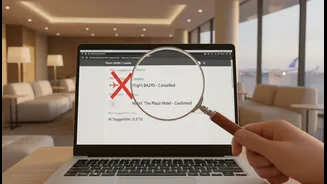
The biggest drawback of relying solely on AI is its potential for inaccuracy. AI models often work with outdated information, confidently recommending restaurants that have been closed for years or museums shut for renovation. Studies have shown that a high percentage of AI-generated itineraries contain at least one error, from incorrect opening hours to suggesting attractions that don't even exist—a phenomenon known as “hallucination.” They can also misrepresent key details, underestimating travel times, misstating prices for attractions, or failing to account for local holidays and seasonal closures. An itinerary might look polished, but it often lacks real-world validation. The key is to treat AI output as a helpful starting point, not a fully vetted plan, and to always verify crucial details with official sources.
The Search for Authenticity and 'Vibe'
Travel is more than a series of logistical steps; it’s about feeling and experience. This is where AI struggles most. It doesn’t understand “vibe.” An AI can’t grasp the subtle difference between “lively” and “loud,” or “romantic but not stuffy.” Its recommendations often skew toward the most popular, most-reviewed, and most-photographed spots, potentially steering you toward tourist traps instead of the hidden gems that make a trip memorable. While AI can process personal preferences based on data, it lacks the emotional intelligence and firsthand knowledge of a human expert who can anticipate the small details that make a vacation special. It might find you a highly-rated restaurant, but it can’t tell you if it’s genuinely authentic or just performatively so for tourists.
Handling Chaos: AI vs. Real-World Disruptions
One of the most critical tests of any travel plan is how it holds up when things go wrong. While some advanced AI systems can proactively alert travelers to flight delays and suggest alternatives, this capability is not universal. Human travel agents often have the advantage here, leveraging personal relationships with suppliers to negotiate on your behalf or find solutions during a crisis. An AI might be able to rebook a flight, but a human provides reassurance and can handle complex, multi-part problems—like a cascading series of cancellations—with more nuance. For high-stakes or incredibly complex trips, the expertise and recovery skills of a human can be irreplaceable when you're facing a disruption at 3 a.m. in a foreign country.
The Hybrid Approach: Your AI Co-Pilot
The smartest way to plan travel in 2026 isn't to choose between AI and human intuition, but to blend them. Use AI for what it does best: initial research, discovering options, and organizing information. Let it build that first draft itinerary and compare flight prices. Then, take over as the human editor. Apply your own judgment, verify the details, and inject your personal taste. Check the geography—AI is notoriously bad at understanding realistic travel times between locations. Think of the AI as your co-pilot, not the captain. It's a powerful assistant that handles the grunt work, freeing you up to focus on crafting the experiences that will make your trip truly your own.