



MS Dhoni: The Cool-Headed Gambler
Mahendra Singh Dhoni’s captaincy was a masterclass in staying calm under extreme pressure. His genius wasn’t just in his unflappable demeanour but in his gut-wrenching, logic-defying gambles that more often than not paid off. The most iconic example remains
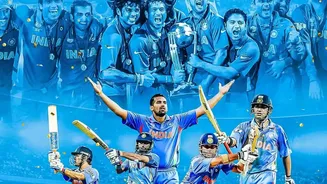
the 2011 ICC World Cup final. Chasing Sri Lanka's formidable 274, India was in a precarious position when Virat Kohli was dismissed. The in-form Yuvraj Singh was expected to walk in next, but to the astonishment of millions, Dhoni promoted himself up the order. The reasoning was pure tactical brilliance: he wanted to counter Sri Lanka's master spinner, Muttiah Muralitharan. Having played with Muralitharan for Chennai Super Kings, Dhoni backed himself to read the bowler better than anyone else. The move worked spectacularly. Dhoni scored an unbeaten 91, finishing the game with a historic six and ending India's 28-year wait for the World Cup trophy. It was a decision rooted in self-belief and astute analysis, a hallmark of his game-changing leadership.
Sourav Ganguly: The Fearless Transformer
When Sourav Ganguly took over the captaincy in 2000, Indian cricket was in turmoil. He didn't just inherit a team; he inherited a crisis. From there, he forged a new identity for Indian cricket, transforming a talented but timid side into a fearless, aggressive unit that wasn't afraid to look the opposition in the eye. Ganguly's game-changing ability lay in his faith in young talent. He famously backed players like Virender Sehwag, Harbhajan Singh, and Yuvraj Singh, giving them the confidence to express themselves. His decision to ask Sehwag, then a middle-order batsman, to open in Test cricket was a revolutionary move that transformed India's batting lineup. Under his leadership, India started winning Test matches abroad, a rare feat at the time, including a drawn series in Australia in 2003-04. The iconic 2002 NatWest Trophy final win at Lord's, immortalised by Ganguly waving his shirt on the balcony, symbolised this new, defiant Indian spirit. He taught the team to believe it could win from anywhere, against anyone.
Ricky Ponting: The Relentless Aggressor
Ricky Ponting captained one of the most dominant teams in cricket history, but his leadership was a key ingredient in their supremacy. Taking over from Steve Waugh, Ponting amplified Australia's aggressive brand of cricket, turning the team into a ruthless winning machine. His game-changing art was in applying relentless pressure. Whether with aggressive field placements that choked batsmen or an unwavering attacking mindset, Ponting's teams never took their foot off the pedal. This philosophy was on full display during Australia's unbeaten runs to the 2003 and 2007 World Cup titles. Ponting led from the front, and his fierce competitiveness became the team's identity. While his methods sometimes courted controversy, there was no denying their effectiveness. He instilled a belief that winning was a habit, and his era is remembered for an intimidating dominance that few teams have ever managed to replicate in the sport.
Imran Khan: The Inspirational Leader
Imran Khan’s captaincy was a mix of charismatic leadership, fierce determination, and tactical nous. He turned a group of talented but inconsistent players into world-beaters. His most legendary moment came during the 1992 Cricket World Cup. With Pakistan on the brink of elimination, Imran delivered his famous "cornered tigers" speech. He urged his team to fight with the ferocity of a cornered animal, a message that ignited their campaign. To symbolise this new-found belief, he famously wore a t-shirt with a tiger on it at the toss. From that point, Pakistan played with renewed spirit, culminating in their first-ever World Cup victory. Beyond motivation, Imran was a sharp tactician who championed the art of reverse swing and backed young talents like Wasim Akram and Waqar Younis to flourish. He led by example, scoring a crucial 72 in the final and taking the winning wicket himself, cementing his legacy as a leader who could single-handedly change his team's destiny.
Clive Lloyd: The Architect of Dominance
When Clive Lloyd became the West Indies captain in 1974, he took on the task of uniting gifted players from various Caribbean nations into a single, cohesive force. He succeeded spectacularly, architecting an era of unprecedented dominance. Lloyd’s game-changing strategy was revolutionary: he perfected the four-pronged pace attack. Realising the psychological and physical toll it could take, he unleashed a relentless barrage of fast bowling that dismantled batting lineups around the world. This fearsome strategy propelled the West Indies to victories in the first two Cricket World Cups in 1975 and 1979. Lloyd was more than just a tactician; he was a calm, respected leader who commanded a team of superstars. Under his captaincy, the West Indies went on a remarkable run of 27 Test matches without a defeat. His leadership transformed a collection of entertainers into a ruthless, professional unit that ruled world cricket for over a decade.