
Beyond Pointing Your Camera at the Sky
Anyone who has tried to photograph the stars knows it’s more complicated than simply pointing a camera upwards. The best astrophotography requires careful planning. Three major factors stand in your way: light pollution from cities, the phase and position
of the moon, and knowing where your celestial subject will be at a specific time. A bright moon can wash out the stars just as effectively as city lights, and the Milky Way’s core is only visible during certain months and times of the night. Overcoming these challenges used to require complex charts and deep astronomical knowledge. Now, a suite of sophisticated yet user-friendly apps can handle the heavy lifting, turning your smartphone into an essential planning tool for capturing cosmic wonders.
Finding True Darkness
The first step to a great night sky photo is escaping light pollution. Apps like Light Pollution Map and Dark Sky Finder are indispensable for this. They use satellite data to show you exactly where the darkest skies are relative to your location. These maps are often color-coded, helping you find areas with minimal artificial light, which dramatically improves the visibility of stars, nebulae, and the Milky Way. Some apps even use the Bortle scale, a nine-level numeric scale that measures the night sky's brightness, to help you understand just how dark a location will be. For photographers, finding a location in a low Bortle class (ideally Class 3 or lower) is the foundational step for a successful shoot.
Your Personal Planetarium
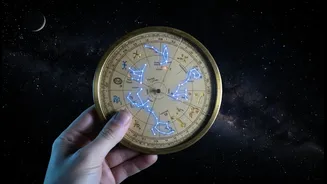
Once you've found a dark spot, you need to know what you're looking at. This is where planetarium apps come in. Apps like Stellarium Mobile, Star Walk 2, and SkyView use your phone’s GPS and compass to create a real-time map of the sky above you. Simply point your phone at the sky, and the app will identify stars, planets, constellations, and even satellites like the International Space Station. Many feature augmented reality (AR) overlays, which superimpose this information onto your live camera view, making it incredibly intuitive to locate celestial objects. These apps are perfect for beginners learning to navigate the night sky and for seasoned photographers who want to quickly frame a specific constellation or planet.
The All-in-One Planning Powerhouse
For serious landscape astrophotographers, apps like PhotoPills and The Photographer's Ephemeris (TPE) are considered game-changers. PhotoPills, in particular, is an all-in-one tool designed specifically for photographers. Its most celebrated feature is the Planner, which lets you see the exact position of the sun, moon, and Milky Way for any location on Earth, at any time in the future. Want to capture the Milky Way's core rising behind a specific mountain? PhotoPills' augmented reality mode lets you visualize the shot on-site, even during the day, ensuring you're in the perfect spot when darkness falls. The app also includes calculators for exposure, depth of field, and star trails, helping you nail the technical aspects of your shot.
Weather and Special Events
Even the best plans can be ruined by a cloudy night. That’s why specialized weather apps are a critical part of the astrophotographer’s toolkit. Apps like Astrospheric and Clear Outside provide detailed forecasts for cloud cover, transparency (clarity of the air), and seeing (atmospheric stability). Some newer apps, like Milky Way Tonight, even combine visibility forecasts with moon phases and cloud cover to give you a simple "go/no-go" recommendation for a specific night. Furthermore, many general astronomy apps include calendars for celestial events like meteor showers, eclipses, and planetary alignments, ensuring you never miss a unique photo opportunity.