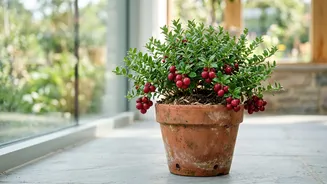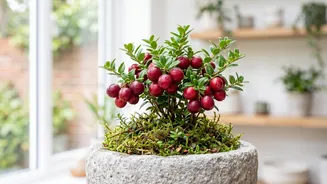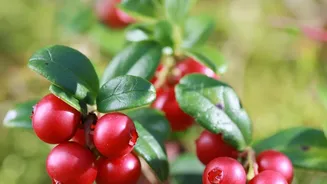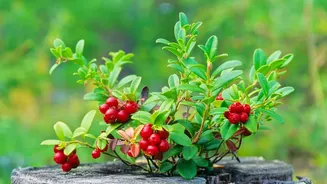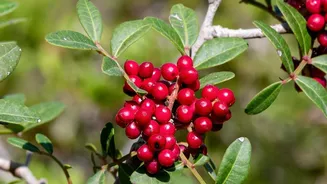



Growing cranberries indoors is a rewarding challenge, bringing a touch of the bog to your home. But to get from a green vine to a harvest of tart red berries, one factor stands above all others: light. A lot of it.
Why Light Is So Critical
Cranberries (Vaccinium macrocarpon) are
native to North American bogs and open, sandy wetlands. In these environments, they receive hours of direct, unfiltered sun. This love for intense light is baked into their DNA. To thrive, flower, and produce fruit indoors, they need conditions that replicate their native habitat. A standard windowsill, even a south-facing one, often falls short of providing the intensity and duration these plants crave, especially for bountiful fruit production. While the plant might survive in lower light, it is unlikely to produce the flowers and berries that make the effort so worthwhile. Full sun is the gold standard.
Decoding Light for Gardeners
To give cranberries what they need, it helps to understand two key metrics: PPFD and DLI. Photosynthetic Photon Flux Density (PPFD) measures the intensity of usable light that your plant receives at any given moment. Think of it as the brightness of the light. Daily Light Integral (DLI) measures the total amount of that light the plant accumulates over a full day. It is the combination of intensity (PPFD) and duration (how many hours the light is on). Fruiting plants like cranberries are heavy feeders when it comes to light and require a high DLI to fuel the energy-intensive process of developing berries. While exact DLI targets for cranberries are not widely published, comparing them to other high-light, fruiting crops like cannabis or tomatoes can provide a strong baseline, suggesting a target DLI of 30-40 mol/m²/day or even higher is necessary for robust fruiting.
Choosing the Right Grow Light
Not all grow lights are created equal. For a sun-loving plant like the cranberry, you need a high-quality, full-spectrum light. This ensures the plant receives all the wavelengths of light it uses for photosynthesis, from vegetative growth to flowering and fruiting. LED (Light Emitting Diode) lights are the top choice for most home growers today. Modern full-spectrum LED fixtures are highly efficient, run cooler than older HID (High Intensity Discharge) lights, and have a long lifespan. Look for fixtures that provide a manufacturer's PPFD map. This chart shows the light intensity at different points under the lamp, helping you ensure your entire plant is bathed in adequate light. While T5 fluorescent bulbs can be good for seedlings or leafy greens, they often lack the penetration and intensity needed for a demanding fruiting plant like a cranberry.
Setting Up Your Lighting System
Once you have a powerful, full spectrum LED light, the setup is key. Cranberries need at least six to eight hours of direct, bright light daily. With an indoor setup, you have full control and should aim for a photoperiod of 12 to 16 hours. This longer duration helps you achieve the high DLI the plant needs. For example, to hit a DLI of 35 mol/m²/day with a 14 hour light cycle, you would need an average PPFD of around 694 µmol/m²/s. Position the light directly above the plant. The correct height depends on your light's power; check the manufacturer's recommendation. It is often a balance between covering the plant's full width and providing enough intensity. A common starting point is 18–24 inches above the canopy, but high–power lights might need more distance to avoid scorching the leaves. As the plant grows, you may need to raise the light to maintain the optimal distance. Using a timer is non–negotiable for consistency, ensuring your cranberries get the same 'dose' of light every single day.