



More Than Just a Game
An obstacle course isn't just about burning off excess energy. It’s a powerful form of canine enrichment that engages your dog's mind. Navigating new challenges helps build their confidence, improve their body awareness (proprioception), and prevent boredom-related
behaviours like chewing or excessive barking. More importantly, guiding them through the course strengthens the bond you share. Think of it as a fun puzzle you solve together, turning a dull afternoon into a productive training and bonding session.
Safety is Non-Negotiable
Before you turn your living room into a canine playground, establish some ground rules. First, ensure the floor surface isn’t slippery; a rug or yoga mat is better than polished tiles. Use objects that are sturdy and won't topple over easily. Never force your dog to do anything they seem scared of—lure them with high-value treats and praise. Keep sessions short (5-10 minutes) to maintain their interest and always supervise them closely to prevent accidents. The goal is fun, not a competitive sport.
The Weave Pole Challenge
This is a classic agility exercise you can easily replicate. You don’t need professional poles. Simply line up a series of objects like plastic water bottles, shoes, or even rolled-up towels, placing them about two feet apart. Using a treat, slowly guide your dog in a zig-zag pattern through the 'poles'. This exercise is fantastic for teaching your dog to focus on your guidance and control their body movements with precision. Start slowly and celebrate every successful weave.
Build a Cushion Mountain
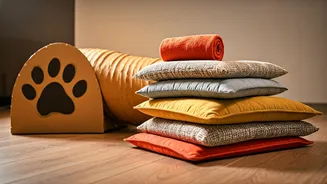
Gather all your sturdy pillows, bolsters (masands), and cushions to create a small, soft 'mountain'. The goal is for your dog to walk or climb over it. This seemingly simple task is excellent for building core strength and teaching them to be mindful of where they place their feet. The unstable surface forces them to engage different muscles. Make sure the pile is not too high to begin with, especially for smaller or older dogs. Lure them over with a treat and a cheerful “Yes!” when they make it across.
The Cardboard Box Tunnel
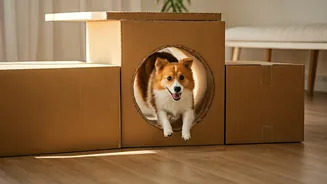
Thanks to online shopping, most of us have a surplus of cardboard boxes. Open both ends of a large, sturdy box to create a short tunnel. Initially, your dog might be hesitant. You can encourage them by placing a treat at the far end and peeking through to call them. Keep it short and un-intimidating. For a longer tunnel, you can place a few boxes in a row, but ensure they are secure and won't collapse. This activity plays into a dog’s natural denning instinct and builds confidence in enclosed spaces.
Create a Sensory Texture Walk
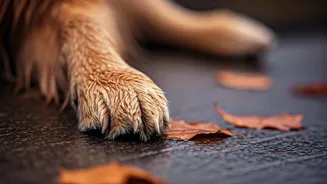
The 'texturized' element is crucial for sensory stimulation. Create a pathway using different materials for your dog to walk over. Lay down a sequence of items like a rough coir doormat, a soft blanket, a folded cotton dupatta, a crinkly (but supervised) sheet of packing paper, and a smooth yoga mat. Each surface provides a new sensation for their paws, engaging their brain in a novel way. Guide them slowly across each texture, letting them investigate each new feeling.
Putting It All Together
Once your dog is comfortable with each individual obstacle, you can link two or three of them together to form a mini-course. For example, have them go through the weave poles, over the cushion mountain, and into the cardboard tunnel. Use a treat to guide them from one station to the next. Keep the flow simple and the praise high. Don't worry about speed; focus on successful, happy completion. This sequence-based thinking is a great mental workout for your pup.